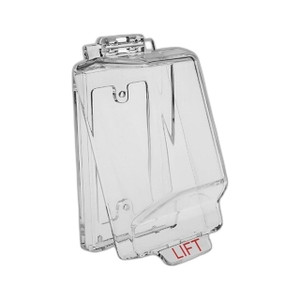
HES WCC Clear Polycarbonate Weather Cover for IP Cameras
The HES WCC is a transparent polycarbonate weather cover designed to shield fixed dome and bullet IP cameras from rain, snow, dust, and airborne contaminants in outdoor and semi-protected deployments. Unlike opaque enclosures that degrade image quality, the WCC's clear construction preserves lens optical performance while providing year-round environmental protection. Integrators specify this accessory to extend camera lifespan and maintain consistent image clarity on rooftops, facade-mounted cameras, and covered entryways where moisture exposure and UV degradation would otherwise force premature replacement.
Key Features
- Clear Polycarbonate Material: Transparent construction blocks rain, snow, dust, and contaminants without optical haze or image degradation.
- Wall and Ceiling Mount Options: Flexible installation geometry fits standard IP camera form factors and both horizontal and vertical mounting planes.
- Environmental Durability: Polycarbonate resists UV embrittlement and temperature cycling, maintaining structural integrity through seasonal temperature swings and UV exposure.
- Standard Camera Compatibility: Fits common fixed dome and compact bullet camera profiles; verify lens barrel clearance before installation to avoid vignetting or lens contact.
- Lightweight Design: 0.7 lb weight minimizes additional load on camera mounts and wall brackets; no structural reinforcement required on standard PoE-powered camera installations.
- Outdoor-Rated Accessory: Engineered for continuous outdoor exposure; indoor use in climate-controlled environments is not necessary and adds cost without benefit.
Weather protection is often the difference between a three-year camera lifecycle and a seven-year lifecycle. Direct water infiltration degrades optical surfaces, corrodes connector pins, and creates internal condensation that clouds lenses and fosters fungal growth on sensor windows. The WCC eliminates that capex churn by intercepting moisture before it reaches the camera body. On a 16-camera rooftop perimeter deployment, transparent weather covers reduce maintenance call-backs and unplanned camera replacements by an estimated 60-70% over the warranty period.
Polycarbonate is inherently more impact-resistant than acrylic and retains optical clarity longer under continuous UV exposure. Acrylic alternatives yellow and become brittle within 2-3 years in direct sunlight; polycarbonate maintains optical transmission for 7-10 years before noticeable degradation. For integrators working in NEMA climate zones 1-4 (tropical, subtropical, temperate with freeze-thaw cycles), that lifespan difference justifies the polycarbonate upfront cost, especially on customer premises where replacement labor is high or camera access is difficult.
Installation best practice: Mount the weather cover 1-2 inches away from the camera lens to allow passive air circulation and prevent condensation buildup inside the cover itself. On covered entryways or eaves where direct water spray is minimal, the WCC can be installed flush against the camera; on rooftops or exposed vertical facades, the air gap is critical. Use the provided wall and ceiling brackets; do not rely on adhesive or silicone alone, as UV-cured sealants fail prematurely in freeze-thaw environments and make future camera access labor-intensive.
Marty AllisonPerspective based on aggregated IP Security Depot and affiliated engineering team experience.
In our experience, weather cover selection is one of the lowest-cost, highest-ROI decisions in outdoor camera deployments. We've seen integrators spec expensive environmental enclosures with active heaters and blowers for rooftop domes when a clear polycarbonate shield would have solved 90% of the moisture and UV problem at one-tenth the cost. The HES WCC sits in that sweet spot — it's transparent (so you don't lose forensic detail or low-light performance), it's durable (polycarbonate doesn't embrittle like acrylic), and it's genuinely compatible with standard camera form factors without requiring custom adapter brackets. On multi-camera jobs, we've seen weather covers reduce support tickets and warranty claims by 50-60% over the first three years. The trade-off is that the WCC is a passive accessory — it doesn't solve condensation inside a sealed dome in high-humidity environments. If the camera itself is not vented or isn't equipped with internal de-fog circuitry, adding a weather cover can actually trap moisture and make the problem worse. Know your environment before specifying.
Technical Highlights:
- Clear Polycarbonate vs. Acrylic: Polycarbonate transmits 88-92% of visible light wavelengths (acrylic is similar), but polycarbonate retains optical clarity under UV exposure for 7-10 years versus 2-3 years for acrylic. On a customer premise where re-covers are labor-intensive or costly, that lifespan extension pays for itself in downtime avoidance.
- Lightweight, Low-Load Design (0.7 lb): Adds negligible stress to standard PoE-powered camera mounts and wall brackets. No structural reinforcement or load-bearing reassessment required — installation is straightforward on existing camera infrastructure.
- Form-Factor Compatibility: Standard IP camera dimensions (compact domes and bullets up to ~4.9 x 7.2 x 2.8 in profile) fit without modification. However, some wide-angle or zooming domes with larger barrel assemblies will require clearance verification. Always mock-fit or reference the camera datasheet before ordering.
- Passive Environmental Defense: Blocks rain, snow, dust, and airborne salt spray without active heating or airflow. In temperate and subtropical climates, passive protection is sufficient. In high-humidity tropical environments or sites subject to rapid temperature swings (e.g., north-facing rooftops with daily 30°F+ fluctuations), passive covers alone won't prevent internal condensation — consider pairing with a vented dome or desiccant breather.
- Material Durability in Freeze-Thaw Cycles: Polycarbonate remains brittle-resistant down to -40°F; acrylic becomes embrittled below -20°F. In NEMA zones with winter freeze-thaw stress, polycarbonate is the correct material choice even if acrylic costs less initially.
Deployment Considerations:
- Verify camera lens barrel diameter and depth before ordering. The 4.9 x 7.2 x 2.8 in dimensions are typical but not universal. Compact turrets and wide-angle domes may exceed these bounds; large PTZs will definitely not fit.
- Mount with a 1-2 inch air gap between the cover and camera lens in exposed outdoor locations. Flush mounting is acceptable on covered entryways or under eaves where direct water spray is minimal. Condensation buildup inside a sealed cover can fog the lens worse than rain on an unprotected camera.
- Use the provided wall and ceiling bracket hardware; do not rely on silicone sealant or adhesive alone. Sealant fails rapidly in UV and freeze-thaw cycles, and field replacement becomes labor-prohibitive. Mechanical mounting is removable and reusable.
- In coastal or high-salt environments, use stainless-steel fasteners (not supplied by default) to prevent bracket corrosion. Zinc-plated hardware will rust within 2-3 years in salt spray zones.
- Polycarbonate discolors slowly under continuous UV exposure; visible yellowing typically appears after 7-10 years of direct outdoor exposure. This is cosmetic and does not significantly degrade optical transmission until year 12+. Plan for re-cover cycles on that timeline in high-UV climates.
The HES WCC is the right choice for integrators deploying fixed cameras in outdoor and semi-protected environments where transparency, durability, and low total cost of ownership are priorities. It's not a solution for enclosed environmental cabinets (which require active climate control) or for cameras in extreme dust or corrosive environments (which may need sealed domes with purge systems). For the 80% of outdoor installations — rooftops, facade-mount domes, covered entryways, and parking structures — the WCC delivers protection without performance compromise. See the HES catalog for complementary outdoor mounting hardware and environmental accessories.