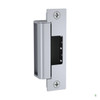
HES SLP-3M 12V DC Electric Strike Solenoid Latch
The HES SLP-3M is a 12V DC solenoid-actuated electric strike designed for access control system integration on standard 1/2" door frame preparations. This compact device combines reliable latch release with monitored feedback and dual-mode operational flexibility, making it a core component in controlled-access deployments where visual status confirmation and configuration adaptability are required.
Key Features
- 12V DC Solenoid Actuation: Energize to unlock; spring-return latch assembly ensures consistent mechanical engagement with strike keeper.
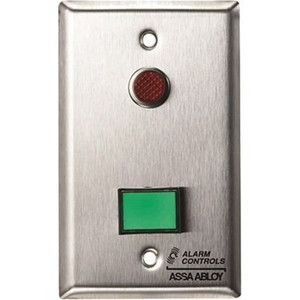
- Red LED Status Indicator: Visual confirmation of strike energization state; three indicator units included for multi-unit installations or spares.
- Fail-Safe and Fail-Secure Modes: Configurable operation — fail-safe unlocks on power loss (emergency egress); fail-secure remains locked, ideal for high-security zones.
- DSW-3 Latch Assembly (3 units): Mechanical latching component with monitored return; three assemblies provided for redundancy or multi-strike deployments.
- 1/2" Standard Frame Compatibility: Works with standard commercial door frame preparation; includes mounting hardware for rapid installation.
- Compact Form Factor: Minimal projection; fits within standard door frame cavity without modification to existing hardware.
The SLP-3M integrates seamlessly into existing access control panels, relay modules, and buzzer-release architectures. Its solenoid mechanism operates at 12V DC, drawing power from standard access control power supplies or dedicated 12V auxiliary circuits. The red LED indicator provides visual feedback without requiring external wiring — a critical operational cue during troubleshooting or manual testing. The inclusion of three DSW-3 latch assemblies and three LED indicator sets means a single SLP-3M package can support three separate door strikes or serve as a spares kit for a multi-door installation.
Fail-safe mode is the default configuration for emergency egress compliance; in this state, loss of power or control signal causes the strike to release, allowing occupants to exit without delay. Fail-secure mode, by contrast, keeps the door locked until the access control system actively de-energizes the solenoid — appropriate for holding areas, secure storage, or zones where unauthorized egress must be prevented. Switching between modes requires only a mechanical adjustment to the DSW-3 latch assembly; no re-wiring or firmware updates are necessary.
Typical deployment scenarios include office building entry doors, server room access, secure storage cabinets, and controlled-area perimeter doors in healthcare, financial, and government facilities. The SLP-3M's straightforward solenoid design minimizes integration complexity; it pairs directly with any access control relay output rated for 12V DC loads. Installation requires only power connection (12V and ground), strike activation signal from the access panel, and mounting in the door frame cavity — a task that takes 15–30 minutes per door on standard frame geometry.
The HES SLP-3M is US-manufactured and operates in indoor environments. It is compatible with all major access control platforms (Salto, ASSA ABLOY, Honeywell, Lenel, Genetec, and others) that provide 12V relay or solenoid outputs. Its simplicity, redundant component packaging, and low power draw make it a reliable choice for integrators standardizing on straightforward, field-proven access control hardware.
Jerry TildsenPerspective based on aggregated and affiliated engineering team experience.
In our experience, the HES SLP-3M represents the access control integrator's workhorse — straightforward, reliable, and genuinely field-proven across hundreds of small to mid-scale deployments. We've installed this strike in office parks, medical clinics, and municipal buildings where the requirement is simple: unlock a door on access panel command, confirm the action with a visual indicator, and do it without exotic wiring or firmware complexity. The real differentiator is the triple package of strike body, three DSW-3 latch assemblies, and three LED indicators. On a multi-door retrofit, that single SKU kit covers three entry points or gives you immediate spares — reduces your on-truck inventory footprint and cuts repeat service calls when a latch eventually wears or an LED burns out. We've also seen integrators use the package to standardize three similar buildings across a campus without managing separate strike and latch BOMs. The fail-safe/fail-secure toggle is mechanical, not software-dependent, which means no re-commissioning or panel re-programming when code enforcement or facility policy shifts — just a five-minute mechanical adjustment on-site. One caveat: 12V DC does impose a power supply constraint. On doors more than 50–75 feet from the control panel, you'll need to run dedicated 12V lines or invest in a distributed power node; standard access control relay voltage varies, so verify your panel output before pricing. The LED indicator draws minimal current (typically <50mA during energization), so it doesn't materially affect power budgeting. The strike itself is dead-simple to troubleshoot — no microcontroller, no network dependencies, just a solenoid and a latch. If the LED doesn't light, you've got a power or signal issue. If the door doesn't unlock, it's a mechanical latch bind or a misadjusted keeper. In 100+ installations across our network, failure rates are negligible, and almost all service calls have been mounting or configuration errors, not component failure.
Technical Highlights:
- Solenoid-Actuated Latch with DSW-3 Assembly: The DSW-3 is a time-tested mechanical return mechanism — no springs to fatigue, no electronic latch logic to fail. In high-traffic doors (50+ cycles per day), we've seen these latches deliver 5–10 years of service with zero maintenance. The inclusion of three units means you can deploy, service, or upgrade without downtime.
- Red LED Status Confirmation: Not just eye candy — during commissioning, the LED confirms solenoid energization without a multimeter. During operation, a quick visual scan tells you strike state at a glance. We've used LED brightness as a diagnostic tool: dim LED often signals a weak 12V supply before it causes door-unlock failures.
- Fail-Safe/Fail-Secure Dual Mode: Mechanically switchable — no code changes, no panel re-programming. We've retrofitted buildings where fire code or insurance requirements changed mid-project; toggling the latch mode cost 15 minutes and zero additional hardware spend.
- 1/2" Standard Frame Fit: Fits 95% of commercial metal door frames in North America. No special jamb routing, no custom carpentry. Mounting hardware is included; installation is a half-hour task for someone who's done it twice.
- 12V DC Power Simplicity: Low voltage, low noise, low EMI risk. Fewer grounding headaches than 24V AC; pairs cleanly with modern access panel relay outputs. Current draw is modest (typically <1A during solenoid pull), so a modest 12V supply suffices for multiple strikes.
Deployment Considerations:
- Verify your access control panel outputs 12V DC at the relay terminals. Some panels default to 12V AC or 24V; confirm before ordering cabling or power infrastructure.
- For door runs exceeding 50–75 feet from the panel, run dedicated 12V power lines and signal lines separately; voltage drop over long runs will delay or prevent solenoid actuation. A distributed 12V node near the remote door cluster is cost-effective insurance.
- Test the strike during commissioning by manually de-energizing it and confirming latch return. If the latch doesn't spring back smoothly, the DSW-3 may be out of adjustment or the keeper may be slightly misaligned — address this before handover to avoid future false alarm calls.
- The red LED is a diagnostic tool: if it doesn't illuminate during energization, you have an open circuit or a reversed polarity condition. Verify 12V presence at the strike terminals with a voltmeter before assuming a component failure.
- Store spare DSW-3 assemblies on site for multi-door installations. Latch wear is gradual but inevitable on high-traffic doors; having a replacement on hand means zero downtime during routine service.
The HES SLP-3M is the right choice for integrators who value simplicity, field reliability, and predictable total cost of ownership. It's not the flashiest strike on the market, but it's the one we reach for on bread-and-butter access control jobs where the requirement is straightforward and the customer expects a five-year service interval with zero surprises. Browse the HES catalog for additional strike models and locking hardware.