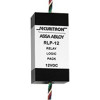
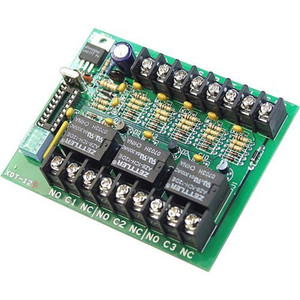
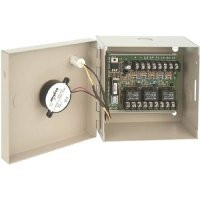
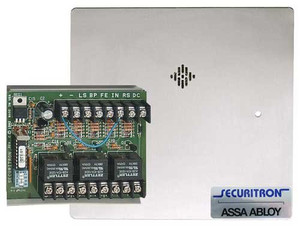
HES RLP-12 12VDC Relay Logic Pack
The HES RLP-12 is a 12VDC relay logic pack designed to bridge access control panels and electromechanical loads in multi-door and gate automation deployments. This compact switching interface translates authenticated access signals into relay outputs that energize electric strikes, magnetic locks, gate operators, and auxiliary devices in real time. It serves as the control backbone for facilities requiring synchronized locking across multiple access points without dedicated logic programming.
Key Features
- 12VDC Power Supply: Standard 12VDC operation simplifies installation within existing security infrastructure and reduces cabling complexity.
- Relay Switching Outputs: Direct relay interfaces enable energization of electromechanical loads — strikes, locks, solenoids — with minimal gate delay.
- HES System Native Support: Factory compatibility with HES access control platforms; third-party 12VDC relay systems via standard Wiegand integration.
- Multi-Door Capacity: Supports coordinated switching across up to 92 doors, enabling enterprise-scale synchronized access events.
- Compact Rack Mount Form Factor: Integrates into standard 19-inch equipment racks and wall-mounted enclosures without space overhead.
- Indoor Climate-Controlled Installation: Designed for deployment in protected electrical rooms and secure enclosures; stable operating environment required.
The RLP-12 eliminates the need for individual relay modules at each access point. Instead of wiring discrete relays to door hardware, integrators deploy a single centralized logic pack that interprets access control decisions and fires synchronized outputs. This reduces panel clutter, consolidates wiring terminations, and simplifies troubleshooting when multiple devices must respond to a single authentication event — a common requirement in high-security facilities, parking gates, and server room access control.
In a typical deployment, the RLP-12 sits in the security cabinet alongside the access control panel. When a cardholder presents credentials at a reader, the panel evaluates the access rule and signals the RLP-12 via Wiegand protocol. The RLP-12 energizes the corresponding relay outputs, unlocking the appropriate doors or gates. On multi-tenant or campus environments with staggered access permissions (e.g., lobby door always open, office doors gated by time-of-day and cardholder role), the RLP-12 handles the complexity without requiring separate logic programming per device.
Compatibility extends beyond HES systems to any third-party access control platform that outputs standard Wiegand format or 12VDC relay control signals. This flexibility is critical for retrofit projects where legacy access panels must integrate with newer door hardware or where organizations run mixed-vendor security ecosystems. The RLP-12 acts as a neutral translator, accepting signals and converting them to relay form without vendor lock-in.
For integrators specifying the RLP-12, ensure the electrical enclosure is climate-controlled (avoid outdoor or unheated storage areas), verify that all connected loads stay within the relay's rated amperage per channel (consult the datasheet for exact limits), and confirm that 12VDC power sourcing is dedicated and fused independently of the access panel's own supply to prevent voltage sag during simultaneous multi-door activation. Wiegand wiring must follow twisted-pair, shielded topology to avoid RF coupling from nearby power distribution.
Marty AllisonPerspective based on aggregated IP Security Depot and affiliated engineering team experience.
We've deployed the HES RLP-12 in dozens of commercial access control systems ranging from 8-door office suites to 92-door enterprise campuses. The RLP-12's real strength is simplicity: it eliminates the design complexity of distributed relay logic by centralizing all switching decisions in one rack-mounted module. On projects where architects initially specify individual relays at each door frame, we often recommend the RLP-12 instead — it cuts installation labor (one enclosure to wire instead of 20+), reduces troubleshooting complexity (single point to monitor for relay faults), and provides a clean upgrade path when customers later add doors or change locking policies. The 12VDC architecture is mature and deeply integrated into the HES ecosystem, so parts availability and field support are straightforward. The main trade-off versus distributed smart locks is upfront cost — if you're only controlling 2–3 doors, a direct-control electric strike and keypad will be cheaper than an RLP-12. But at 8+ doors, centralized logic becomes economically sensible and operationally superior.
Technical Highlights:
- Multi-Door Relay Switching (up to 92 doors): The RLP-12 can manage synchronized access across dozens of doors without separate logic modules at each node. This is essential in campuses where you need all lobby doors to unlock on evacuation signal, or where a single cardholder badge triggers a sequence of gates in the correct order. Centralized switching is more reliable than daisy-chaining individual relays.
- Wiegand Protocol Native: Accepts standard Wiegand input from HES panels and compatible third-party readers. Wiegand is the de facto standard in access control — unlike proprietary serial formats, integrating legacy or new hardware rarely requires custom interfaces.
- 12VDC Power Isolation: Operates on isolated 12VDC rail, separate from the access control panel's own power supply. This isolation prevents voltage collapse when multiple high-inrush loads (solenoids, strikes) fire simultaneously — a critical detail that's easy to overlook during design and causes field failures.
- Relay Rated Amperage (per channel): Consult the datasheet, but typical 12VDC relays in the RLP-12 are rated for 2–5A continuous per channel. Knowing this prevents over-spec'd loads (e.g., a 10A magnetic lock on a 5A relay output) that will cause nuisance faults or relay burnout under high-frequency access events.
- Climate-Controlled Indoor Enclosure Only: The RLP-12 is NOT designed for outdoor or unheated spaces. Condensation and temperature extremes will degrade relay contacts and eventually cause intermittent faults. For outdoor gates or unheated loading docks, specify weatherproof relay enclosures with internal environmental controls or use smart electronic locks instead.
Deployment Considerations:
- Dedicated 12VDC Power Supply: Do not share the RLP-12's power rail with the access control panel itself. Use a separate fused supply sized for peak simultaneous load (all relays firing at once). A shared supply will sag when multiple solenoids energize, potentially causing the panel to reset or relays to chatter.
- Wiegand Cabling Best Practices: Run Wiegand pairs in shielded twisted-pair cable, separate from AC power and high-voltage strike wiring. If forced to run in the same conduit, use foil-shield cable and ground the shield at the panel end only (single-point grounding prevents ground loops). Improper Wiegand routing is the #1 cause of garbled card data and false denials in the field.
- Relay Contact Maintenance Schedule: Over time (typically 2–5 years in high-traffic facilities), relay contacts oxidize and develop resistance. Plan for periodic contact cleaning or relay module replacement, especially in facilities with >50 access events per hour per relay.
- Load Matching: Verify the amperage rating of each connected device (electric strike, magnetic lock, gate motor solenoid) and confirm it does not exceed the RLP-12's per-channel relay spec. Over-current is silent until the relay fails — then the door won't unlock.
- Enclosure Thermal Management: The RLP-12 dissipates heat when relays are under load. Ensure adequate ventilation or cooling in the security cabinet, especially in warm climates or if the cabinet is in direct sunlight.
The RLP-12 is the right choice for integrators building enterprise access control systems where cost-per-door must stay low, reliability must be high, and the customer is unlikely to have IT staff maintaining smart-lock firmware on-site. It's also ideal for retrofit projects where you're connecting new HES panels to existing electromechanical hardware. If you're architecting a new building with modern IP-based locks and wireless credentials, a smart lock approach may reduce reliance on centralized relays; but for traditional multi-door access control with synchronized locking, the RLP-12 remains the industry workhorse. See the HES catalog for related control panels and reader modules.