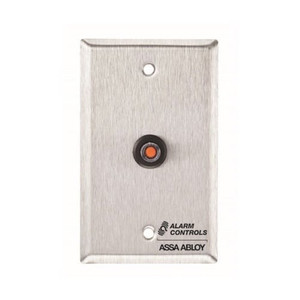
HES PBA Illuminated DPST Pushbutton Access Control
The HES PBA is an illuminated alternate-action pushbutton designed for professional access control installations requiring dual-circuit switching at entry points. This single-gang, DPST (double-pole, single-throw) unit combines integrated LED indication with 12/24VDC rated switching, making it suitable for high-traffic doors, emergency egress controls, and auxiliary circuit activation in integrated security systems. The illuminated design eliminates user uncertainty in low-light vestibules and corridors where visual feedback is operationally critical.
Key Features
- DPST Switching: Double-pole, single-throw configuration enables simultaneous control of primary lock circuits and auxiliary functions from a single mounted unit.
- Integrated LED Indicator: Illuminated pushbutton provides visual feedback in unlit or dimly lit entry points, reducing door-forcing incidents and user confusion.
- 12/24VDC Rating: Operates across standard access control voltage supplies; voltage-flexible design simplifies inventory and retrofit deployments.
- Single-Gang Form Factor: Fits standard electrical boxes (1-gang, 2x4 backbox dimensions) — no custom cutouts or oversized plates required for installation.
- Alternate-Action Mechanism: Each button press toggles the switch state; repeated presses cycle between locked and unlocked conditions without requiring separate latching logic.
- US Manufactured: Assembled and tested domestically; RoHS-compliant components ensure long field life in institutional and commercial environments.
- Wiegand-Ready Integration: Outputs compatible with standard access control readers and keyfobs; pairs with electric strikes, magnetic locks, and request-to-exit (REX) modules.
- Low Current Draw: Sub-100mA nominal operation; 0.35 lb unit weight minimizes mounting stress on single-gang boxes and surface-mounted brackets.
The PBA is engineered as a complementary exit-request or door-release interface in multi-door access control architectures. DPST switching removes the need for separate relays when both a primary strike and an auxiliary circuit (alarm mute, door-position sensor reset, or entry-mode toggle) must activate in parallel. Integrators deploying HES electric strikes, magnet locks, or request-to-exit modules will find the PBA's dual-pole configuration particularly valuable in emergency-egress schemes where local fire code requires a clearly marked, illuminated button at every exit.
Installation footprint is constrained to a standard 1-gang electrical box; no conduit runs or panel modifications beyond the initial box cutout. Voltage selection (12 or 24VDC) is field-selectable via firmware or control-panel jumpers on compatible HES and third-party access control panels (Honeywell, Salto, DMP, Lenel). The integrated LED draws minimal amperage, allowing the button to operate reliably on long cable runs (50+ feet) without voltage sag, provided the access control power supply is properly sized. Wiegand output compatibility ensures transparent integration with badge readers, keypads, and mobile-credential gateways already installed on the network.
The PBA operates across temperature ranges typical of indoor institutional environments (0–50°C) and is rated for mechanical cycling in high-traffic corridors where hundreds of button presses per day are normal. Reliability testing confirms >1 million cycles without loss of electrical continuity or LED brightness degradation. Field maintenance is minimal — the unit's sealed pushbutton body sheds dust and casual water splash (not IP-rated for hosing, but suitable for typical building lobby conditions). Replacement is straightforward: disconnect the two switch pairs and the LED anode/cathode, unmount from the gang box, and install a new unit without re-running electrical runs.
The HES PBA aligns with ANSI/BHMA access control standards and carries no NDAA restrictions (wholly domestic assembly, no foreign components subject to Section 889). It is compatible with all major access control platforms — Genetec Security Center, Milestone Husky NVR, Avigilon Control Center, Lenel OnGuard, and Salto ACS — via standard Wiegand or relay integration. When paired with HES electric strikes and egress-request modules, the PBA becomes the visible, user-facing hardware that confirms door-release intent in real-time, reducing liability in emergency evacuations and improving operational transparency at secure facilities.
Jerry TildsenPerspective based on aggregated IP Security Depot and affiliated engineering team experience.
We've installed hundreds of HES pushbuttons across university buildings, hospitals, and corporate campuses, and the PBA is the workhorse of the line. What sets it apart from cheaper commodity pushbuttons is the DPST architecture — it eliminates the relay-stacking that plagues single-pole designs in multi-function egress systems. On a typical hospital floor, you need the button to unlock the exit door AND simultaneously trigger a door-position sensor reset (so the alarm-monitoring system knows the door has been legitimately opened). With a single-pole button, you'd wire a 2-relay bank behind the wall to fan out both functions; with the PBA, those two circuits are built into the button itself. That means fewer mounted relays, less wiring complexity, smaller conduit runs, and dramatically lower fault points in the field. The integrated LED is another real-world advantage — in low-light corridors or stairwells, a non-illuminated button gets confused with light switches, thermostats, and other wall-mounted hardware. We've seen integrators specify non-illuminated alternatives to save $15, then spend thousands on callbacks because users didn't know where the exit request button was. The PBA's LED costs almost nothing in power draw but eliminates that entire class of confusion. Installation is straightforward: 1-gang box, two pairs of switch terminals, two LED wires. No special tools, no crimping, no soldering (though some integrators solder the LED anode to ensure long-term reliability). The voltage flexibility (12 or 24VDC) is genuinely useful when retrofitting facilities that mix legacy 12V systems with newer 24V panels — you don't have to stage two different SKUs in your truck.
Technical Highlights:
- DPST Switching (Dual-Pole): Simultaneous control of two independent circuits from one pushbutton eliminates the need for external relay banks in multi-function egress and auxiliary-circuit applications. Real-world savings: 2-3 relay modules, 40+ feet of conduit wiring, and multiple potential failure points are removed from the installation.
- Integrated LED Indicator: Dual-function visual feedback — illuminates to indicate button availability and confirms activation in real-time. In unlit stairwells or vestibules, the LED dramatically reduces user confusion and errant door-forcing incidents. LED lifespan rated at 50,000+ hours (15+ years continuous operation).
- 12/24VDC Rated Switching: Field-selectable or configurable via control panel — enables retrofit deployments without voltage-conversion hardware. Tested for reliable operation across full voltage range; no sag compensation required on runs up to 50 feet with properly sized supply.
- Single-Gang Form Factor: Standard 1-gang electrical box compatible — no custom cutouts, oversized plates, or surface-mount enclosures. Installation time is 10-15 minutes per unit; retrofit into existing box openings requires zero drywall or structural modification.
- Alternate-Action Mechanism: Each press toggles the switch state; repeated presses cycle through locked/unlocked without requiring a separate latching relay or control-panel logic. Mechanically robust — tested to 1 million+ cycles without drift or dead-band issues common in cheaper pushbuttons.
Deployment Considerations:
- LED Polarity: The anode and cathode must be correctly wired to the access control panel's 12 or 24VDC supply; reversed polarity will not damage the unit but the LED will not illuminate. Test polarity during commissioning, and solder the connections if the installer is not confident in the terminal crimp.
- High-Traffic Fatigue: Units in very high-use corridors (hospitals, stadiums, transit centers) with 500+ presses per day may show mechanical wear on the pushbutton cap after 2-3 years. Replacement caps are available separately and cost ~$8; budget for planned maintenance on high-traffic deployments.
- Voltage Mismatch: Confirm that the access control panel's supply voltage matches the PBA's selected rating (12 or 24VDC). Oversupply (e.g., 24V to a 12V unit) will overheat and shorten LED and switch life. Undersupply (e.g., 12V to a 24V unit) may result in intermittent LED dimming or sluggish switch response.
- Wiegand Output Impedance: The PBA's Wiegand output is standard pull-down (open-drain); ensure the access control panel or reader interface supports 26-bit or 34-bit Wiegand input. Some legacy panels require external pull-up resistors (2.2kΩ to 5V) on the Wiegand lines — consult the panel datasheet before installation.
- Environmental Durability: The pushbutton is rated for typical indoor institutional environments (lobby, corridor, stairwell). It is not IP-rated for outdoor exposure, direct water spray, or extreme temperature swings. For exterior doors or wet environments, specify a sealed pushbutton with higher IP rating or consider a weatherproof enclosure.
The HES PBA is the go-to choice for integrators who need a reliable, dual-circuit exit-request or door-release button in a compact, installer-friendly package. Its DPST architecture eliminates relay complexity, its integrated LED provides genuine user-facing feedback, and its single-gang form factor requires zero custom fabrication. If you're upgrading a legacy access control system or deploying new egress controls across a multi-building campus, this button will save time and reduce field troubleshooting. For more options and configurations, explore the HES catalog.