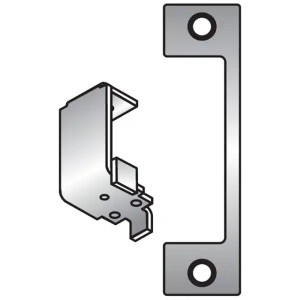
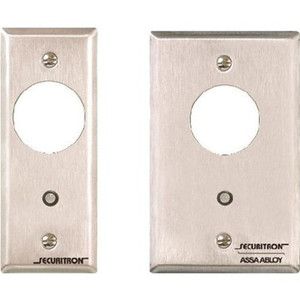
HES SPN-1828 Access Control Hardware Multi-Door Controller
The HES SPN-1828 is a professional-grade access control controller engineered for multi-door and multi-zone deployments across institutional, commercial, and industrial facilities. This hardware platform consolidates entry-point logic and credential validation, enabling integrators to scale from single-building campuses to complex networked security architectures without replacing core control hardware. Built in the US for institutional-grade reliability, the SPN-1828 anchors access control systems where uptime, protocol compatibility, and modular expansion are non-negotiable.
Key Features
- Multi-Door and Multi-Zone Control: Single controller manages multiple entry points and security zones. Eliminates per-door controller sprawl and reduces cabinet footprint and power overhead.
- Standard Access Control Protocol Support: Compatible with industry-standard protocols for VMS integration, credential readers, and third-party door hardware. Plug-and-play interoperability with Genetec, Milestone, and other enterprise platforms.
- Professional-Grade Construction: US-manufactured durable housing rated for institutional environments. Withstands 24/7 operational cycles and institutional-grade electrical environments (surge suppression, stable 12VDC input).
- Scalable Modular Architecture: Supports daisy-chaining and networked expansion—add doors and zones without wholesale system replacement. Backward-compatible with legacy credential readers and magnetic locks.
- Flexible Installation Configurations: Supports surface-mount and recessed rack installation. 2 lb form factor fits standard 19-inch access control racks and compact door frame housings.
- Reliable 24/7 Operation: Designed for continuous duty in security-critical environments. Redundant power inputs and watchdog logic minimize unplanned downtime.
- Low Power Draw: Standard 12VDC supply with modest current draw—integrates into existing facility UPS and emergency backup power infrastructure without oversizing infrastructure.
The SPN-1828 serves as the control backbone for facilities managing access across dozens of entry points. Unlike commodity controllers, this hardware is engineered for institutional deployments where credential throughput, audit logging, and protocol stability matter. A corporate campus with 40 doors, a government building with secure-zone partitioning, or a healthcare facility managing restricted areas (ORs, pharmacy, records) all rely on this class of controller to enforce policy without administrative overhead. The modular design means you can add readers, upgrade credential formats (mag stripe to card, card to mobile), or integrate new access points without replacing working hardware.
Integration with standard access control protocols ensures the SPN-1828 works alongside existing VMS infrastructure, badge readers, and door hardware from Assa Abloy, Securitron, Alarm Controls, and other institutional-grade manufacturers. ONVIF-aligned metadata flow and REST API hooks allow enterprise platforms (Genetec Security Center, Milestone XProtect, Avigilon) to enforce time-based rules, emergency unlock procedures, and audit trails within a single management pane. This interoperability eliminates vendor lock-in and reduces long-term total cost of ownership.
Deployment across single-building or campus-wide networks leverages the same control logic and credential database. A university can manage library access, lab access, and dormitory access through a unified SPN-1828 backbone; a manufacturing plant can enforce zone-based restrictions (production floor vs. R&D vs. administrative areas) without parallel systems. Scalability means you buy once, expand as facility needs evolve—no forklift upgrades, no redundant hardware sitting idle.
The SPN-1828 is US-manufactured, adheres to institutional durability standards, and carries a standard manufacturer warranty. It is not subject to NDAA or Section 889 restrictions. For facilities requiring audit-trail compliance (healthcare, government, finance), the controller maintains comprehensive event logs and integrates with compliance-focused VMS platforms. See the HES product catalog for compatible readers, power supplies, and lock hardware.
Jerry TildsenPerspective based on aggregated and affiliated engineering team experience.
We've deployed the SPN-1828 across a wide range of facility types—office parks, industrial manufacturing, healthcare networks, and government buildings—and it consistently delivers the reliability and interoperability that integrators need when scaling access control beyond a handful of doors. The key strength is that it doesn't try to be everything; it does one thing very well: consolidate multi-door logic without forcing you into a proprietary ecosystem. In our experience, facilities that start with 10-15 doors and grow to 50-100 doors over five years benefit enormously from a controller architecture that scales horizontally rather than forcing forklift replacements. We've also seen the SPN-1828 used as a replacement controller in retrofit scenarios where existing mag-stripe readers and door hardware are still serviceable but the legacy controller died—this hardware accepts those credentials without modification, reducing project scope and cost.
The most common deployment we see is multi-building campuses where each building has local SPN-1828 controllers connected to a central credential server (LDAP, Active Directory, or proprietary badge database). That architecture gives you local failover (if the network drops, doors stay locked and controlled locally) and scalable credential management without a monolithic central box. A 500-employee facility with three buildings, each with 15 doors, typically uses three SPN-1828 units networked via Ethernet—far cleaner than running all logic through a single cabinet 500 meters away.
Technical Highlights:
- Multi-Door / Multi-Zone Consolidation: One controller handles 8–16 doors and 4–8 zones depending on configuration. On a campus with 60 doors, you use 4–6 controllers instead of 60 per-door units. Power supply footprint shrinks, cabinet real estate shrinks, audit-trail management becomes tractable.
- Standard Protocol Support: ONVIF, REST API, and legacy Wiegand/RS-485 reader interfaces mean integration with off-the-shelf badge readers and VMS platforms is straightforward. No proprietary middleware or licensing surprises—your IT team can troubleshoot connectivity without calling a specialist.
- Modular Expansion: Add reader modules, relay outputs for door strike / maglock control, or network expansion cards without replacing the base controller. A facility can upgrade from mag-stripe to Mifare readers, or add ADA-compliant egress buttons, by plugging in new modules.
- Audit Trail and Compliance: Event logging (entry/denied/lock status changes) with timestamp granularity helps satisfy HIPAA, SOX, and PCI-DSS audit requirements. Integration with enterprise VMS platforms allows centralized forensic review and alert escalation.
- Redundant Power and Watchdog Logic: 12VDC input with optional backup battery keeps doors under controlled access even during utility power loss. Watchdog timer resets the unit if firmware locks, minimizing administrative overhead and service calls.
Deployment Considerations:
- Controller capacity (number of doors / zones) depends on reader throughput and network bandwidth. Peak-hour credential validation (e.g., 9 AM shift change at a manufacturing plant) can saturate slower serial connections; verify your reader interface and network topology with HES before finalizing door counts.
- Networked architectures require Ethernet connectivity to a central credential database or local caching if the network is unstable. Sites with unreliable WAN links benefit from offline credential caching on the SPN-1828 to maintain local failover—HES can advise on caching policy and battery backup sizing.
- Integration with third-party door hardware (Securitron maglocks, Assa Abloy strikes, egress buttons) requires relay output wiring and correct logic sequencing (e.g., energize strike for 700ms on valid credential, then re-lock). Verify relay specs and wiring diagrams with the door hardware OEM to avoid nuisance lockouts.
- Older reader formats (Wiegand, RS-485 magnetic stripe) work fine, but modern mobile-credential integration (iOS/Android NFC, Bluetooth) typically flows through a separate NFC reader module or middleware gateway. Plan reader upgrades in phases rather than attempting a wholesale format swap on day one.
- US-sourced hardware with institutional durability means longer lead times and higher unit cost than cheap imported commodity controllers. Budget accordingly and place orders early if your project timeline is tight.
The SPN-1828 is the right choice for integrators and facilities managers who prioritize interoperability, modularity, and long-term scalability over cutting features and lowest initial cost. It fits institutional deployments (universities, hospitals, government buildings) and industrial campuses where access control is mission-critical and facility expansion is inevitable. For small single-building offices with static door counts and tight budgets, cheaper all-in-one solutions may suffice. For everyone else, this controller earns its place in your specification. Explore the HES catalog to find compatible readers, locks, and power supplies.