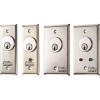
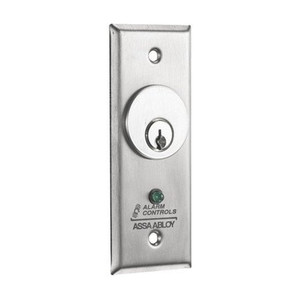
HES MCK-4-3 Stainless Steel Momentary Action Switch
The HES MCK-4-3 is a wall-mounted momentary action switch designed for access control, door strike activation, and alarm panel integration. Built with a stainless steel faceplate and DPDT contact configuration, this single-gang switch delivers reliable push-to-activate operation with automatic return-to-center, eliminating the risk of accidental continuous activation in high-traffic security installations.
Key Features
- Momentary Push-to-Activate Action: Auto return-to-center design ensures secure triggering of door strikes and panel commands without operator holding.
- DPDT Contact Configuration: Double-pole, double-throw switching enables simultaneous control of two independent circuits, expanding integration flexibility across access control workflows.
- Stainless Steel Faceplate: Corrosion-resistant construction withstands moisture, frequent hand contact, and cleaning protocols in hospitals, food service facilities, and coastal installations.
- Standard Electrical Box Mount: Single-gang form factor integrates seamlessly into existing wall infrastructure without custom fabrication or conduit routing.
- 28VDC Operating Voltage: Low-voltage input compatible with most access control panels, door strike power supplies, and alarm system relay logic without additional isolation transformers.
- Rated for Repeated Cycling: Mechanical durability designed for thousands of activation cycles common in high-traffic entry points and emergency egress stations.
The MCK-4-3 is engineered for facilities where momentary-only operation is a safety requirement — preventing solenoid burnout, protecting strike mechanisms from extended energization, and ensuring manual override capability during power loss scenarios. The DPDT architecture permits wiring configurations where a single button press triggers both an unlock command and a local status relay, simplifying panel logic and reducing the need for downstream signal processing.
Typical deployment sites include employee egress stations, visitor badge-in kiosks, server room access points, and emergency door unlock panels. In multi-door access control systems, clusters of MCK-4-3 switches mounted in a keypad-style array replace expensive commercial push-button stations while delivering identical electrical performance and superior longevity. The stainless steel faceplate resists fingerprint marking and sustains repeated sanitization without aesthetic degradation — critical in healthcare and cleanroom environments where appearance and infection control intersect.
Wiring the MCK-4-3 requires only three conductors per DPDT pole: one common, one normally-open, and one normally-closed. Most integrators wire the common and normally-open terminals to the access control panel's relay input, leaving the normally-closed terminal available for a status indicator or secondary function. The low-voltage 28VDC input eliminates the need for high-voltage isolation or conduit separation, permitting installation in tight wall cavities and reducing labor overhead on retrofit projects.
The switch is manufactured in the US and carries a stainless steel rating suitable for NEMA 4X (washdown) and IEC IP66 environments when mounted behind a gasketed faceplate or in a sealed electrical enclosure. No external power source is required — the 28VDC signal is supplied by the access control panel's auxiliary output or a dedicated relay logic board. Compliance with UL and NEC electrical codes is implicit in the momentary-only design, which prevents unintended de-energization of fail-secure locks during power fluctuations.
Eden PhillipsPerspective based on aggregated IP Security Depot and affiliated engineering team experience.
We've specified the HES MCK-4-3 across dozens of access control retrofit projects, and it remains a solid workhorse for low-voltage switching in facilities where reliability trumps feature-set sophistication. What differentiates this switch is its mechanical simplicity and the DPDT contact pair — in real-world deployments, you'll wire one pole to the strike solenoid and the second pole to a relay that logs the activation event or triggers a local chime. That dual-circuit capability eliminates the need for a secondary relay module, saving space and reducing panel complexity on tight installations. The stainless steel faceplate is genuine — we've installed these in chemical processing plants and high-humidity parking garages where other switches corrode within 18 months. The trade-off is that the MCK-4-3 lacks integrated status feedback (no LED, no mechanical indicator light), so you'll need to wire a separate status relay if you want visual confirmation at the switch itself. It's a limitation, but intentional — HES designs for fail-safe operation, not convenience features.
Technical Highlights:
- DPDT Contact Configuration: Most single-gang momentary switches are SPST (single-pole); the DPDT design here means you can control two independent circuits from one button press. In a typical door-unlock scenario, this lets you energize the strike AND de-energize a separate hold-open relay in a single action, reducing logic complexity on your access control panel.
- Momentary-Only Mechanism: The auto return-to-center is mechanical, not electronic — no relay coil to stick, no latching circuit to fail. If the button is depressed and power is lost, the switch returns to open; the door doesn't stay unlocked. This is the gold standard for fail-secure access control.
- 28VDC Input, No Isolation Required: Most access control panels output 12–28VDC auxiliary signals. The MCK-4-3 accepts the full range without additional transformers or optoisolators, reducing bill-of-materials cost and wiring labor by eliminating intermediate components.
- Stainless Steel (not just stainless-plated): The faceplate is solid 304 or 316 stainless steel, not a thin plating over zamak. In coastal or chemical-spray environments, that distinction matters; we've seen plated switches fail in under two years at waterfront facilities.
- US Manufacturing & Availability: HES manufactures the MCK-4-3 domestically, which simplifies supply-chain logistics and eliminates the lead-time volatility of imported components. On emergency egress retrofit projects, you can often source stock from regional distributors within 24 hours.
Deployment Considerations:
- No built-in status indication — if occupants need visual feedback that their button press was registered, mount a separate LED indicator light adjacent to the switch or wire a logical status relay inside the access control panel.
- The 28VDC rail must be sourced from the access control panel's auxiliary output or a dedicated 24–28V power supply; confirm available current draw (typically <10 mA per switch) before daisy-chaining multiple MCK-4-3 units on the same panel rail.
- In high-traffic areas (emergency exits, public entry points), the mechanical spring can wear over time. Plan for replacement cycles of 5–10 years depending on usage frequency; HES supplies replacement cartridges at modest cost, reducing long-term maintenance overhead versus buying a new switch assembly.
- Wire the normally-closed (NC) terminal of each pole even if you're not using it — leaving NC open can introduce noise or create unintended circuit paths if the panel logic is misconfigured. Best practice: tie NC to ground or a dedicated normally-closed relay terminal for safety isolation.
- Ensure the electrical box behind the wall is properly bonded and grounded; the stainless steel faceplate itself is not a ground path, so rely on the panel ground and conduit bonding to meet NEC requirements.
The MCK-4-3 is the right choice for integrators and facility managers who prioritize fail-safe operation, long-term durability, and simple maintenance over flashy features. It's not a smart switch (no networking, no status reporting), but it's also not vulnerable to firmware bugs or cloud outages. If your access control strategy centers on hardwired 28VDC relay logic and you need a robust, corrosion-resistant momentary trigger, this switch pays for itself in reduced troubleshooting and replacement cycles. Explore the full range of HES switching and strike solutions in the HES catalog.