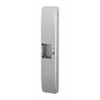
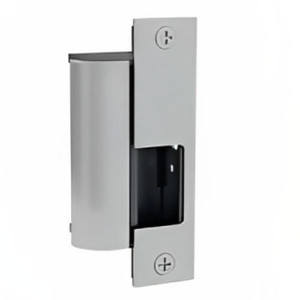
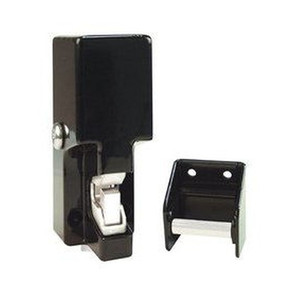
HES 9700-630-LBSM Electromechanical Access Control Device
Overview
The HES 9700-630-LBSM is a purpose-built electromechanical access control device engineered for secure door and entry point management in commercial and institutional environments. Part of the HES 9700 series platform, this controller delivers proven reliability in high-traffic security applications where consistent access control integration is critical to facility operations. The LBSM configuration is optimized for specific mounting and operational scenarios, ensuring compatibility with diverse facility layouts and existing security protocols.
Key Features
- Electromechanical Design: Mechanical actuation ensures reliable door control independent of software state — power loss or network fault won't leave doors unsecured or inaccessible. This is essential in mission-critical facilities where access must degrade gracefully rather than fail hard, maintaining physical security even during infrastructure outages.
- 9700 Series Platform: Established ecosystem with deep integration support across major access control management systems. This reduces deployment time and eliminates protocol or driver incompatibility risk when scaling across multiple facilities — you're not pioneering integration, you're leveraging thousands of hours of field-proven compatibility.
- LBSM Configuration: Specialized variant tailored for particular mounting or operational requirements. This allows you to select the exact form factor and electrical behavior your facility layout demands without overspecifying capacity or forcing hardware compromises.
- Commercial-Grade Construction: Built for continuous operation in demanding security environments. The unit withstands the mechanical wear of frequent door cycles and the electrical noise of busy, mixed-protocol buildings — no premature failure from normal wear.
- Standard Integration Architecture: Compatible with established access control system frameworks and protocols. Integrates into existing credential readers, controller hardware, and network management platforms without requiring custom drivers or middleware translation — simplifies procurement and support.
- Enterprise Deployment Proven: Installed track record across corporate offices, educational institutions, healthcare facilities, government buildings, multi-tenant properties, data centers, and secure document storage. This validates functional reliability and field durability across real-world conditions spanning diverse threat models and operational tempos.
Integration and Compatibility
The 9700-630-LBSM (often searched as 9700 630 LBSM) integrates as a core component within coordinated access control systems. When planning deployment alongside a broader access control platform, confirm that your reader technology, controller architecture, and network topology align with the device's electrical and protocol requirements. Cross-reference the datasheet against your facility's power delivery and signal routing specifications — mismatched electrical interfaces or incompatible reader protocols are the most common deployment delays. Work with your system integrator to validate form factor fit and control logic against your specific layout and credential type before ordering.
When to Choose a Different Model
If your facility requires a different mounting configuration, electrical interface, or specialized reader technology support, explore alternative variants within the HES 9700 family. Contact your system integrator or HES technical support to validate form factor and control logic against your specific layout and credential type. The 9700 series offers multiple configurations — choosing the correct variant upfront eliminates rework during commissioning.
Frequently Asked Questions
Q: What happens to door control if the network fails or power is lost?
A: The electromechanical design of the 9700-630-LBSM means door control continues to function independently of software state or network connectivity. Access decisions degrade gracefully — the device defaults to a fail-safe posture rather than locking users in or leaving doors unsecured. This is why electromechanical controllers remain essential in mission-critical facilities.
Q: Is the 9700-630-LBSM compatible with my existing access control system?
A: The 9700 series platform supports integration with major access control management systems via standard protocols and established driver support. However, you must verify compatibility with your specific reader technology, network topology, and controller architecture. Request the datasheet and cross-reference it against your system specifications before ordering.
Q: What is the difference between the LBSM variant and other 9700 models?
A: The LBSM configuration is specialized for particular mounting or operational requirements — form factor, electrical interface, or control logic tailored to specific facility layouts. If you are unsure which variant matches your facility, contact your system integrator to validate the correct model against your physical layout and operational needs.
Q: What types of facilities typically deploy the 9700-630-LBSM?
A: The 9700-630-LBSM is deployed across corporate offices, educational institutions, healthcare facilities, government buildings, multi-tenant properties, data centers, and secure document storage. Any facility requiring reliable, continuous-duty access control at entry points benefits from the proven field durability and integration maturity of the 9700 platform.
Q: How do I plan integration with my facility's existing access control infrastructure?
A: Work with your system integrator or HES technical support to validate the 9700-630-LBSM against your power delivery specifications, signal routing requirements, reader technology, and network topology. Mismatched electrical interfaces or incompatible reader protocols are common integration delays — validate before ordering.
Q: What mounting configurations does the LBSM support?
A: The LBSM variant is optimized for specific mounting scenarios. Refer to the datasheet for exact form factor, mounting points, and electrical interface details. If your facility requires a different mounting configuration, explore alternative variants within the HES 9700 family with your integrator.
Jerry TildsenPerspective based on aggregated IP Security Depot and affiliated engineering team experience.
The HES 9700-630-LBSM is a textbook example of why electromechanical access controllers remain the backbone of high-assurance facility security. The architecture here is straightforward and honest: mechanical actuation means the device does what it's told to do regardless of whether the network is up, the software is responsive, or power is marginal. In facilities where access denial has operational consequences — data centers, hospitals, government buildings, multi-tenant properties — this kind of fail-safe mechanical certainty is non-negotiable.
Technical Highlights:
- Electromechanical Actuation: Door control operates independently of software state and network connectivity. Power loss or network fault defaults to fail-safe, not fail-open or fail-locked. Real deployment benefit: you don't wake up at 3 AM to find all doors locked because a network card failed, nor do you have a security breach because the controller lost power.
- 9700 Platform Maturity: Established ecosystem with deep integration support across major access control management systems. This means reduced deployment risk, shorter integration cycles, and vendor support that already understands your system architecture. Real benefit: your integrator isn't writing custom drivers; they're following a playbook.
- LBSM Form Factor Specialization: Tailored configuration for specific mounting and operational requirements. Real benefit: you get the exact electrical interface and mechanical fit your facility layout demands without overspecification or underutilization — no wasted capacity, no adaptation hardware.
Deployment Considerations:
- Validation before order is critical. The LBSM variant is purpose-built for specific mounting and electrical scenarios. If your facility's layout, power delivery, reader technology, or network topology doesn't match the published specifications, you will encounter integration delays or rework during commissioning. Cross-reference the datasheet against your infrastructure specs with your integrator before committing.
- Network and power failures are the reality, not the exception. The electromechanical design handles these gracefully, but only if the device is wired correctly and the fail-safe behavior is understood by operations staff. A poorly documented integration can lead to confusion during an outage — ensure your facility team knows the expected access behavior when infrastructure fails.
The 9700-630-LBSM is the right choice for any commercial or institutional facility where access control must remain reliable and predictable even when the network or power infrastructure falters. Government buildings, healthcare campuses, multi-tenant office complexes, and data centers all benefit from this kind of mechanical certainty. If your facility can tolerate network-dependent access (cloud-only, software-first), you may be overspecifying — but if you need access to work during an outage, the 9700 platform is the proven answer.