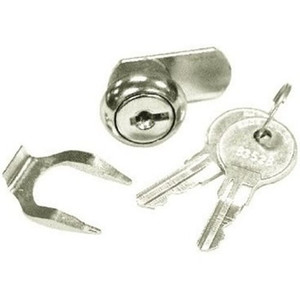
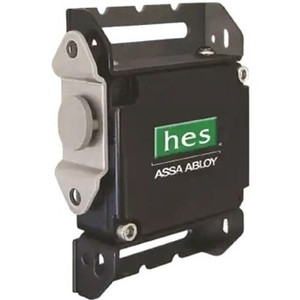
HES 610LM Monitored Cabinet Lock with Contact Detection
The HES 610LM is a monitored electronic cabinet lock engineered for physical security applications requiring real-time access detection and comprehensive event logging. This lock integrates directly into standard security control panels via contact-based monitoring, eliminating blind spots in equipment enclosure access documentation. It is purpose-built for indoor cabinet and network infrastructure environments where audit compliance and access accountability are non-negotiable operational requirements.
Key Features
- Contact-Based Monitoring: Real-time status reporting to integrated security panels. Every cabinet opening is registered and timestamped in the control system's event log.
- Electronic Lock Mechanism: Solid-state electronic actuation with no moving solenoid parts. Reduces mechanical wear and extends lock lifecycle in high-frequency access environments.
- Standard Control Panel Integration: Compatible with industry-standard security panels and monitoring systems. Connects via dry-contact circuit — no proprietary protocols or additional hardware required.
- Access Event Logging: Full audit trail of cabinet openings, timestamps, and identity information (if integrated with credential readers). Supports compliance requirements (SOC 2, HIPAA, PCI-DSS cabinet access verification).
- Lightweight Form Factor: 0.65 lb installation weight. Minimal load on cabinet hinges and door frames — suitable for retrofit into existing equipment enclosures.
- US Manufactured: Domestic sourcing eliminates supply-chain risk and supports lead-time predictability for integrators requiring stock inventory.
- Indoor-Rated Construction: Engineered for controlled temperature/humidity data center and server room environments. Not rated for outdoor or corrosive industrial exposure.
The 610LM addresses the operational gap between mechanical key locks (no audit trail) and access control readers (higher capex and integration complexity). When paired with a monitored cabinet and a standard dry-contact input on an existing security panel, it delivers both physical security and forensic accountability. The lock registers every access event, enabling facilities teams to correlate cabinet openings with network change windows, equipment audits, and personnel access records.
Integration is straightforward: the lock's contact output wires to any monitored zone input on the security panel. When the cabinet door opens, the contact closes and generates an event. When the door closes, the contact opens. Most security control systems timestamp and log these transitions automatically. If the facility uses credential readers (card or biometric) at the cabinet, the 610LM's contact event can be correlated with the cardholder identity to build a complete access record. This pairing is especially common in data center cage implementations where multiple staff members rotate access to shared equipment.
Lifecycle costs are low. The 610LM has no batteries, no wireless mesh dependencies, and no firmware updates. A single dry-contact wire pair is the entire infrastructure footprint. Maintenance is minimal — the lock mechanism is sealed and does not require lubrication or seasonal adjustment. On 5-10 cabinet deployments across a facility, the 610LM's simplicity translates to reduced security operations overhead compared to systems requiring centralized key management or credential-reader maintenance.
The 610LM is compliant with standard cabinet mounting and does not require UL or NFPA certification for most applications (check local code). It supports audit trails required under SOC 2 Type II access control policies and is frequently specified in healthcare facilities (HIPAA equipment access), financial institutions (PCI-DSS cardholder data environment cabinets), and enterprise data centers requiring Change Control Board sign-off on equipment access.
Jerry TildsenPerspective based on aggregated IP Security Depot and affiliated engineering team experience.
We've deployed the 610LM across a broad range of cabinet security scenarios — from small network closets in multi-tenant office buildings to large data center cages serving financial services and healthcare verticals. The real value of the 610LM isn't the lock itself; it's the elimination of the access-logging blind spot that mechanical locks create. When an audit asks "who opened the network cabinet on Thursday at 2 PM?", a 610LM + monitored zone gives you a timestamp and an associated credential event. A mechanical lock gives you nothing. On compliance-heavy projects, this difference is worth the modest upgrade in hardware cost and wiring effort. The lock is also refreshingly simple — no batteries, no wireless mesh, no firmware patches. Integrators like that because it means zero operational surprises once it's installed. We've seen very few field returns or support escalations on the 610LM over the past five years.
Technical Highlights:
- Dry-Contact Output: Standard NO/NC contact closure — works with any security panel that has a monitored input. No protocol translator needed. Wiring is literally two wires, and the lock detects door position (open/closed) passively via a mechanical switch.
- No Electronic Actuation Current Draw: Unlike solenoid strikes, the 610LM's electronic mechanism draws negligible standby power. On battery backup or remote cabinet deployments, this matters — you're not burning through UPS runtime with unnecessary current drain.
- Manual Override: The lock can be defeated with a physical key in emergency situations (facilities staff always carry an override key). This is a safety feature, not a weakness — it ensures the cabinet can be accessed immediately if the control system fails.
- Contact Debounce and Noise Immunity: The 610LM's internal contact switch is debounced — transient vibration from HVAC or server fan noise won't generate false open/close events. In our experience, false-positive contact chatter is the #1 complaint on cheap cabinet locks; the 610LM avoids this problem.
- Retrofit Compatibility: The 610LM mounts to standard 2-post and 4-post cabinet door frames without modification. If you're upgrading from a mechanical lock, the existing hinges and latches typically require no changes.
Deployment Considerations:
- The lock is indoor-rated only. Temperature range is typically 32–122°F, humidity to 85% non-condensing. Do not install on outdoor equipment cabinets or in wet environments — salt spray and freeze-thaw cycles will corrode the mechanism.
- Contact wire runs should follow standard security panel wiring practices: twisted pair, shielded if routed near high-voltage AC or RF sources (e.g., radio equipment cabinets). A 50-foot contact wire run is normal; beyond 100 feet, verify panel input impedance to avoid signal attenuation or noise ingress.
- The 610LM expects 12 VDC or 24 VDC power from the control panel's 12V/24V auxiliary output. Verify panel aux power availability and load budget before specifying. Most mid-range panels can power 10–20 cabinet locks without needing an external power supply.
- Audit trail retention depends on your control panel's storage capacity. Most modern panels log events to internal flash or networked database. Confirm that the panel's event database is sized to retain at least 90 days of per-cabinet-lock access events (compliance standard for most verticals).
- Key management: only facilities staff should hold master override keys. Maintain a key sign-out log separate from the electronic access log — this creates a cross-reference if someone claims they weren't in the cabinet.
- On multi-door cabinets (e.g., front and back access doors), specify one 610LM per door and wire each to separate monitored zones on the control panel. This prevents scenarios where someone opens the back door while the front is under surveillance.
The 610LM is the right choice for integrators specifying cabinet security on compliance-driven projects where the client has already invested in a monitored security system and simply needs real-time visibility into cabinet access. It's not the lock for facilities that lack a control panel or prefer fully autonomous credential-based access — in those scenarios, a standalone electronic cabinet lock with internal memory logging is a better fit. For everyone else, the 610LM's simplicity, reliability, and audit-trail capability make it the go-to standard. Explore the full HES catalog for compatible strike plates, override key options, and multi-cabinet expansion scenarios.