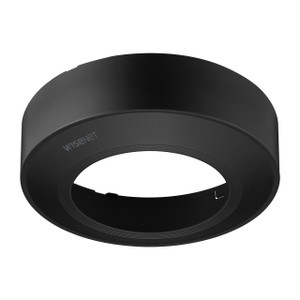
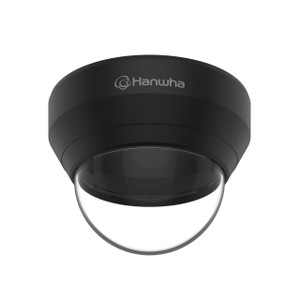
Hanwha SPI-35B Black Body Calibration Device
Overview
The Hanwha SPI-35B is a precision black body calibration reference designed for thermal imaging deployments where temperature measurement accuracy is non-negotiable. If you're running a fever-screening or industrial thermal camera setup and need a traceable, stable reference source to keep readings honest, the SPI-35B is what goes in front of the camera. It provides a 3-inch square emitting aperture with emissivity greater than 0.95 across 3µm to 14µm — covering the full spectral band relevant to uncooled thermal sensors. It warms up in under five minutes, which matters in operational environments where calibration can't be a production bottleneck. Internal links: explore the full Hanwha surveillance line or browse thermal cameras for compatible imaging devices.
Key Features
- 3-Inch Square Emitting Aperture: The 3" aperture is sized to fill the field of view of standard thermal cameras at close range, giving the sensor a clean, uniform reference surface rather than a pinpoint hot spot. Undersized references cause edge-averaging errors — this aperture avoids that.
- Settable Temperature Range 30°C to 45°C: The adjustable range covers the core human body temperature band (roughly 36–38°C), making the SPI-35B directly relevant to elevated skin temperature screening setups. You set the target above ambient; the device won't allow a setpoint below the room temperature to prevent condensation and calibration drift.
- ±0.15°C Absolute Accuracy: This is the figure that matters for regulatory or operational sign-off. At ±0.15°C, the SPI-35B is tight enough to validate camera accuracy claims in the ±0.5°C range — you have sufficient margin to separate device error from camera error. Also, uniformity holds to ±0.15°C across the central 1.5" × 1.5" region, so the center of the aperture is a clean reference, not just the perimeter.
- 0.1°C Setpoint Resolution: Fine setpoint control means you can position the reference temperature precisely within the detection threshold band of your thermal system — useful when tuning alert triggers.
- Built-in Ambient Temperature and Humidity Sensors: The ambient sensor covers 0°C to 50°C (±2°C) and the humidity sensor covers 0–100% RH (±5%). These let the device log environmental conditions alongside calibration runs, which is essential for any deployment that requires documentation of operating conditions — airport screening, medical facilities, or audit-ready industrial sites.
- Under 5-Minute Startup: Quick thermal stabilization means calibration checks can happen at shift start, after camera repositioning, or following any environmental change without significant downtime.
- 18V / 1A DC Power with Included AC Adapter: Self-contained power — no special lab supply required. Draws under 18W maximum. The included adapter means it's ready to deploy out of the box.
- Operating Temperature 22°C ±6°C: The SPI-35B is designed for controlled indoor environments, not outdoor or harsh-industrial use. Plan for a stable, conditioned space — this is a calibration instrument, not a ruggedized field tool.
Integration and Compatibility
The SPI-35B pairs with thermal cameras capable of radiometric temperature measurement. It is positioned in the camera's field of view as a fixed-temperature reference; the camera software uses the known emissivity (>0.95) and set temperature to compensate for scene variables. Consult your thermal camera selection guide for guidance on pairing calibration sources with radiometric sensors. For multi-camera screening lanes, a single SPI-35B can serve one camera position — verify FOV coverage geometry before finalizing your layout. Browse camera mounts and positioning hardware to get the geometry right.
Frequently Asked Questions
Q: What temperature range can the SPI-35B be set to?
A: The settable range is 30°C to 45°C (86°F to 113°F). The setpoint must be above ambient temperature — the device will not accept a target below room temperature.
Q: What is the absolute temperature accuracy of the SPI-35B?
A: Absolute accuracy is ±0.15°C (±0.3°F), with uniformity of ±0.15°C across the central 1.5" × 1.5" region of the 3-inch aperture.
Q: How long does the SPI-35B take to reach a stable setpoint?
A: Startup time is under 5 minutes to reach stable operating temperature.
Q: What power supply does the SPI-35B require?
A: It requires 18V, 1A DC maximum. An AC adapter is included.
Q: Is the SPI-35B suitable for outdoor or harsh environments?
A: No. The operating temperature is 22°C ±6°C (approximately 61°F to 82°F), making it a controlled indoor calibration instrument only. It is not rated for outdoor or harsh-industrial deployment.
Q: What is the emissivity of the SPI-35B?
A: Average emissivity is greater than 0.95 across 3µm to 14µm — the relevant spectral range for uncooled thermal imaging sensors.
The SPI-35B sits at the front of any serious radiometric thermal deployment — not a camera, not software, but the traceable reference that makes your camera's temperature readings defensible. The ±0.15°C absolute accuracy is the number integrators need to cite when a facility asks whether their screening setup meets a specific detection threshold. Without a calibrated black body in the FOV, you're trusting factory calibration drift curves — and in a screening context, that's a hard conversation to have after the fact.
Technical Highlights:
- ±0.15°C Absolute Accuracy: Tight enough to validate camera specs — most radiometric cameras claim ±0.5°C or better; a ±0.15°C reference gives you the margin to isolate camera error from reference error in a proper calibration chain.
- Emissivity >0.95 (3µm–14µm): High, consistent emissivity across the full uncooled thermal band means the aperture behaves as a near-ideal emitter — the camera sees a predictable, spectrally flat surface, not a variable one that introduces correction uncertainty.
- 0.1°C Setpoint Resolution: Fine enough to bracket the detection threshold precisely — useful when tuning alert triggers at 37.5°C or similar clinical cutoffs where a coarser reference would introduce ambiguity.
Deployment Considerations:
- Operating temperature is 22°C ±6°C — the SPI-35B needs a climate-controlled space. In a screening lane with HVAC variation, monitor ambient conditions; the built-in 0–50°C ambient sensor helps log this, but the device itself isn't rated beyond 28°C ambient.
- The uniform region is the central 1.5" × 1.5" of the 3" aperture. For camera FOV alignment, center the aperture in frame — don't rely on edge regions for accuracy claims.
The SPI-35B is the right choice for airport fever-screening lanes, hospital entry points, and any regulated facility where the calibration chain needs to be documented and auditable. If your thermal deployment is purely perimeter/industrial with no temperature-accuracy requirement, this device adds cost without benefit — but where accuracy matters and needs to be proven, it belongs in the system design.