


Product images are provided for reference and may not represent the exact model, configuration, or included
components.
Overview
SKU:
AT-x530L-18GHXm-10
UPC:
767035222189
Condition:
New
Availability:
Backorder Available — Contact for ETA

Hanwha AT-x530L-18GHXm-10 16-Port PoE++ Switch
Hanwha AT-x530L-18GHXm-10 16-Port PoE++ SwitchThe Hanwha AT-x530L-18GHXm-10 is a enterprise-grade managed network switch purpose-built for security an…
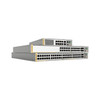
Hanwha AT-x530L-18GHXm-10 16-Port PoE++ Switch
$99,999.99
Your recommended setup
Review items below — quantities update pricing automatically.
Item
Qty
Status
Price
Optional Add-Ons recommended
Services optional
Bundle Summary
Bundle Subtotal:
$0.00
Optional Add-Ons:
$0.00
Services:
$0.00
Total:
$0.00
Overview
SKU:
AT-x530L-18GHXm-10
UPC:
767035222189
Condition:
New
Availability:
Backorder Available — Contact for ETA
Description

Hanwha AT-x530L-18GHXm-10 16-Port PoE++ Switch
The Hanwha AT-x530L-18GHXm-10 is a enterprise-grade managed network switch purpose-built for security and IoT deployments requiring high-density Power over Ethernet delivery. With 16 multi-gigabit PoE++ ports, dual 10G uplinks, and 720W total PoE budget, this switch provides the power and bandwidth needed to support modern IP camera systems, wireless access points, and networked security appliances in mid to large-scale installations.
Key Features
- 16 x 100M/1/2.5/5 Gigabit Ethernet PoE++ ports with automatic speed negotiation
- 2 x 1/10 Gigabit SFP+ uplink ports for high-speed backbone and redundancy
- 720W maximum PoE power budget with flexible per-port configurations
- 200 Gbps switching fabric with 148.8 Mpps forwarding rate for wire-speed performance
- 2 stacking ports enabling daisy-chain clustering and unified management
- Compact 1U rack-mount form factor measuring 441 x 256 x 44 mm
- Low-noise 42 dBA operation ideal for indoor installations
Performance & Power Delivery
This switch combines exceptional packet handling with intelligent power management. The 200 Gbps switching fabric and 148.8 Mpps forwarding rate deliver wire-speed performance across all ports. Latency remains minimal across speed tiers: 8.35µs at 100 Mbps, 7.96µs at 1 Gbps, 7.72µs at 2.5 Gbps, 5.23µs at 5 Gbps, and 2.56µs at 10 Gbps—critical for real-time video streaming and synchronized access control systems.
The 720W PoE budget accommodates diverse device requirements. All 16 ports deliver minimum 7.5W, with scalable support across power levels: 15.4W (all 16 ports), 30W (all 16 ports), 60W (12 ports maximum), and 90W (8 ports maximum). This tiered approach maximizes budget efficiency while supporting high-power PTZ cameras, dual-radio access points, and networked intercoms simultaneously.
Connectivity & Management
Dual SFP+ ports (1/10 Gbps capable) provide flexible uplink options for redundant core connections or high-speed data center integration. Two stacking ports enable seamless expansion—connect multiple units for centralized management and virtual chassis operation without dedicated uplink consumption.
Ideal Applications
- Multi-site security camera deployments with 60-90W powered devices
- Campus and enterprise wireless infrastructure with PoE-powered APs
- Building automation and access control system backbone
- Retail and hospitality multi-camera surveillance networks
- Data center edge switching with 10G uplink requirements
Eden Phillips
The AT-x530L-18GHXm-10 bridges the gap between fixed-power switches and modular core infrastructure. Its 16 PoE++ ports on a single 1U unit deliver exceptional port density—16 ports supporting up to 90W per device on 8 ports represents genuine high-power capability rarely seen at this form factor. The dual 1/10G SFP+ uplinks offer architectural flexibility: run at 1G for cost efficiency or 10G for bandwidth-intensive deployments without sacrificing PoE density.
Stacking capability adds resilience for critical installations. The 42 dBA noise floor suits office-adjacent deployments. Maximum power draw of 970W and heat dissipation of 3317 BTU/h require standard rack cooling but pose no thermal constraints in properly ventilated equipment rooms.
This switch excels in environments where PoE budget and port count matter more than chassis modularity.
Specifications
10/100/1000T (RJ-45) COPPER PORTS:
-
100M/1/2.5/5 GIGABIT PORTS:
16
1/10 GIGABIT SFP+ PORTS:
2
STACKING PORTS:
2*
POE ENABLED PORTS:
16
SWITCHING FABRIC:
200Gbps
FORWARDING RATE:
148.8Mpps
WIDTH X DEPTH X HEIGHT:
441 x 256 x 44 mm (17.36 x 10.07 x 1.73 in)
Mount Type:
Rack-mount
UNPACKAGED WEIGHT:
4.3 kg (9.48 lbs)
PACKAGED WEIGHT:
5.98 kg (13.18 lbs)
PACKAGED DIMENSIONS:
526 x412 x129 mm (20.70 x 16.22 x 5.07 in)
NOISE (DBA:
42
MAX POWER CONSUMPTION (W:
970
MAX HEAT DISSIPATION (BTU/H:
3317
MAX POE POWER (W:
720
POE (7.5W:
16
POE (15.4W:
16
POE+ (30W:
16
POE++ (60W:
12
POE++ (90W:
8
100MBPS:
8.35µs
1GBPS:
7.96µs
2.5GBPS:
7.72µs
5GBPS:
5.23µs
10GBPS:
2.56µs
Have Questions?
Ask an Expert.
RELATED PRODUCTS



System Design, Deployment & Technical Support
Support services and planning resources for commercial surveillance, access control, and infrastructure deployments.
Fixed scope • Fixed price
System Design Assistance
- Get help validating product compatibility
- Coverage requirements
- Storage planning and deployment architecture before you buy.
Deployment & Configuration Support
- Access fixed-scope support for rollout planning
- User setup guidance
- Migration and system standardization across single-site or multi-site deployments
Guides, Tools & Calculators
- PoE requirements
- Storage retention
- Camera selection and deployment methodology