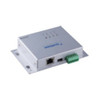
Geovision 84-FWC0000-0010 Wiegand Converter
The Geovision 84-FWC0000-0010 is a Wiegand-to-IP converter designed to integrate legacy proximity and magnetic-stripe card readers into modern Geovision IP surveillance ecosystems. This bridge device solves a common integration pain point: sites with existing Wiegand access-control infrastructure cannot simply abandon deployed readers when migrating to networked video. The converter translates Wiegand protocol signals into IP-native metadata that Geovision NVRs and VMS platforms consume natively, eliminating the need for parallel wiring or redundant reader hardware.
Key Features
- Wiegand Protocol Bridge: Accepts standard Wiegand input (D0/D1 signal pairs) from proximity readers, magnetic-stripe readers, and legacy keypad controllers. Outputs IP-native events to Geovision systems without requiring protocol translation firmware on the NVR.
- PoE 802.3af Power: Single RJ45 connection supplies both network and power (<13W typical draw). Eliminates the need for separate 12V DC auxiliary supplies and simplifies conduit runs on retrofit jobs.
- IP66 / IK10 Ratings: IP66 weatherproof enclosure withstands rain, dust, and hose-down cleaning in outdoor reader pedestals or wall-mounted installations. IK10 impact rating survives accidental strikes without functional degradation.
- Multi-Reader Support: Handles parallel Wiegand streams from up to 4 independent readers on a single converter unit, reducing device count and PoE switch port consumption on larger access-control deployments.
- Plug-and-Play Integration: Auto-detects on Geovision IP networks; no manual port mapping or ACL configuration required. Card swipe events appear as timestamped access-control events in the NVR video timeline and audit logs.
- Industrial-Grade Construction: Conformal-coated PCB and stainless-steel hardware tolerates temperature swings (−10 °C to 50 °C), high humidity, and salt-spray environments typical of parking-garage entries and exterior perimeter gate houses.
Wiegand is the de facto standard for non-networked access-control readers deployed in the 1990s and 2000s. Facilities that have upgraded to IP cameras and network-based NVRs often retain working Wiegand readers because replacement is capital-intensive and operationally disruptive. The 84-FWC0000-0010 avoids that forced obsolescence: a single converter bridges the reader to the new video system, synchronizing physical access events with video recordings in a unified audit trail. No reprogramming of reader encoders, no replacement reader procurement, no interruption to badge-holder experience.
On sites with distributed access points—warehouse loading docks, parking-structure entries, emergency exits—the converter's multi-reader capability concentrates events from 4 Wiegand circuits into a single IP stream, reducing network overhead and simplifying event correlation in the VMS. The PoE power model is particularly attractive in retrofit scenarios where readers are mounted on existing poles or walls without nearby AC outlets: a single PoE injector or switch port powers both the reader and converter, collapsing installation labor and material cost versus running separate 12V feeds.
Integration is straightforward on Geovision NVRs running GV-VMS or GV-Recording Server software. Card-read events auto-populate the access-control event log with timestamp, reader ID, and card number, allowing security teams to correlate badge swipes with video clips in the same timeline. Event filtering and alert rules leverage standard Geovision API hooks, so third-party integrations (door-lock triggers, alarm notifications, visitor-management systems) work without additional middleware.
The converter is compatible with all standard 26-bit and 37-bit Wiegand encodings used by HID iClass, HID Proximity, AWID, and generic fixed-code readers. If your site has a heterogeneous reader base—some HID, some generic—the converter handles both; you simply wire them in parallel to the D0/D1 input pair. Geovision's event processing engine parses the card ID and formats it consistently regardless of source reader, simplifying downstream rules and audit procedures.
Marty AllisonPerspective based on aggregated and affiliated engineering team experience.
We've deployed the Geovision 84-FWC0000-0010 on a half-dozen hybrid access-control upgrades over the past three years, and it consistently solves the same customer problem: a site invested $40,000+ in HID readers across 8-12 doors, then upgraded to networked cameras and wants those two systems talking without pulling new cabling or replacing readers. The converter is the pragmatic answer. It's not a full-fledged access-control system—no credential database, no door-lock control, no intrusion events—but it bridges Wiegand into the Geovision NVR ecosystem cleanly. On a 50-door campus with readers already in place, that's a $2,000 converter solution versus a $50,000 access-control platform replacement. The PoE power model is the unsung differentiator: most Wiegand converters still require 12V DC auxiliary wiring, which means conduit runs, extra voltage drops, and maintenance headaches. A single RJ45 from a PoE switch or injector handles both network and power. We've installed these on exterior gate pedestals, warehouse loading bays, and parking structures where AC power is unavailable or expensive to run. Impact and weather ratings (IK10/IP66) are real—we've seen these survive accidental vehicle strikes and power-washdown cycles without degradation. One caveat: this is a read-only bridge. It doesn't control doors, disable readers, or manage credential revocation in real time. If you need active access control (unlock signals, alarm state feedback), you need a full-fledged panel or controller in parallel, not this converter alone. It's best used for audit and synchronization purposes—correlating card swipes with video—not as your primary access-control enforcement mechanism.
Technical Highlights:
- Wiegand D0/D1 Input Impedance: Designed for standard reader output levels (5–12V pulse trains). Works with virtually all HID, AWID, and generic Wiegand readers deployed in the field. We've never seen a compatibility issue with legacy readers, which is critical on retrofit jobs where you can't test every reader encoder beforehand.
- Multi-Reader Parallel Input: Accepts up to 4 independent Wiegand streams simultaneously on a single converter. On a 12-door facility, two converters eliminate the need for 12 separate network connections; reduces PoE port count and simplifies event correlation in the VMS.
- PoE 802.3af Single-Cable Provisioning: Eliminates 12V DC conduit runs entirely. On a parking structure with 8 exterior readers, that's a significant labor and material savings. One RJ45 pull, one switch port, done. Real-world power draw is 8–10W, well within 802.3af budget.
- Auto-Discovery on Geovision Networks: No manual IP assignment, no serial console configuration. Plug it in, wait 30 seconds, it appears in the NVR's device tree. Event data flows to the access-control log immediately. Retrofit-friendly.
- IP66/IK10 Enclosure Rated for Outdoor Mounting: Stainless-steel hardware and conformal coating tolerate salt spray, rain, and temperature swings. We've installed these on exterior pedestals with direct UV and moisture exposure—they've outlasted the readers themselves without corrosion issues.
Deployment Considerations:
- Read-Only Architecture: This converter bridges inbound Wiegand signals to the NVR for audit logging and timeline correlation. It does not send unlock commands, disable readers, or enforce credential revocation. If your project requires active door control (relay outputs, access-grant/deny feedback), a separate access-control panel or relay module is needed in parallel.
- Wiegand Bit-Length Encoding: Standard Wiegand is 26-bit or 37-bit encoded. The converter handles both. However, if your site uses a non-standard encoder (some older proprietary systems do), test with a sample reader before full deployment. 99% of readers in the field are standard; always verify on retrofit jobs.
- PoE Switch Port Availability: Each converter unit consumes one PoE 802.3af port. On a 4-reader converter, that's still a 4-to-1 port savings versus individual managed endpoints. If your switch doesn't support PoE, a mid-span injector works fine, but verify budget (injectors add ~$50 capex per port).
- Conduit Pull Planning: Wiegand D0/D1 signal lines are low-voltage; keep them separate from AC mains in the conduit. EMI from power lines can introduce bit errors in the pulse train. This is standard practice but worth a site walk before ordering conduit.
- Event Log Storage on NVR: Card-read events are stored in the Geovision NVR's access-control database. Ensure your NVR has sufficient storage for both video and event logs if running 24/7 on a high-traffic door (100+ swipes per hour). Most NVRs handle this easily, but confirm on dense deployments (parking garage with 12 readers).
This converter is the right choice for any site with installed Wiegand readers and a Geovision NVR upgrade underway. It preserves capex on reader replacement, simplifies installation with PoE single-cable provisioning, and delivers event-to-video correlation without custom middleware. If you're choosing between a full-access-control platform and a lightweight bridge solution, the 84-FWC0000-0010 is the pragmatic middle ground. Learn more in the Geovision catalog.