
How to Choose the Right Thermal Security Camera
A technical buyer's guide for security integrators, critical-infrastructure security managers, utility and pipeline operators, and perimeter-protection designers specifying thermal imaging cameras. Covers thermal sensor resolution, DRI (detection / recognition / identification) ranges, lens selection, analytics, environmental ratings, and integration with radar and PTZ cameras.
In This Guide
Thermal cameras see heat signatures regardless of light level, fog, rain, or dust. They detect intruders at distances far beyond what visible-light cameras can cover with IR illumination, and they do not create the privacy friction of visible-light surveillance over residential fences. The tradeoff is that thermal cameras do not identify people. A thermal image shows a human-shaped heat source, which is actionable for detection but not for prosecution. Thermal always pairs with a visible-light camera or PTZ that provides identification after detection. This guide covers the DRI math that determines thermal camera selection and the integration patterns that make thermal deployments work.
Key Specifications Explained
Thermal Sensor Resolution
Thermal sensor resolution is measured in pixels (typically 160x120, 256x192, 384x288, 640x480, or 1024x768). The resolution sets the absolute limit on how far the camera can detect and identify heat signatures. A 384x288 sensor with a 25mm lens detects a person at roughly 500m. A 640x480 sensor with the same lens extends detection to nearly 800m.
Higher thermal resolution costs significantly more. 384x288 is the working mid-range for perimeter surveillance. 640x480 suits critical infrastructure and utilities. 1024x768 is reserved for long-range military/coast surveillance and gas detection applications. Specify thermal resolution to match the detection range required, then size the lens to cover that range.
DRI: Detection, Recognition, Identification
Johnson's Criteria defines three levels of target assessment: Detection (something is there, 1.5 pixels across target), Recognition (person vs vehicle vs animal, 6 pixels), and Identification (specific person, 12 pixels). For each lens and sensor combination, vendors publish DRI ranges for "person" (1.8m tall by 0.5m wide) and "vehicle" (2.3m by 2.3m).
Design to the detection range, not recognition or identification. Thermal cameras are for detection. Recognition and identification require a paired visible-light PTZ that zooms in after thermal detects. Specify thermal detection range to exceed the response envelope (time for security to reach the detected point plus buffer).
Lens and Field of View
Lens focal length controls field of view and detection range. Short focal length (7-13mm) gives wide FoV but short detection range. Long focal length (50-75mm) gives narrow FoV but long detection range. A 25mm lens covers a 300m fence line at roughly 15 degrees horizontal FoV. A 75mm lens extends detection to 1000m but narrows FoV to 5 degrees.
For perimeter protection, use multiple thermal cameras with overlapping FoV. Design 10-15% overlap between adjacent cameras to prevent blind zones. For corner coverage, specify dual-thermal multi-sensor cameras that provide two separate FoVs from a single mount.
Analytics and False Alarm Reduction
Thermal analytics include line crossing, intrusion detection (box perimeter), object left/removed, and AI-based classification (person vs vehicle vs animal). The value of analytics on thermal is false-alarm reduction: without analytics, trees moving, small animals, and temperature-contrast weather events generate constant alerts.
AI-based thermal classification (Axis Perimeter Defender, Hikvision AcuSense for thermal, FLIR Safety Vision) typically runs 85-95% accuracy in filtering non-human targets. Rule-based perimeter lines require careful calibration and masking to exclude static heat sources (vents, lights, warm surfaces). Budget analytics training time in the deployment plan. Integrate thermal analytics with VMS for alert routing.
Weather Penetration and Environmental Ratings
Thermal cameras see through light fog and rain better than visible-light cameras but performance degrades in heavy rain, dense fog, and snow. Rain attenuates thermal radiation proportional to rain rate; a typical thermal detection range drops 20-40% in moderate rain. Dense fog (visibility under 100m) can reduce thermal range 50-80%.
For all-weather perimeter protection, pair thermal with radar. Radar penetrates rain and fog without degradation. The combined system: radar detects targets in any weather, thermal provides visual confirmation, PTZ zooms for identification. IP66 is the baseline for outdoor thermal; IP67 is preferred for coastal and industrial. For hazardous locations (Class I Div 2 or Zone 2), specify explosion-protected thermal housings.
Fever Detection and Body Temperature Screening
Fever-screening thermal cameras (used during pandemic responses) require specialty configurations: radiometric calibration, blackbody reference source, high accuracy (typically +/-0.3°C), and specific mount geometry for face-centered screening. General-purpose perimeter thermal cameras cannot accurately measure body temperature; they detect heat signatures but do not provide calibrated temperature measurements.
For body temperature screening applications, use dedicated fever-detection thermal cameras with matched blackbody reference sources, calibration schedules, and workflow integration. These deployments have compliance requirements distinct from security thermal.
Palette and Display Modes
Thermal imagery displays in false-color palettes (white-hot, black-hot, ironbow, rainbow) selected for the scene type. White-hot and black-hot are the most operator-friendly for perimeter detection. Ironbow provides more visual contrast for absolute temperature visualization. Rainbow palettes suit scientific and diagnostic applications.
Specify cameras that support operator-selectable palettes and that allow palette changes without service-interrupting reboots. For fusion-enabled cameras, the palette may combine thermal with visible-light overlay; check the fusion quality at night to verify the visible channel is not obscuring thermal detail.
PoE, Power, and Cable Runs
Standard thermal cameras draw 8-15W, matching 802.3af PoE. Long-range thermals with heaters draw 30W+ (802.3at). Pan-tilt thermal and thermal-visible fusion systems draw 60-90W, requiring 802.3bt. For pole-mount installations beyond 100m from the nearest switch, use fiber with local power injection. Thermal at high latitudes needs internal heaters; verify power budget with heater active in datasheet not just typical load. For installation on perimeter fencing or light poles, specify surge protection at both cable ends.
Integration with Radar, PTZ, and VMS
Standalone thermal detection generates false alerts from weather, animals, and vegetation. The working architecture integrates thermal with radar (for weather-penetrating detection), PTZ (for identification after detection), and VMS (for alert routing, recording, and operator workflow). Radar-based video detection pairs with thermal to filter non-threat events. PTZ cameras hand off from thermal detection zones to specific coordinates for visible-light identification. Verify integration support on the VMS certification matrix before specifying. Avigilon, Genetec, Milestone, Axis Camera Station, and Hanwha WAVE each certify specific thermal camera models for integrated alert workflows; unlisted models may work with limited feature support.
Featured Thermal Cameras
Top-selling thermal cameras in stock, selected by our technical team.
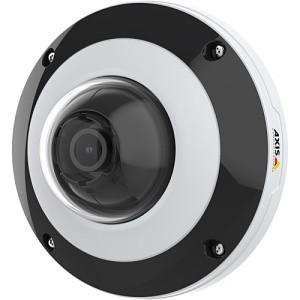
Axis F4105-LRE 2MP Full HD IR Outdoor Mini Dome IP Camera, 02364-001
02364-001
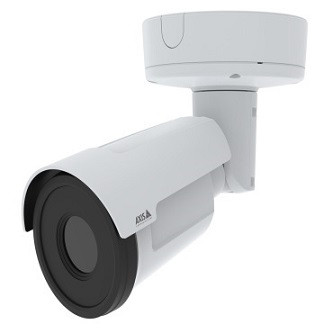
Axis 02953-001 Outdoor Thermal Bullet Camera
02953-001
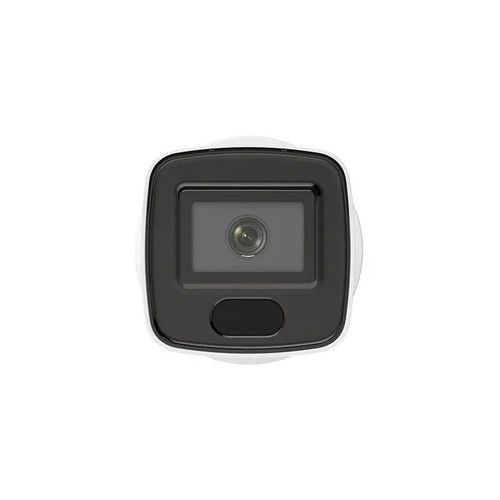
Hikvision PCI-B15F2S Thermal 5MP Outdoor Fixed Bullet IP Camera
PCI-B15F2S
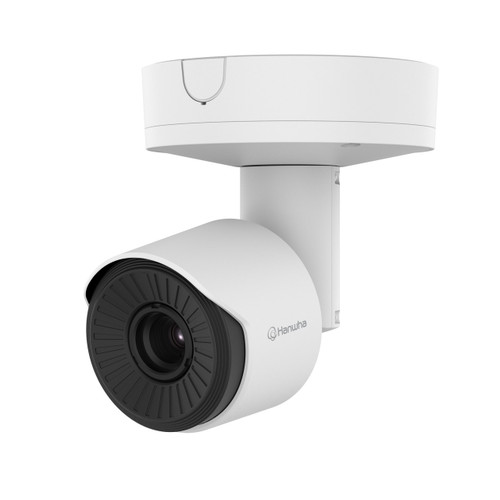
Hanwha TNO-C3042T Thermal Bullet Network Camera
TNO-C3042T
Deployment Scenarios
Perimeter Fence Line
Perimeter fence applications use thermal for detection at extended ranges beyond IR illuminator capability. Recommended: 384x288 or 640x480 thermal bullet camera with 25-50mm lens matched to fence segment length, line-crossing analytics with AI person/vehicle filtering, IP67, integration with long-range PTZ for zoom-to-identify, radar plus VMS for alert routing. Coverage budget: one thermal per 400-800m of fence depending on lens. Pair with PTZ guard tour integration.
Utility Substation and Pipeline
Electric substations and pipeline infrastructure need perimeter detection with hazmat-rated cameras. Recommended: 384x288 thermal bullet with 19-25mm lens, IP67 + explosion-protected housing for hazardous zones, line-crossing and object-left detection, integration with SCADA for event correlation, radar fusion for weather-all-condition coverage. For remote unmanned sites, cellular backhaul with local recording. See also our Radar-Based Video Detection Guide for fusion deployments.
Airport and Transportation Hub Landside
Landside airport and seaport operations need long-range perimeter detection and high-value asset monitoring. Recommended: 640x480 thermal with 50-75mm telephoto lens, 1.5-2.5km person detection range, integration with radar and LPR cameras, thermal-PTZ slew-to-cue for visible-light confirmation, TSA-certified VMS platform for retention and audit, and redundant recording. Pair with long-range PTZ cameras for identification.
Data Center and Critical Compute
Data center perimeters use thermal to detect approach before a person reaches the fence line. Recommended: 384x288 thermal with 19-25mm lens, two-stage detection (warning zone at 50m, alert zone at 10m), line-crossing plus intrusion box analytics, integration with access control for timed lockdown on detection, 640x480 on critical infrastructure or facilities above Tier III. Also useful for thermal-anomaly detection on server halls (overheating racks, thermal hot-spots on coolant plumbing).
Correctional Facility Perimeter
Prison and correctional facility perimeter uses multi-layer thermal plus radar plus fence disturbance detection for defense-in-depth. Recommended: 640x480 thermal bullets covering fence perimeter with 30-60m overlap, fixed radar providing fog/rain-all-weather backup, long-range PTZ for visible-light confirmation, integration with officer radio dispatch for immediate response, vandal-rated housings for interior-facing positions, and redundant control center display. Calibrate analytics to prisoner-specific thermal signatures and approved yard movement.
Solar Farm and Wind Farm
Remote renewable energy sites use thermal for copper-theft detection, trespass alerts, and equipment hot-spot monitoring. Recommended: 384x288 thermal with 25mm lens, line-crossing analytics around panel arrays and inverter stations, solar-powered cameras with integrated cellular backhaul for remote sites, thermal-anomaly detection for identifying hot-spot panels that indicate diode or connection failures. Pair with outdoor cameras at main gates and LPR at vehicle access points.
More Top-Selling Thermal Cameras
Additional thermal camera options for various deployment ranges.
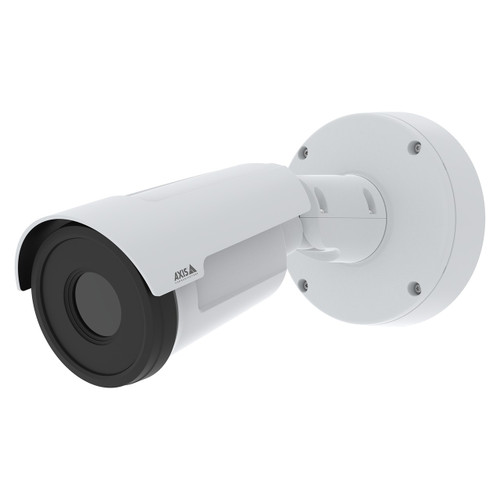
Axis Q1961-TE 640x480 Thermal Outdoor Fixed IP Camera, 02174-001
02174-001
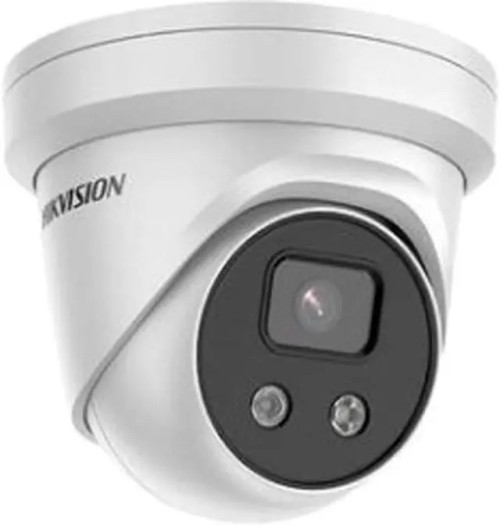
Hikvision PCI-T15F6S Thermal 5MP Outdoor Fixed Turret IP Camera
PCI-T15F6S
Axis 02947-001 Outdoor Thermal Bullet Camera
02947-001
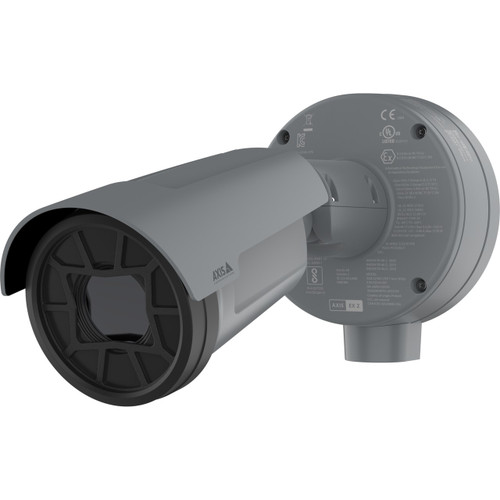
Axis Q1961-XTE Explosion-Protected Thermal Camera
02535-001
Common Mistakes to Avoid
- Designing to identification range instead of detection range. Thermal cameras detect people at 5-10x the distance they can identify them. Specify thermal for detection and pair with visible-light PTZ for identification.
- Standalone thermal without radar in all-weather deployments. Heavy rain and dense fog reduce thermal range 50-80%. For critical infrastructure, pair with radar so detection is weather-independent.
- Over-relying on thermal analytics in urban environments. City scenes with HVAC vents, lit windows, and traffic generate constant false thermal alerts. Either use in remote perimeter deployments or invest significant time in analytic zone masking.
- Specifying general-purpose thermal for fever detection. Security thermal cameras do not provide calibrated body temperature. Dedicated fever screening requires radiometric cameras with blackbody reference.
- Deploying thermal without visible-light follow-up integration. An alert from thermal that cannot be verified by visible-light evidence is not actionable at a legal or dispatch level. Always integrate with PTZ or paired fixed cameras.
- Mismatching lens to fence segment. A 13mm wide lens on a 2km fence creates a 400m gap. Calculate lens FoV overlap at the worst-case distance across every fence segment before specifying.
- Under-powering thermal with heater. A thermal camera with heater on can draw 25-30W. A PoE switch configured for 15W/port will reboot the camera during cold-weather heater cycles.
What to Ask Your Integrator
- What is the thermal detection range calculated for each coverage zone, not just published specs?
- How does the thermal alert route to an operator? Is it paired with a PTZ slew-to-cue or is it standalone?
- What analytic rules are configured, and how are false alarms (weather, animals, vegetation) filtered?
- Is radar integrated for weather-independent detection, or is thermal operating alone?
- What is the peak PoE draw with heater active, and does the switch accommodate it?
- For hazardous or explosion-proof environments: is the housing certified for the specific classification?
- How will thermal performance degrade in the worst weather for this site, and is that drop acceptable?
- Is the thermal camera on the VMS compatibility list with full analytic event support?
Quick Comparison: Thermal Camera Tiers
| Specification | Short-Range Detection | Mid-Range Perimeter | Long-Range Critical Infrastructure |
|---|---|---|---|
| Thermal Resolution | 160x120 or 256x192 | 384x288 (VGA/4) | 640x480 (VGA) or 1024x768 |
| Lens / FoV | 13-25mm (wide) | 19-35mm (medium) | 50-75mm+ (telephoto) |
| Detection Range (Person) | 80-150m | 300-600m | 1.2-2.5 km |
| Recognition (Person) | 20-40m | 80-150m | 300-625m |
| Identification (Person) | 10-20m | 40-75m | 150-300m |
| Analytics | Basic motion | Line crossing + intrusion + AI classification | Full ruleset + radar fusion + multi-zone |
| Form Factor | Mini bullet or turret | Outdoor bullet | Outdoor bullet + PTZ fusion |
| IP Rating | IP66 | IP67 | IP67 + explosion-proof for Zone 2 |
| Typical Price Range | $1,500 - $4,000 | $4,000 - $12,000 | $12,000 - $50,000+ |
Frequently Asked Questions
What's the difference between thermal and regular night vision cameras?
Regular night vision cameras use near-infrared illumination (IR LEDs) to create a visible-spectrum image in low light; they produce black-and-white video and require enough reflected IR light to see. Thermal cameras detect longwave infrared (heat radiation) emitted by objects and need zero illumination, seeing through total darkness, smoke, and light fog. Thermal excels at detecting humans and vehicles at long range because they emit strong heat signatures against cooler backgrounds, but thermal cannot read faces, license plates, or colors.
How far can a thermal camera detect a person?
Detection range depends on sensor resolution and lens focal length (NETD < 50mK preferred for long range). A 320x240 sensor with 13mm lens detects a person at 350 feet, recognizes at 90 feet, identifies at 50 feet. A 640x480 sensor with 35mm lens detects at 1,500 feet, recognizes at 400 feet. These DRI (Detection, Recognition, Identification) distances follow the Johnson criteria: detection = 2 pixels on target, recognition = 8 pixels, identification = 13 pixels. Higher resolution and longer focal length dramatically extend range.
When should I use thermal instead of regular IR cameras?
Choose thermal for total-dark perimeters with no ambient light (remote substations, border fences, storage yards). Use thermal when targets are camouflaged or hidden in foliage where visible IR cannot penetrate. Use thermal in fog, light rain, and smoke where visible IR struggles. Use thermal for overheating equipment detection in industrial facilities. Use regular IR cameras when you need to identify faces, read signs, or capture license plates, because thermal cannot resolve visible detail.
Do thermal cameras work in rain or fog?
Thermal cameras significantly outperform visible cameras in fog, light rain, smoke, and dust because longwave infrared penetrates small particles better than visible light. In heavy rain or dense fog, thermal range does drop but remains 2-3x the effective range of visible or IR-illuminated cameras. Steam or direct water spray on the lens will obscure the image just like any camera. For outdoor perimeter defense in variable weather, thermal is the most consistently reliable sensor type.
What's NETD and why does it matter?
NETD (Noise Equivalent Temperature Difference) measures how small a temperature difference the thermal sensor can detect, in millikelvins (mK). Lower NETD = more sensitive and cleaner image. Entry-level thermal cameras have NETD of 60-80mK. Mid-range is 40-50mK. High-end analytics-ready cameras operate at 30mK or below. NETD below 50mK is ideal for reliable analytics in mixed weather, where small thermal differences between a person and ambient background must be detected at long range. Do not confuse NETD with pixel resolution, both matter.
Can thermal cameras be used for analytics like line crossing?
Yes, thermal is actually better for perimeter analytics than visible-spectrum cameras because heat signatures reliably distinguish humans and vehicles from wind-blown objects, shadows, and lighting changes that fool visible analytics. Line crossing, intrusion detection, and tripwire analytics on thermal cameras achieve 95%+ accuracy in real-world outdoor deployments versus 60-80% on visible cameras. AI-enhanced thermal camera lines from FLIR, Axis, and Hikvision add human/vehicle classification to further reduce nuisance alarms.
Ready to Design a Thermal Perimeter?
Share the perimeter length, weather conditions, response-time envelope, and paired visible-light plan. We will recommend the right thermal resolution, lens FoV, and integration architecture.