
How to Choose the Right PTZ Security Camera
A technical buyer's guide for security integrators, risk managers, and facility designers specifying pan-tilt-zoom cameras for active monitoring, perimeter patrols, large-area coverage, and event-driven tracking. Covers optical zoom range, pan/tilt speed, auto-tracking accuracy, guard tour configuration, IR range, and integration with fixed cameras and VMS platforms.
In This Guide
A PTZ camera covers the area of 10-30 fixed cameras when used correctly, and delivers zero usable evidence when used incorrectly. The difference is whether the system has been designed around the PTZ's role: active tracking, tour-based surveillance, alert-driven zoom, or operator-controlled investigation. A PTZ left on a default scene with no tour and no integration is worse than a single fixed camera at the same location, because when an incident happens, the PTZ is almost always pointed the wrong way. This guide covers the specifications and configuration decisions that make PTZ deployments actually work.
Key Specifications Explained
Optical Zoom Range
Optical zoom determines identification distance. A 10x zoom at 4MP covers approximately 150-foot identification range from a mid-height mount. 25x zoom extends identification to roughly 500 feet. 30-45x zoom is required for perimeter fence-line work, port/airport surveillance, and critical infrastructure where you need face-level detail at 800+ feet.
Digital zoom beyond optical is always lossy. A "360x zoom" spec combining 30x optical and 12x digital is really only a 30x identification camera. Specify the optical zoom as the working maximum and ignore digital zoom numbers. The Video Retention and Storage Calculator helps you plan storage for the resolution + frame rate combination the PTZ will actually record.
Pan and Tilt Speed
Pan speed measured in degrees per second determines how fast the camera can slew to a preset, alert, or target. 90 degrees/second is slow; operators see lag when jumping between presets. 240-300 degrees/second is typical mid-range. 400-500 degrees/second handles fast auto-tracking of vehicles and moving targets.
Tilt range matters at the extremes. A PTZ that only tilts to -5 degrees below horizontal has dead zones directly below the mount. -20 degree tilt with flip (the camera inverts to follow a target that passes directly below) is the enterprise standard for dome PTZs mounted on building corners or light poles.
Auto-Tracking and AI
Auto-tracking uses on-camera analytics to detect a moving subject (person or vehicle) and automatically pan/tilt/zoom to follow. Basic auto-tracking struggles with crowds, multiple targets, and tree movement. AI-enhanced tracking (Axis Smart Defender, Hanwha Auto Tracking IV, Hikvision Smart Tracking) classifies targets, ignores vegetation, and can hand off between multiple PTZs.
Auto-tracking works best when paired with fixed cameras. The fixed cameras detect a subject entering a defined zone, then trigger the PTZ to zoom in for identification. Without this pairing, the PTZ spends most of its time tracking empty scenes or missing actual events. See the PTZ Deployment and Guard Tour Guide for integration patterns.
Guard Tours and Presets
Presets are saved PTZ positions (pan, tilt, zoom). A tour is a scheduled sequence of presets with dwell times. Enterprise PTZs support 256-300 presets and multiple independent tours (day shift, night shift, weekend). Budget PTZs offer 16-64 presets and often only one tour.
Calibrate preset positions at installation and re-verify quarterly. PTZs lose position over time from motor wear and vibration. A PTZ with drifted presets tours locations that no longer match the intended scenes. Specify PTZs with optical encoders that re-reference position on each rotation for accuracy longevity.
Low Light and IR Illumination
PTZ IR illuminators typically range 30m (basic) to 500m (long-range perimeter PTZ). At long zoom, the effective IR range is limited by optical-zoom telephoto FoV matching the illuminator beam angle; many PTZs include a "smart IR" function that adjusts illuminator intensity and spread based on zoom position.
For critical perimeter work, pair PTZ IR with thermal cameras which detect body heat through fog, rain, and darkness. Thermal cameras alert; the PTZ zooms in for visible-light identification. For fully dark environments without IR blooming concerns, specify low-light sensors (Sony STARVIS, Hanwha Wisenet P) that deliver color imagery at <0.01 lux.
Environmental Ratings
Outdoor PTZs need IP66 minimum for water-jet protection and IK10 for vandal resistance. Dome PTZs with pressurized nitrogen fill maintain long-term seal integrity; standard gaskets degrade in 3-5 years. For coastal, industrial, and chemical-exposed installations, specify marine-grade or hazardous-location-rated housings.
Operating temperature matters. Standard PTZs rate 14 to 122°F. Cold-climate installations need internal heaters (not just "cold-start" mode which warms the motor) that maintain internal temperature to -40°F. Heaters add 5-15W to PoE draw; verify switch budget accommodates full load with heater active.
PoE Class and Powering
PTZ power draw is significantly higher than fixed cameras. Standard PTZs (no heater) draw 15-25W, requiring 802.3at (30W) at the PSE. PTZs with heaters, wipers, and long-range IR require 802.3bt Type 3 (60W). Some long-range PTZs need Type 4 (90W) or direct 24VAC/DC.
Pole-mounted PTZs at parking lot distances often exceed 100m from the nearest switch. Use PoE injectors at the pole base or switch to fiber with local high-wattage power supply. Confirm the PTZ spec sheet lists actual peak power (motor stall during slew + heater on + wiper running) not just typical.
VMS Integration and Control
ONVIF Profile S is the minimum for PTZ integration with third-party VMS. Profile G adds storage; Profile T adds video-over-HTTP. For auto-tracking integration with fixed cameras and joystick control, check VMS support for the specific PTZ model, not just the vendor family. Milestone, Genetec, Axis Camera Station, Hanwha WAVE, and Avigilon each have certified PTZ lists. Unlisted cameras may work but with limited PTZ control and no auto-tracking integration. For joystick/keyboard control in a video operations center, specify PTZs with sub-pixel control granularity and low-latency RTSP streams.
NDAA Compliance and Encryption
NDAA Section 889 applies to PTZ deployments the same as fixed cameras, with additional scrutiny because PTZs are frequently specified for critical infrastructure. Verify NDAA compliance of chipset, firmware, and any cloud management platform. For federal and defense deployments, additional requirements apply: FIPS 140-2 encryption for video streams, TLS 1.2+ for management, and specific TPM requirements. For multi-sensor and PTZ-with-fixed combos (Hanwha P-series, Axis Q-series), verify all integrated sensors meet compliance requirements, not just the PTZ housing.
Featured PTZ Cameras
Top-selling PTZ cameras in stock, selected by our technical team.
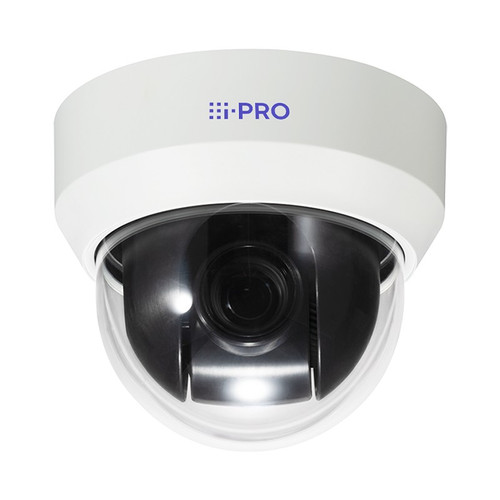
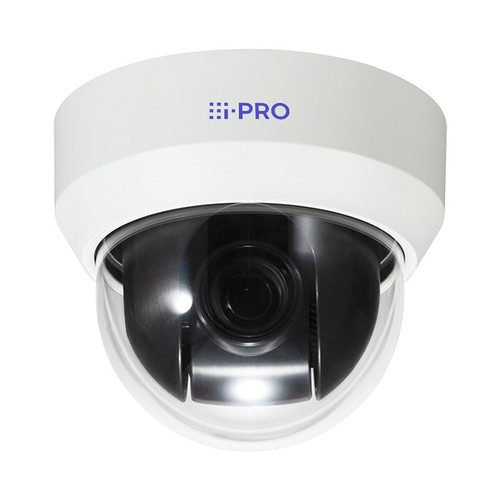
i-PRO WV-S65301-Z1 2MP Outdoor AI PTZ Dome Network IP Camera
WV-S65301-Z1
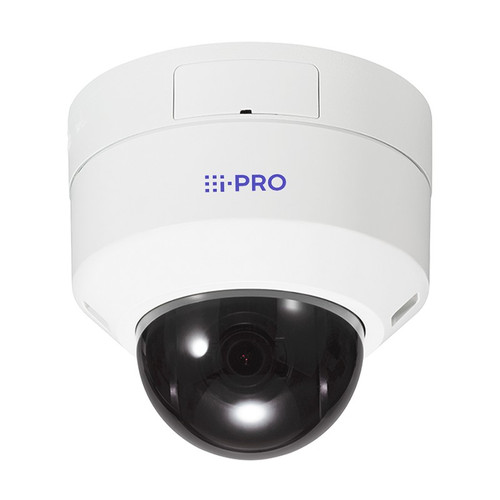
i-PRO WV-U61300-ZYG 2MP AI PTZ Dome Indoor IP Camera
WV-U61300-ZYG
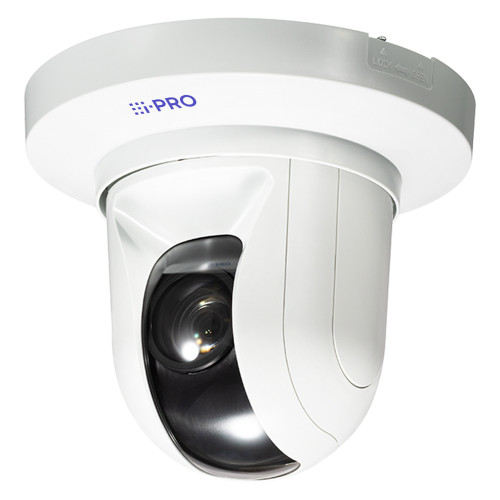
i-PRO WV-U61301-Z1 2MP AI 10x Optical Zoom PTZ Dome Indoor IP Camera
WV-U61301-Z1
Deployment Scenarios
Parking Lot Perimeter
Large parking lots (300+ spaces) use 1-2 PTZs mounted on light poles at corners, paired with fixed outdoor cameras and LPR cameras at entrances. Recommended: 4MP 25-30x PTZ, 150m IR, IP66/IK10, auto-tracking with person/vehicle classification, 8-preset tour covering rows and exits, integration with fixed cameras so an alarm in a zone triggers the PTZ to zoom in. 802.3at or 802.3bt PoE depending on heater. See the PTZ Deployment Guide for tour patterns.
Corporate Lobby and Campus Entry
Large lobbies and campus entries use a PTZ overhead to follow visitors through the space and record high-resolution identification when needed. Recommended: 2MP or 4MP indoor PTZ with 10-20x zoom, smooth pan at 240°/sec, joystick control from the security desk, and integration with access control so badge-denied events auto-trigger PTZ zoom to the denied reader. Pair with fixed indoor cameras for overall coverage.
Perimeter Fence Line
Critical infrastructure perimeters use long-range PTZs paired with thermal cameras, radar sensors, and fence disturbance detection. Recommended: 45x zoom long-range PTZ with 500m IR, 4MP or 4K resolution, integration with thermal cameras so heat-detection triggers PTZ track-and-zoom, auto-handoff between adjacent PTZs when target crosses coverage boundary, IP66/IK10 with 802.3bt Type 4 power (90W) for integrated wiper and heater.
Stadium and Event Venue
Stadiums, arenas, and large event venues use multiple PTZs overlooking crowd areas, concourses, and gates. Recommended: 4MP PTZ with 25x zoom, true WDR 140dB+ for extreme arena lighting, smooth 300°/sec pan for crowd tracking, IK10 for public-facing lower-level mounts, integration with VMS-based joystick controllers for security operations center. Pair with panoramic cameras for wide-area situational awareness and crowd count analytics.
Port, Airport, and Industrial Perimeter
Long-range perimeter surveillance uses extreme-zoom PTZs paired with radar and thermal. Recommended: 4MP PTZ with 45x zoom + wide-angle spotter lens, 500m+ IR, thermal-visible fusion technology, hazardous-location rating if applicable (Class I Div 2), UPS-backed power, and integration with radar and radar sensors. Full ATS (air traffic surveillance) integration required for airport landside deployments.
Detention and Corrections Yard
Detention yards use IK10+ PTZs at mount heights above inmate reach, with 24/7 recording and touchscreen control at the control center. Recommended: 4MP rugged PTZ with 25x zoom, reinforced dome (polycarbonate not acrylic), vandal/anti-ligature hardware, redundant power, dedicated VLAN, integration with incident management system. Call-station integration for hands-free officer communication if yard has emergency buttons. Pair with thermal cameras for fence-line coverage.
More Top-Selling PTZ Cameras
Additional PTZ options for various deployment sizes and environments.
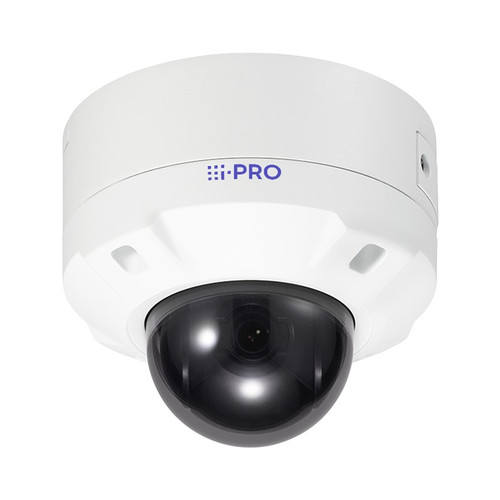
i-PRO WV-U65300-ZYG 2MP Outdoor AI PTZ Dome Network IP Camera, Smoke Dome
WV-U65300-ZYG
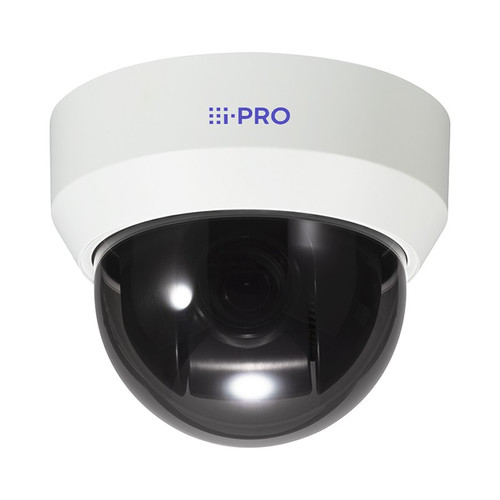
i-PRO WV-U65301-Z1G 2MP Full HD AI PTZ Outdoor Dome IP Camera
WV-U65301-Z1G
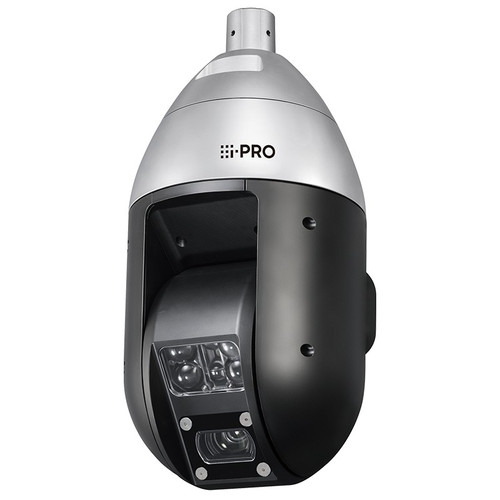
i-PRO WV-X6533LNS 2MP Extreme H.265 IR PTZ Outdoor Security IP Camera
WV-X6533LNS
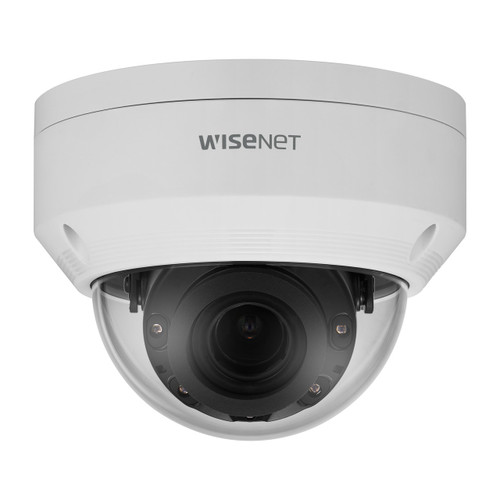
Hanwha ANV-L7082R 4MP High Definition Outdoor PTZ Dome IP Camera
ANV-L7082R
Common Mistakes to Avoid
- Deploying a PTZ without a guard tour or alarm integration. An idle PTZ covers the wrong scene 95% of the time. Always configure tours and integrate with fixed camera analytics or access control events.
- Conflating digital and optical zoom. A "360x zoom" spec with 30x optical is not a 360x identification camera. Use optical zoom as the working maximum.
- Underpowering the PTZ. A PTZ with heater, wiper, and long-range IR can peak at 60-90W. Mismatched PoE class causes reboots during cold-weather heater activation or extended IR use.
- Skipping true WDR. Outdoor PTZs at any angle face backlighting conditions during daylight. Digital WDR on PTZs produces silhouettes when tracking subjects against the sky or lit windows.
- Mounting PTZs too low for IK rating to matter. A PTZ mounted below 10 feet with IK10 rating is still vulnerable to thrown objects, ladders, and deliberate tampering. For public-facing positions, mount above 12 feet or use reinforced caging.
- Not calibrating presets quarterly. Motors drift, gears wear, vibration shifts mount position. Presets that were accurate at installation drift 2-5 degrees per year. Schedule preset verification in the preventive maintenance program.
- Overloading auto-tracking with multiple simultaneous targets. Auto-tracking struggles with crowds, multi-vehicle scenes, and tree movement. For complex scenes, use fixed cameras for event detection and PTZ for operator-controlled zoom, not auto-tracking.
What to Ask Your Integrator
- What is the optical zoom range, and what identification distance does that provide at the planned mounting height?
- How are fixed cameras and PTZs integrated? Does a fixed-camera event trigger PTZ zoom-in?
- What presets and tours are programmed, and how are they verified during maintenance?
- Is auto-tracking paired with fixed camera event detection, or is the PTZ running tracking alone?
- What is the peak PoE draw with heater and wiper active, and does the switch support it?
- For outdoor PTZs: is the housing nitrogen-filled, IP66/IK10 rated, and operating temperature matched to climate extremes?
- For perimeter deployments: are PTZs integrated with thermal cameras and radar for event-driven handoff?
- Is the PTZ on the VMS certified compatibility list for full PTZ control, tour configuration, and event integration?
Quick Comparison: PTZ Camera Tiers
| Specification | Budget / Indoor | Mid-Range Outdoor | Premium Long-Range |
|---|---|---|---|
| Resolution | 2MP (1080p) | 4MP | 4K or 4MP with AI |
| Optical Zoom | 10x | 20-25x | 30-45x |
| Pan Speed | 90°/sec | 240°/sec | 400°/sec |
| Tilt Range | -5 to 90° | -20 to 90° | -20 to 100° (flip function) |
| IR Range | None or 30m | 100-150m | 200-500m |
| WDR | Digital | True WDR 120dB | True WDR 140dB+ with dual sensor |
| Guard Tours / Presets | 16-64 presets | 256 presets, 8 tours | 300+ presets, unlimited tours |
| Auto-Tracking | None or basic | Smart tracking (person/vehicle) | AI tracking with multi-target, handoff |
| IP / IK Rating | IP66 / IK08 | IP66 / IK10 | IP66/67 / IK10 + anti-shock |
| Typical Price Range | $400 - $1,200 | $1,200 - $3,500 | $3,500 - $12,000+ |
Frequently Asked Questions
What's the difference between PTZ, e-PTZ, and mini-PTZ cameras?
True PTZ cameras have motorized optical zoom and pan/tilt, providing full 360-degree continuous pan, tilt to ground level, and 25x-45x optical zoom for long-range identification. E-PTZ (electronic PTZ) uses a high-resolution fixed camera and digitally crops/zooms within the wide field of view, with no moving parts and no real optical zoom. Mini-PTZ cameras offer limited pan/tilt travel (typically 350-degree pan, 90-degree tilt) and lower optical zoom (5x-12x), used indoors or for smaller sites at a lower price point.
How much optical zoom do I need on a PTZ?
Calculate zoom based on how far you need to identify subjects. 25x optical zoom captures recognizable facial features at 200-300 feet. 32x reaches 400 feet. 45x hits 600+ feet but sacrifices low-light performance due to the longer lens. For parking lots under 200 feet, 12x-20x is sufficient. For large campuses, stadium parking, or border perimeter, step up to 32x-45x. Avoid digital zoom multiplier claims; only optical zoom preserves identification quality.
Should I use a PTZ for primary surveillance or just auxiliary?
PTZs work best as auxiliary cameras zoomed in on action, directed by a fixed camera or analytic event. A PTZ cannot record every direction at once, so pointing it at one scene misses everything else. The best practice is a 4:1 ratio of fixed cameras to PTZs, using fixed cameras for continuous wide-area recording and PTZs for detailed follow-up, guard tour, or manual operator control. Auto-tracking PTZs partially automate this by following motion, but fail at complex scenes with multiple targets.
What's a guard tour and how does it work?
A guard tour is a pre-programmed sequence of preset positions that a PTZ camera cycles through automatically, like a virtual security guard. Program 8-32 presets at key locations (entrances, lobby, back gate, loading dock) with dwell times of 15-60 seconds each. The PTZ continuously loops through the tour unless interrupted by an alarm, motion event, or manual operator control. Guard tours maximize the value of a single PTZ by providing periodic coverage of many positions instead of watching only one.
Do I need a heated PTZ for outdoor installation?
Yes, any outdoor PTZ in a climate that drops below 32F needs a built-in heater to prevent freezing of the pan-tilt mechanism, lens fogging, and dome icing. Look for operating temperature down to -40F (-40C) with built-in defogger. Cold climate PTZs draw 30-60W during heater operation, so size your PoE+ or PoE++ switch accordingly. Some models also include automatic defrost cycles that briefly increase heater output to clear accumulated frost. Plan for at least 1.5x the summer power draw during winter.
How do PTZ presets and tours compare to auto-tracking?
Presets and guard tours are deterministic, predictable, and good for routine coverage. Auto-tracking uses motion detection or AI analytics to automatically pan, tilt, and zoom onto moving objects, useful for unattended perimeters. Modern AI auto-tracking distinguishes people from vehicles and ignores environmental motion like trees and flags. However, auto-tracking can get confused by multiple targets or cross-traffic, and it occupies the camera so other positions are not covered. Best practice combines both: auto-track when triggered, return to tour when idle.
Ready to Specify Your PTZ System?
Share the coverage area, mounting height, identification distance, environmental conditions, and integration plan. We will recommend the right zoom range, power class, and auto-tracking configuration.