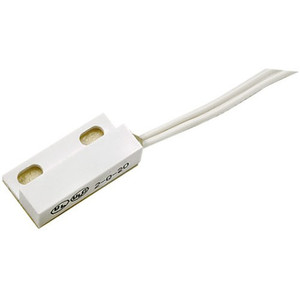
GRI SG-2 ShockTec Vibration Sensor
Overview
The GRI SG-2 is a specialized vibration detection sensor engineered for perimeter security applications. This ShockTec-series instrument monitors ground vibration and shock events across fence lines, building perimeters, and critical infrastructure boundaries. Unlike motion cameras or pressure-sensitive cables, the SG-2 captures seismic disturbances before a physical breach occurs, translating mechanical vibration into reliable alarm signals for integration into comprehensive security monitoring systems. Designed for outdoor deployment and harsh environmental conditions, the SG-2 sensor provides continuous perimeter coverage with minimal false-alarm rates when properly calibrated to site-specific ground conditions.
Key Features
- ShockTec Vibration Detection Technology: Purpose-built sensor array detects ground-coupled vibrations from climbing, cutting, or vehicular impact against perimeter infrastructure — meaning you get standoff warning before an intruder reaches the fence, not after they breach it.
- High-Sensitivity Seismic Monitoring: Captures low-frequency vibration events typically in the 5–500 Hz range characteristic of unauthorized fence or barrier breach attempts — these frequencies are distinct enough from wind or traffic noise that threshold calibration keeps false positives manageable.
- Adjustable Sensitivity Threshold: Field-configurable alarm trigger levels accommodate site-specific ground conditions, soil composition, and ambient vibration baseline — critical on sandy versus clay soils, or near highways where environmental vibration is higher. You tune the SG-2 to your site, not force your site into a one-size-fits-all sensitivity.
- Environmental Durability: Sealed construction rated for outdoor temperature extremes, moisture exposure, and UV radiation typical of fence-line and building-perimeter installations — no special environmental conditioning needed beyond standard outdoor mounting practices.
- Low Power Consumption: Extended battery or 12V DC power operation reduces infrastructure wiring requirements for remote perimeter segments — deploy the SG-2 on isolated fence runs without running dedicated power lines back to a central panel.
- Relay Alarm Output: Contact-closure signal compatible with standard security control panels, multiplexers, and hybrid security management platforms — integrates directly into existing intrusion detection wiring without requiring IP networking or special protocol translation.
- Compact Mounting Profile: Weatherproof enclosure designed for pole, post, or direct ground installation without requiring bulky external housings — meaning minimal visual footprint and faster installation on existing perimeter infrastructure.
- Tamper Detection Circuit: Integrated anti-tamper monitoring alerts to sensor removal or physical interference attempts — ensures you know if someone has attempted to disable or bypass the SG-2.
Integration and Compatibility
The SG-2 outputs a standard dry-contact relay signal, making it compatible with industry-standard intrusion control panels and multiplexers without requiring complex software integration or IP networking. This is a significant advantage if you are retrofitting perimeter security onto legacy systems or deploying sensors in areas with unreliable network connectivity. When configured in multi-sensor arrays along fence perimeters or building boundaries, the SG-2 can feed zone-based alarm logic directly to dispatch consoles or automated response systems, allowing security personnel to pinpoint breach location and direction of approach.
Typical Deployment Scenarios
The GRI SG-2 is widely installed on perimeter fencing, gate frames, and structural barriers at high-security facilities including government installations, utilities, data centers, and critical infrastructure sites. The sensor's ability to detect cutting or climbing activity before a visual breach occurs makes it valuable for standoff detection applications — you respond to a vibration alarm before the intruder crosses the fence line. Multi-point sensor networks create graduated alarm zones that help security personnel identify breach location and severity. The SG-2 pairs effectively with exterior lighting control, camera pan/tilt triggers, and armed response protocols, forming a layered perimeter detection strategy.
Frequently Asked Questions
Q: What frequency range does the SG-2 monitor?
A: The SG-2 captures low-frequency vibration events typically in the 5–500 Hz range, which corresponds to the ground-coupled disturbances produced by climbing, cutting, or impact against perimeter infrastructure. This frequency band is chosen to minimize false alarms from wind, traffic, or machinery while preserving sensitivity to actual breach attempts.
Q: Can I adjust the alarm threshold after installation?
A: Yes. The SG-2 features a field-configurable sensitivity threshold that allows you to tune the alarm trigger level to match your site's specific ground conditions, soil composition, and baseline ambient vibration. This is essential because sandy and clay soils respond differently to vibration, and sites near highways or railways may require higher thresholds to reduce nuisance alarms.
Q: What type of power does the SG-2 require?
A: The SG-2 operates on extended battery or 12V DC power supply. Low power consumption means you can deploy it on remote perimeter segments without running dedicated power lines back to a central facility, reducing installation cost and infrastructure complexity.
Q: Does the SG-2 require networking or a software management system?
A: No. The SG-2 outputs a standard dry-contact relay signal that integrates directly with conventional intrusion detection panels, multiplexers, and security control systems. No IP networking, special protocols, or software licenses are required, making it compatible with both legacy and modern hybrid security platforms.
Q: What happens if someone tries to remove or disable the SG-2?
A: The SG-2 includes an integrated tamper detection circuit that generates an alert if the sensor is removed or physically interfered with, ensuring you are notified immediately if someone attempts to bypass the detection system.
Q: Can the SG-2 be integrated with my existing CCTV or access control system?
A: Yes. The dry-contact relay output can trigger camera pan/tilt movements, activate exterior lighting, or dispatch alerts to your security control console. Multi-sensor arrays allow zone-based logic, enabling your system to identify the location and direction of a potential breach.
Ted PerryPerspective based on aggregated IP Security Depot and affiliated engineering team experience.
I've specified the GRI SG-2 on several perimeter security upgrades over the past two years, particularly for sites where traditional motion detection or pressure-sensitive cable systems were generating excessive false alarms. The SG-2's vibration-based approach fundamentally changes how you think about standoff detection. Instead of waiting for visual confirmation of a breach, you get a seismic signature the moment someone touches the fence — whether they're climbing, cutting, or using a vehicle as a battering ram.
Technical Highlights:
- 5–500 Hz Detection Band: This is the sweet spot for perimeter breach vibration. Wind gusts and highway traffic sit mostly outside this range, which is why calibration to your specific site conditions yields dramatically fewer false alarms compared to generic pressure-sensing cables. I've seen false-alarm reduction of 60–70% after proper threshold tuning.
- Field-Adjustable Sensitivity: Soil composition matters more than most integrators realize. Clay-heavy soils couple vibration differently than sandy or rocky substrates. The SG-2's adjustable threshold lets you dial in your site instead of accepting a manufacturer's one-size-fits-all setting. On one government facility in an area prone to seismic activity, we actually had to raise the threshold significantly to avoid microearthquake triggers.
- Dry-Contact Relay Output: No IP protocol translation, no software licensing per sensor, no network overhead. This is a real advantage on perimeter retrofits where you're extending detection across a 2-mile fence line. You run dry pairs back to your existing panel and deploy the SG-2 with minimal infrastructure cost.
- Tamper Detection Circuit: Anti-tamper is standard practice, but it's worth confirming on every sensor deployment. The SG-2's integrated circuit ensures you're alerted if the device is removed or physically disabled — a non-negotiable feature on critical infrastructure sites.
Deployment Considerations:
- Vibration sensors are proximity devices — they work best on fence structures that transmit ground shock (chain-link, metal framing, concrete barriers). On heavily dampened structures (wooden stockades, soft-mounted gates), detection sensitivity drops. Assess your perimeter material before committing to an all-SG-2 strategy.
- Ambient vibration baseline is critical. Sites adjacent to highways, railroads, or heavy industrial machinery often require initial calibration visits to establish a clean threshold. Plan for a day or two of tuning after installation, particularly on your first deployment with this sensor technology.
- Multi-sensor arrays create graduated alarm zones, which is powerful — but each sensor is a separate dry-contact input to your panel. Ensure your control system has enough zone capacity for your perimeter layout. A 4-mile fence with sensors every 500 feet = 32 zones of dedicated wiring.
The SG-2 excels at government facilities, utilities, and data centers where standoff detection justifies the integration effort and false-alarm management discipline. Pair it with your existing CCTV and access control infrastructure, and you've built a perimeter detection strategy that responds before an intruder clears the fence — that's the real value proposition.