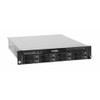
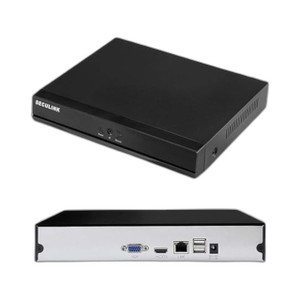
Geovision 82-VMS0000-0010 32-Channel VMS Platform
Overview
The Geovision 82-VMS0000-0010 is a 32-channel video management system platform built for security integrators and IT operations teams managing multi-site or enterprise surveillance infrastructure. The key constraint—and the constraint that forces thoughtful system design—is the 10 concurrent recording channel limit across 32 monitored cameras. This means you'll prioritize recording streams based on operational risk: continuous recording on critical areas (entry points, high-value assets, perimeter), and motion-triggered or scheduled recording on supplementary coverage. For environments where every camera needs 24/7 recording, this platform is a mismatch; for balanced deployments, the tradeoff between monitoring scope and recording density is manageable and often cost-effective.
Key Features
- 32-Channel Architecture with 10 Concurrent Recording Channels: Monitor up to 32 IP cameras from a single platform while recording from 10 channels simultaneously—reducing the need for multiple VMS instances in small-to-mid enterprise deployments and simplifying central management overhead.
- ONVIF Profile Compliance: Full ONVIF support eliminates proprietary driver requirements and camera lock-in, allowing you to source cameras from multiple manufacturers based on performance and cost rather than brand ecosystem constraints.
- IP Camera Native Support: No analog-to-digital converters, no legacy analog infrastructure—pure network-based cameras reduce cabling complexity and leverage existing Ethernet and PoE switch investments.
- Flexible Channel Allocation: Dynamically assign the 10 recording channels across the 32-camera platform; high-priority zones run continuous recording while secondary areas capture motion events or operate on a schedule, matching actual operational needs.
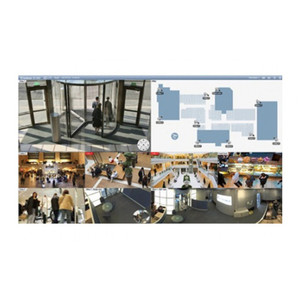
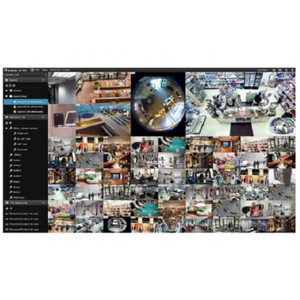
- Centralized Single-Pane-of-Glass Management: Unified interface for live monitoring, event logging, system administration, and multi-site oversight without jumping between separate control panels or manufacturer-specific software.
- Standard Network Deployment: Operates over standard Ethernet with PoE-capable switches and attached or network storage, reducing specialized hardware dependencies and allowing IT teams to leverage existing infrastructure.
Integration & Compatibility
The 82-VMS0000-0010 operates as a VMS-IPCAM class system, meaning it's built to integrate with industry-standard IP camera ecosystems. ONVIF profile support is the critical enabler here—it eliminates the need for proprietary integration layers and lets you mix cameras from different vendors without firmware compatibility headaches. This flexibility directly cuts total cost of ownership: you're not forced to standardize on a single camera brand to avoid integration work. The platform supports network video recorder workflows and can be paired with PoE switches to simplify power and network provisioning at installation sites.
Deployment Considerations
The 82-VMS0000-0010 is designed for organizations that want enterprise-class centralized surveillance without building an on-premises data center. Installation requires standard network cabling, PoE-capable switching infrastructure, and storage capacity (internal or network-attached). Administrators must plan bandwidth based on camera resolution, frame rate, and codec selection—10 simultaneous 4MP streams at 30fps consumes roughly 80–120 Mbps depending on compression. The 10-channel recording constraint is the critical planning variable: map your cameras to operational priority (critical 24/7, secondary motion-triggered, tertiary scheduled), and size storage accordingly. For IP camera selection guidance, review factors like resolution, frame rate, and low-light performance alongside your deployment footprint. The platform's scalability within a single instance is well-suited for multi-site operators managing 5–15 locations independently, or single large facilities requiring granular event correlation across dozens of cameras. If your deployment requires 24/7 recording on all 32 channels, evaluate a higher-capacity VMS instance or distributed recording architecture.
Frequently Asked Questions
Q: Can I upgrade the 82-VMS0000-0010 to record from more than 10 channels simultaneously?
A: The 10 concurrent recording channel limitation is a platform specification and cannot be upgraded. If your deployment requires more simultaneous recording channels, you'll need to evaluate a higher-capacity VMS model in the VMS family or implement a distributed recording architecture across multiple smaller VMS instances.
Q: Does the 82-VMS0000-0010 work with any IP camera brand?
A: Yes. ONVIF profile compliance means it supports cameras from any ONVIF-compliant manufacturer. You're not locked into Geovision cameras, though Geovision IP cameras integrate seamlessly with this platform.
Q: What storage capacity does the 82-VMS0000-0010 require for 24/7 recording?
A: Storage depends on camera resolution, frame rate, and codec. As a rough guide: 10 cameras recording 24/7 at 4MP, 30fps, H.265 compression requires approximately 2–3 TB per month. Network-attached storage (NAS) or internal direct-attached storage both work; consult your camera and codec selection to calculate exact retention needs.
Q: Is the 82-VMS0000-0010 NDAA-compliant or suitable for U.S. federal security contracts?
A: No evidence of NDAA Section 889 compliance is available in the manufacturer documentation. If this is a contractual requirement, contact Geovision directly or consult your integrator for the latest compliance status.
Q: Can the 82-VMS0000-0010 integrate with third-party VMS software like Milestone XProtect or Genetec?
A: The 82-VMS0000-0010 is a standalone VMS appliance, not a camera. However, Geovision IP cameras can generally integrate with third-party VMS platforms via ONVIF. For specific VMS software compatibility questions, contact the software vendor or your systems integrator.
Q: What is the warranty on the 82-VMS0000-0010?
A: Warranty information is not available in the evidence provided. Contact the manufacturer or your authorized integrator for warranty terms and coverage details.
Ted PerryPerspective based on aggregated and affiliated engineering team experience.
I've evaluated the Geovision 82-VMS0000-0010 from a systems design perspective, and the platform makes practical sense for mid-scale multi-site operations and large single-facility deployments where recording demand doesn't match monitoring scope. The 32-channel architecture with 10 concurrent recording channels creates an explicit constraint that forces integrators to think deliberately about priority allocation—which is actually valuable. You're not buying a platform that tries to be everything; you're buying a platform that scales monitoring broadly while requiring you to choose which streams justify 24/7 recording versus motion capture.
Technical Highlights:
- 32-Camera / 10-Recording Channel Ratio: This 3.2:1 ratio is the core tradeoff. On a 25-camera deployment, you'd allocate 10 channels to continuous recording on perimeter and entry points, motion detection on secondary zones. Storage costs drop significantly—you're storing maybe 40% of the camera feed volume, not 100%.
- ONVIF Compliance: Pure vendor-neutral integration. Source 4MP cameras from Brand A because they're priced right, 2MP turrets from Brand B because the optics suit your installation, all on the same VMS. No integration layer tax.
- Ethernet-Native Architecture: PoE power and network over a single infrastructure. Reduces cabling runs, simplifies provisioning, and lets you lean on IT's existing switch investments rather than requiring parallel security-specific networks.
Deployment Considerations:
- Bandwidth planning is non-negotiable. Ten simultaneous 4MP@30fps H.265 streams consume 80–120 Mbps of network bandwidth—reasonable on a dedicated VLAN with a managed switch, problematic on shared corporate infrastructure. Audit your switch capacity before committing.
- Storage is the secondary constraint. The 10-channel recording cap actually reduces storage burden relative to all-channels recording, but you still need to right-size capacity for resolution, frame rate, and retention policy. A single month of 24/7 10-camera 4MP H.265 recording easily consumes 2–3 TB; budget accordingly and plan for network or attached NAS expansion.
- The lack of simultaneous 24/7 recording across all 32 channels makes this platform unsuitable for high-density warehouses or facilities that require forensic capture of every angle. If that's your use case, evaluate distributed NVR architecture or a higher-capacity VMS.
The 82-VMS0000-0010 is the right fit for security integrators managing 5–15 small-to-medium customer sites where each location has 20–32 cameras and only 8–12 justify continuous recording. It's also solid for a single 30-camera warehouse or distribution facility where perimeter and dock recording runs continuously while aisle coverage is motion-triggered. It is not a fit for deployment scenarios where every camera must record continuously—that demands a different architecture entirely.