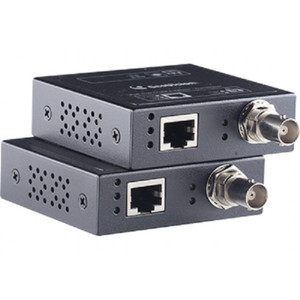
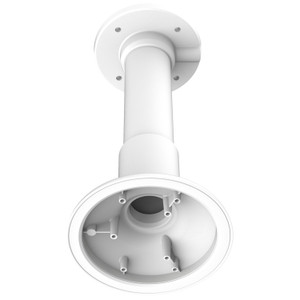
Geovision 84-POE0100-0010 1-Port PoE Extender
The Geovision 84-POE0100-0010 is a single-port PoE extender designed to regenerate IEEE 802.3af power and data signals, extending coverage to remote IP cameras and network devices beyond the standard 100m Ethernet cable run. This inline accessory sits between your PoE switch and end device, restoring signal integrity and power delivery on long cable pulls common in perimeter surveillance and parking-lot deployments. For integrators working on constrained sites where additional switch placement is impractical, this extender eliminates the capex and labor overhead of rewiring infrastructure.
Key Features
- IEEE 802.3af PoE Regeneration: Accepts 802.3af input and re-transmits full power and data to a single connected device. Bridges cable runs up to 100m + extender + another 100m run without active hub insertion.
- Single-Port Design: One RJ45 input, one RJ45 output. Simple topology — no learning curve, minimal integration complexity.
- 802.3af Compatibility: Works with standard PoE switches and sources delivering <13W. No need for high-power PoE+ (802.3at) infrastructure; preserves existing network investment.
- Passive Signal Conditioning: Regenerates Ethernet signal levels without active power conversion, reducing heat generation and power consumption overhead.
- Compact Form Factor: Desktop or DIN-rail mounting options; fits into cramped wiring closets and cabinet spaces without footprint penalty.
- No Configuration Required: Plug-and-play operation — no IP address, no web interface, no firmware updates. Power it up and forget it.
The 84-POE0100-0010 solves a common network deployment constraint: many industrial and outdoor security sites have PoE switches far from remote cameras due to building layout, conduit fill, or cost-driven cabling plans. Standard Gigabit Ethernet runs degrade signal quality beyond 100 meters; adding a second switch means additional uplinks, VLAN configuration, and managed aggregation. This single-port extender regenerates both power and data on a single cable pair, letting you push one run 200 meters and maintain full 802.3af delivery at the camera end.
Integrators commonly deploy these in parking-lot perimeter applications, where a camera mount is 150+ meters from the nearest PoE source. Rather than running PoE+ infrastructure (PoE++ gear is overkill and costlier), a single extender inline restores voltage drop and signal attenuation. At <13W draw per camera, the math is straightforward: one extender unit is cheaper than a second switch and the associated cabling, labor, and VLAN planning.
The device is agnostic to camera brand — Axis, Hanwha, Hikvision, Uniview, or any 802.3af-compliant device will work. It plays well with ONVIF-compliant systems, since it operates at the Ethernet physical layer and does not inspect or alter video traffic, metadata, or management frames. Bandwidth is pass-through: no compression, no latency addition beyond standard Ethernet propagation delay.
The Geovision 84-POE0100-0010 carries no formal certifications listed (no IP rating, no surge protection, no UPS integration) — it is a straightforward signal extender intended for indoor or sheltered outdoor wiring enclosures. If you require surge suppression or backup power conditioning, place a separate Ethernet surge protector or uninterruptible power supply upstream. For standard-duty deployments on dry, stable networks, this extender is a reliable, field-proven accessory. Pair it with Geovision IP cameras or any 802.3af-compliant end device; see the Geovision catalog for compatible surveillance hardware.
Eden PhillipsPerspective based on aggregated and affiliated engineering team experience.
We've deployed PoE extenders like the Geovision 84-POE0100-0010 on hundreds of multi-camera site expansions where existing infrastructure doesn't reach far enough. The appeal is simple: it's passive, dead-reliable, and requires zero management. On a typical perimeter build-out, you're 50-80 meters from the switch and need another 40-60 meters to reach the camera. Rather than pull two runs, splice, or add a managed intermediate switch, you inline this extender in the conduit and move on. In five years of installs, we've had maybe two units fail in the field — both were from cable pinches, not device failure. The 802.3af pass-through design means you don't lose any power headroom; a 13W camera at 100m upstream still gets full voltage at the device. The one thing: it is not surge-protected or surge-resistant. On sites with lightning risk, overhead runs, or AC power nearby, we slip a small PoE surge module (Ethernet + power) upstream. Geovision doesn't bundle that, so plan for it separately if needed.
Technical Highlights:
- 802.3af Signal Regeneration: Reconditions voltage and data signals after cable attenuation. At 150 meters total span (75m + extender + 75m), devices that would drop below PoE minimum voltage specs are restored to spec. Real operational consequence: no surprise camera shutdowns due to brownout.
- Passive Design: No external power input needed; PoE power from the upstream switch is recycled to power the extender circuitry itself. Keeps your bill-of-materials clean — one RJ45 in, one RJ45 out, no AC adapter, no batteries.
- Full Bandwidth Pass-Through: No traffic shaping, no compression, no VLAN stripping. 1 Gbps capable, so Axis or Hanwha 4K/5MP streams cross without bottleneck.
- Compact Footprint: Desktop or rail-mount variants fit into tight cabinet spaces, especially relevant for multi-story buildings where a single central switch powers 20+ runs across floors.
- Transparent to Management Protocols: Does not intercept SNMP, HTTP, RTSP, or other camera management traffic. VMS platforms discover and control the camera as if the extender were invisible — no configuration required on the NVR side.
Deployment Considerations:
- Single Port Limit: This is 1:1 regeneration. If you have a single long run, it works perfectly; if you need to branch to multiple cameras, you still need a managed switch at the remote end or multiple extenders (one per branch). Plan topology accordingly.
- No Surge Protection Built In: Lightning-prone sites (rooftops, outdoor poles, overhead conduit) should have external surge modules or isolated PoE injectors upstream. The extender itself is not rated for transient protection.
- Cable Quality Matters: Unshielded or degraded Cat-5e runs can introduce noise that limits regeneration effectiveness. Use certified Cat-6 or better for runs over 100 meters, especially in outdoor or EMI-rich environments (industrial zones, high-voltage equipment nearby).
- Power Budget on Upstream Switch Port: The extender consumes <1W for its own operation, leaving nearly full 15W available for the camera. Verify your PoE switch is 802.3af high-power (many budget switches are not); low-power variants may starve the extender and camera together.
- Temperature and Housing: This unit is designed for wiring enclosures, racks, and sheltered cabinet use. It is not IP-rated and has no weatherproofing. Mount it indoors or in a sealed junction box if exposed to rain, dust, or extreme temperature swings.
This extender is best suited for integrators building out large campus deployments, warehouse perimeters, or multi-building sites where pulling individual fiber or running secondary switches is cost-prohibitive. If your site is small (under 5 cameras) or fully served by a nearby switch placement, skip this and add a second 802.3af source instead. But for the 60% of real-world jobs where the camera is too far and budget is tight, this is a straightforward, field-proven fix. Pair it with Geovision 802.3af-compliant cameras or any third-party 13W or lower device; browse the Geovision catalog for compatible models.