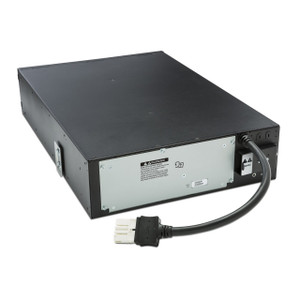
APC by Schneider Electric SYBTU2-PLP Symmetra PX 100 Replacement Battery Kit
Overview
The SYBTU2-PLP is APC by Schneider Electric's factory-replacement battery kit for the APC Symmetra PX 100 uninterruptible power system — one of the most widely deployed three-phase UPS platforms in enterprise data centers and critical infrastructure environments. Each kit contains 8 individual sealed lead-acid batteries rated at 12V / 9Ah, wired with F2/T2 (.250") quick-connect terminals. APC's own recommendation is to replace all four battery modules simultaneously when any module shows end-of-life indicators, and at 8 batteries per kit, the SYBTU2-PLP (often searched as SYBTU2 PLP) is sized to service one complete battery module replacement cycle.
This is not a third-party or aftermarket product. Using factory-sourced replacement batteries in the Symmetra PX 100 keeps the UPS within its tested operating envelope and preserves APC's runtime and load calculations, which are calibrated specifically to this 12V/9Ah cell chemistry and F2 terminal configuration. For facilities managing UPS battery replacement on a scheduled maintenance cycle, ordering this kit eliminates the chemistry mismatch risk that comes from sourcing generic VRLA cells independently.
Key Features
- 12V / 9Ah per cell, 8 cells per kit: The Symmetra PX 100 battery modules are engineered around this exact voltage and capacity specification. Substituting cells with a different Ah rating — even slightly higher — can cause charging imbalance and premature failure across the string. These cells match the OEM chemistry, so the UPS's battery management system charges and monitors them as expected.
- F2/T2 (.250") quick-connect terminals: The .250-inch spade terminal is the standard for this battery module form factor. It mates directly to the existing module wiring harness without adapter or modification — a meaningful time saver when replacing batteries in a hot-standby environment where module swap time is tracked.
- 8-battery kit quantity: APC's published guidance for the Symmetra PX 100 is to replace all batteries within a module together, not to spot-replace individual cells. The 8-count kit aligns with that maintenance protocol, ensuring the entire string ages uniformly from the replacement date forward.
- 3.84-inch cell profile: The 3.84-inch physical dimension is the validated fit for the Symmetra PX 100 battery tray. Cells that differ even fractionally in length can bind in the tray or fail to seat the terminal contacts fully — an installation failure mode that's easy to miss during initial commissioning but surfaces as a contact resistance fault later.
- Sealed lead-acid chemistry (VRLA): Valve-regulated sealed construction means no electrolyte maintenance, no venting requirements beyond standard battery room guidelines, and no orientation sensitivity during installation. Suitable for the enclosed battery module bays in the Symmetra PX 100 enclosure.
- Factory-new cells, not reconditioned: Replacement battery kits sourced through commercial-grade channels are factory-new — not refurbished or reconditioned pulls from decommissioned UPS systems. Starting from a known cycle-zero state means the runtime projections the UPS displays post-replacement are accurate, not optimistic estimates on a partially degraded cell.
Integration & Compatibility
The SYBTU2-PLP is designed specifically for the Symmetra PX 100 UPS platform. Before ordering, confirm the battery module part number on your installed modules matches the SYBTU2-series designation — the Symmetra PX product family spans multiple frame sizes and battery configurations, and cross-installing battery kits between module types is not supported. If you are servicing a multi-module Symmetra PX 100 installation, APC's recommendation to replace all four modules simultaneously means you may need multiple SYBTU2-PLP kits depending on your module count. Consult your power management maintenance schedule and UPS event log to determine whether a full-system battery replacement is indicated or whether individual module replacement is appropriate for your runtime degradation pattern.
Frequently Asked Questions
Q: How many batteries are included in the SYBTU2-PLP kit?
A: Each SYBTU2-PLP kit contains 8 individual sealed lead-acid batteries, each rated at 12V / 9Ah with F2/T2 (.250") quick-connect terminals.
Q: What UPS system is the SYBTU2-PLP designed for?
A: The SYBTU2-PLP is the factory replacement battery kit for the APC Symmetra PX 100 UPS. It is not a universal replacement and should only be used in the specific battery modules it is designed to service.
Q: Why does APC recommend replacing all four modules at once?
A: Battery strings perform best when all cells have been cycled the same number of times from the same start date. Spot-replacing individual cells introduces chemistry age mismatch, which can cause uneven charge distribution and accelerate failure in the older cells surrounding the replacement. APC's protocol is to replace the entire module battery set simultaneously.
Q: Can I use a higher Ah-rated 12V battery to extend runtime?
A: No. The Symmetra PX 100's battery management system is calibrated to 9Ah cells. Installing cells with a different capacity rating can cause charging voltage errors, inaccurate runtime estimates on the UPS display, and potential overcharge conditions that shorten battery life. Use only the specified 9Ah cells.
Q: What does the F2/T2 terminal designation mean for installation?
A: F2/T2 refers to the .250-inch wide spade (Faston) quick-connect terminal standard. This mates directly to the existing wiring harness in the Symmetra PX 100 battery module without any adapter. F1 terminals use a narrower .187-inch spade and are not compatible — confirm terminal size before ordering if you are sourcing replacement cells from multiple vendors.
Q: How many SYBTU2-PLP kits do I need for a full Symmetra PX 100 battery replacement?
A: That depends on how many battery modules are installed in your Symmetra PX 100 frame. Each kit covers one module (8 cells). Count your installed battery modules and order one kit per module. If following APC's replace-all-four guidance, a four-module system requires four kits.
The SYBTU2-PLP is one of those maintenance items where the temptation to substitute a generic 12V/9Ah VRLA cell is real — and usually a mistake. I've seen installations where facilities teams sourced 'equivalent' cells from an industrial battery distributor to save on kit cost, only to find the UPS's battery test routine flagging module faults within six months. The Symmetra PX 100's battery management is calibrated to this specific cell chemistry and the F2/T2 .250-inch terminal interface. Deviating from either introduces variables the BMS wasn't designed to handle.
Technical Highlights:
- 12V / 9Ah matched chemistry: The Symmetra PX 100's charge algorithm and runtime calculations are built around 9Ah capacity. A cell rated even 10% higher won't charge to full capacity under the existing voltage profile, effectively wasting that extra capacity and generating inaccurate runtime readings on the UPS display.
- 8-cell kit per module: Buying the SYBTU2-PLP as a complete 8-cell kit enforces the replace-all-at-once protocol. Ordering individual cells and replacing only the failed ones leaves a mixed-age string that degrades faster than a uniform replacement would.
- 3.84-inch form factor: The physical fit is not just a convenience spec. Cells that are even slightly oversized can prevent the battery module tray from closing fully, which in a hot-swap module means you're running a module that isn't fully seated — an intermittent contact fault waiting to surface during a real power event.
Deployment Considerations:
- If you're managing a Symmetra PX 100 with four battery modules and following APC's replace-all guidance, plan for four SYBTU2-PLP kits per full replacement cycle. Budget and order accordingly — running a mixed-age battery plant in a critical UPS is the most common cause of unexpected runtime shortfalls during actual outages.
- The F2/T2 terminal is the correct spec for this module, but double-check your installed module's wiring harness before ordering — the broader Symmetra PX product family uses different battery module variants, and ordering the wrong kit means a return trip to the loading dock, not a quick swap.
For enterprise data centers and critical facilities running the Symmetra PX 100 as primary three-phase UPS infrastructure, the SYBTU2-PLP is the straightforward, low-risk path for scheduled battery maintenance — particularly where uptime SLAs make 'close enough' battery sourcing an unacceptable gamble.