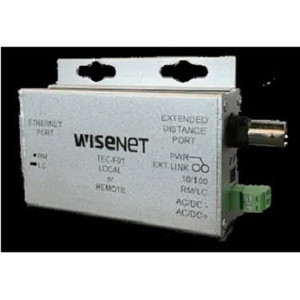
Code Blue SLNP0107 Ethernet PoE Extender Copper
Overview
The Code Blue SLNP0107 is an Ethernet PoE extender designed to distribute power and data across copper-based network infrastructure. This unit addresses a specific infrastructure gap: extending PoE delivery over longer copper runs without signal degradation, while maintaining audio input capability for integrated communication deployments. The SLNP0107 fits into surveillance and emergency communication networks where distributed microphone or speaker nodes require reliable, centralized power and data sourcing.
Key Features
- PoE Power Distribution: Delivers Power over Ethernet across copper infrastructure — eliminates the need for separate power supply runs to remote nodes, reducing installation cost and wall-penetration requirements in retrofit deployments.
- Audio Input Support: Integrated audio input allows connection of microphones, paging amplifiers, or audio sensors without requiring separate audio cabling — meaningful in intercom and emergency announcement systems where audio and power must arrive at the same endpoint.
- Multiple Mount Options: Wall, pole, recessed, and rack mounting configurations accommodate varied installation environments — critical flexibility for facilities that mix indoor wall-mounted controllers with outdoor pole-mounted speakers or in-rack network equipment.
- Copper Ethernet Compatibility: Purpose-built for standard copper twisted-pair networks (CAT5e/CAT6), ensuring compatibility with existing facility cabling infrastructure without requiring fiber or specialized media converters.
- Component Compatibility: Designed as a modular component within Code Blue's broader ecosystem — works with CB Series towers, wall enclosures, and VoIP speakerphone systems that already support PoE-powered endpoints.
Integration & Compatibility
The SLNP0107 integrates into Code Blue's audio and emergency communication product lines, including CB1, CB2, CB4, CB5, CB6, and CB9 series towers and enclosures. It is compatible with IP1500/IP1501, IP2500/IP2501, IP5000 VoIP speakerphones, and LS1000/LS2000 audio paging systems that rely on centralized PoE power distribution. When deploying the SLNP0107 in a mixed-equipment network, verify that upstream switch or injector capacity supports the aggregate wattage of all connected endpoints. The unit uses standard RJ-45 connectors for data and copper wire connections for audio input; if retrofitting into a facility that has legacy molded-plug wire connectors, Code Blue supplies Wago conversion kits to bridge the connector style change that occurred in 2020 production transitions.
Frequently Asked Questions
Q: What is the maximum distance the SLNP0107 can extend PoE over copper?
A: Evidence provided does not specify maximum copper run distance. Standard Ethernet PoE is rated to 100 meters per IEEE 802.3, but confirm with Code Blue technical support for this specific extender model.
Q: Can the SLNP0107 be rack-mounted?
A: Yes. The SLNP0107 supports rack mounting as one of its four mount options (wall, pole, recessed, and rack), making it suitable for centralized network closet installations.
Q: Does the SLNP0107 work with non-Code Blue PoE devices?
A: The SLNP0107 is specified as part of Code Blue's component ecosystem and is documented in the Code Blue parts catalog. Compatibility with third-party PoE endpoints should be verified with Code Blue directly, as proprietary audio input signaling may apply.
Q: What connector types does the SLNP0107 use?
A: The unit uses standard RJ-45 connectors for ethernet data. Audio connections use either Wago plug-and-socket connectors (2020 production forward) or legacy molded-plug connectors (pre-2020 units). Conversion kits are available from Code Blue if mixing old and new connector styles.
Q: Is a separate power supply required for the SLNP0107?
A: The SLNP0107 is a PoE extender; it receives power via the ethernet connection itself and does not require a separate AC or DC power supply, simplifying installation in remote locations.
The SLNP0107 is purpose-built to solve a real pain point in distributed emergency communication and surveillance audio networks: getting power and audio signal to remote speaker or microphone nodes without running dual cable runs. When you're retrofitting a warehouse or campus building with Code Blue speakerphones or IP1500 emergency phones, the SLNP0107 does the heavy lifting — PoE travels the existing copper infrastructure, audio input feeds back to a central paging amplifier, and you cut installation labor and wall penetrations in half.
Technical Highlights:
- Audio Input Over PoE: Integrates microphone or paging amplifier signals without separate audio cabling — cuts the number of cable runs required to a remote node, reducing both material cost and installation time in multi-story or outdoor deployments of Code Blue CB Series towers and IP2500 speakerphones.
- Four-Mount Flexibility: Wall, pole, recessed, and rack options mean the SLNP0107 fits into network closets, electrical enclosures, outdoor pole mounts, or even recessed cavity installations — no need to force an oversized or purpose-built housing into a constrained space.
- Wago Connector Transition Support: Code Blue production switched to locking Wago connectors in 2020. The SLNP0107 and matching accessories include conversion kits if you're mixing pre-2020 molded-plug units with newer equipment — eliminates the gotcha of ordering a replacement component only to discover it won't mate with your existing harness.
Deployment Considerations:
- Verify upstream PoE injector or switch power budget; the SLNP0107 passes power to downstream endpoints, so aggregate wattage of all connected speakers, microphones, or IP handsets must fit within your switch's PoE allocation.
- Audio input signaling is proprietary to the Code Blue ecosystem — third-party PoE devices may not recognize or respond to the audio input channel. Stick to Code Blue IP1500, IP2500, CB Series, or LS2000 endpoints for reliable integration.
The SLNP0107 is the right pick for campus-wide IP paging systems or warehouse emergency announcement networks where you need to distribute power and microphone audio from a central controller to multiple wall-mounted or pole-mounted speaker enclosures. Cable count and labor drop significantly compared to running separate power and audio feeds to each node.