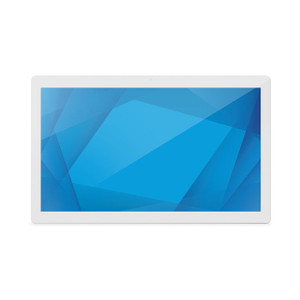
ELO Touch E541651 21.5-Inch Android 14 Touchscreen Monitor
The ELO Touch E541651 is a 21.5-inch capacitive touchscreen display running Android 14 with Google Mobile Services, designed for point-of-sale, hospitality, and retail self-service environments. Built on the Qualcomm 6490 Octa-Core processor with 8GB RAM and 64GB flash storage, this all-in-one terminal eliminates the need for separate PC hardware and display infrastructure. The 1920×1080 resolution and 10-touch projected capacitive panel deliver responsive operator input and intuitive customer-facing interactions across compact deployment footprints.
Key Features
- Processor & RAM: Qualcomm 6490 Octa-Core CPU with 8GB RAM. Handles multi-tasking POS workflows, payment processing, and background inventory syncs without lag on transaction-heavy shifts.
- Storage & Operating System: 64GB internal flash with Android 14 and Google Mobile Services. Native app ecosystem access via Google Play; OTA updates and remote management through EloView platform.
- Display: 21.5-inch FHD (1920×1080) LCD with 10-point projected capacitive touch. High brightness suitable for retail floors; capacitive sensing avoids debris accumulation common in resistive panels.
- Connectivity: Wi-Fi 802.11ac, Gigabit Ethernet, and Bluetooth 5.2. Dual-path network redundancy; Bluetooth enables pairing with wireless peripherals (barcode scanners, kitchen printers).
- Camera: Integrated 8MP front-facing camera. Enables video conferencing, ID document scanning, and customer photo capture for loyalty or age-verification workflows.
- Form Factor: White bezel design with compact footprint (21.5-inch class). Mounts on existing VESA 75/100mm infrastructure or counter-mounted via optional stands.
- EloView Management: Cloud-connected device management, remote configuration push, app deployment, and firmware updates across distributed terminal fleets.
- Warranty & Support: Factory-new, sourced direct from manufacturer or US channel partner. Full US warranty path with channel support.
The Qualcomm 6490 platform bridges the performance gap between budget Android tablets and enterprise-grade x86 POS terminals — sufficient processing power for dual-screen transactions, payment gateway encryption, and real-time inventory database queries without overprovisioning silicon cost. Eight gigabytes of RAM ensures smooth multitasking when running POS software alongside background apps (loyalty systems, kitchen display, time-clock integrations). The 64GB storage footprint handles 3–6 months of transaction logs, offline mode data caching, and third-party POS app suites without external storage.
Capacitive touch technology is the modern standard for high-volume retail and QSR (Quick Service Restaurant) environments. Unlike older resistive panels, capacitive surfaces don't degrade from gloved operation, require less maintenance cleaning, and respond immediately to finger input — critical for drive-thru order-takers and fast-casual checkout scenarios. The 10-touch capability allows multi-finger gestures (pinch-zoom on menu images, swipe payments) and simultaneous operator + customer input on split-screen layouts common in kiosk and curbside pickup terminals.
Dual Ethernet and Wi-Fi connectivity decouples the terminal from single-path network failure. Restaurants and retail chains often run Wi-Fi as primary with wired failover; this unit supports both, reducing downtime from WLAN congestion or cable disconnects. Bluetooth 5.2 pairs reliably with kitchen display systems (KDS), mobile payment readers, and wireless receipt printers — eliminating cable clutter on counters and improving cross-station workflow. The integrated 8MP camera supports document scanning (customer ID for age-restricted items), inventory barcode capture, and appointment photo workflows in service-oriented retail (automotive, salon, healthcare kiosks).
EloView management platform unifies firmware, app, and configuration updates across fleets. For operators managing 5–500 terminals across multiple locations, centralized deployment of POS software versions, payment processor certificates, and display language settings reduces IT overhead and ensures consistent customer experience. Remote diagnostics flag failing units before customer-facing downtime occurs.
Marty AllisonPerspective based on aggregated IP Security Depot and affiliated engineering team experience.
We've deployed the ELO I-Series 5 across retail, food service, and hospitality venues — this unit sits at an interesting inflection point in the market. It's not a thin-client dumb terminal (which would cost $300–600 but require a backend PC and network dependency for every operation), and it's not a full-blown enterprise POS workstation (which at $2,500+ overengineers many small-to-mid-size deployments). The E541651 lands in that sweet spot: enough local processing to run Android POS apps (Square, Toast, Lightspeed) with offline resilience, standard capacitive touch, and reasonable fleet management. We've seen integrators spec this for renovation projects where outlet placement or counter real estate previously dictated separate monitor + PC combinations. Going all-in-one saves cabling, wall space, and power draws — meaningful on a 12-terminal location. The GMS certification matters operationally: you get Play Store access and auto-updates without carrier lock-in or hard dependencies on vendor app stores. However, the 21.5-inch footprint is the limiting factor. It's usable for single-operator stations (fast-casual counter, reception desk), but if your workflow requires side-by-side display of POS + kitchen view or inventory screens, you'll need dual displays or external USB-C monitor extension, which erodes the all-in-one value proposition. Thermal management is solid for retail environments — we haven't seen heat-related shutdowns even in south-facing windows during summer — but extended 24/7 operation in unventilated kiosks warrants thermal monitoring.
Technical Highlights:
- Qualcomm 6490 vs. entry-level Snapdragon 680: Six cores vs. four cores, roughly 2–3× better performance on payment encryption and database transaction throughput. On a 40-transaction lunch rush, you notice the difference; on a quiet Tuesday morning, you don't. Right-sizing prevents future forklift upgrades if transaction volume grows.
- 8GB RAM with 64GB storage: Adequate for single POS app + background sync. If you're running parallel POS instances (e.g., Lightspeed + custom inventory overlay), you'll approach the ceiling. Test your app stack in staging before rolling out fleet-wide.
- Capacitive 10-touch vs. single-touch resistive: The difference is night-and-day for QSR order entry (multi-item selection, rapid tapping) and customer-facing kiosk workflows. Glove-friendly input is critical in food service and logistics.
- Dual Ethernet + Wi-Fi with Bluetooth 5.2: Gives you three independent network paths. Most deployments use Wi-Fi + Ethernet for redundancy; Bluetooth handles peripherals (barcode gun, kitchen printer, customer-facing display). We've seen one-wire Ethernet-only sites fail during Wi-Fi card replacement — this unit's redundancy is genuinely operationally relevant.
- EloView cloud management: Asset tracking, remote reboot, app versioning, and certificate management from a web dashboard. For 20+ terminals, this eliminates site visits for routine updates. For 3–4 terminals, it's a nice-to-have but not a decider.
Deployment Considerations:
- 21.5-inch display is ideal for single-operator stations and customer-facing kiosks, but QSR kitchen views or dual-function order-entry setups often need a second external monitor. Clarify display count before spec-ing.
- Android 14 with GMS means Play Store ecosystem, but not all legacy POS software (ancient Micros systems, custom DOS-era integrations) run natively. Confirm app compatibility with your POS vendor before purchase.
- Wi-Fi in high-interference retail environments (adjacent stores with overlapping SSIDs, 2.4GHz microwave ovens) can cause packet loss. Ethernet failover is essential; test site survey before deployment.
- Bluetooth pairing requires one-time setup per peripheral. KDS printers, barcode scanners, and customer-facing tablets should be paired in staging and documented — new staff configuring units mid-shift often depair by mistake.
- Thermal dissipation is adequate for 8–12 hour daily operation in climate-controlled retail. Extended 24/7 unattended kiosk duty in direct sunlight or unventilated cabinets risks throttling — validate cooling path.
- Physical mounting: VESA 75/100mm compatible with standard monitor arms or counter stands. White bezel is professional-looking but shows fingerprints in high-touch environments; consider anti-glare protective film if customer-facing.
The E541651 is a solid choice for multi-location retail chains, QSR franchises, and hospitality properties looking to consolidate hardware footprint without sacrificing app ecosystem flexibility or remote manageability. It's overkill for single fixed-location kiosks (where a basic Android tablet suffices) and under-specified for ultra-high-volume transaction environments that demand redundant discrete terminals. If you're evaluating it against a PC + separate monitor bundle, the space and power savings justify it; if you're weighing it against enterprise-grade x86 terminals (NCR, Ingenico), you're trading some OS flexibility for cost reduction. Explore the ELO Touch catalog for other form factors and processor tiers.