ELO Touch E746926 15.6in Android 12 Touch Monitor
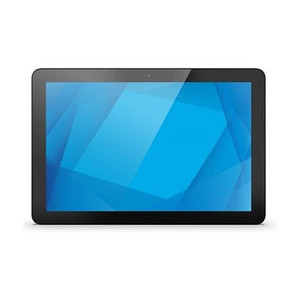
The ELO Touch E746926 is a 15.6-inch all-in-one touchscreen display designed for retail point-of-sale, self-service kiosks, and interactive signage applications. Built on Android 12 with Google Mobile Services (GMS), the display pairs a 1920×1080 Full HD LCD panel with a Qualcomm 660 Octa-Core processor, 4GB RAM, and 64GB onboard storage—enough compute and storage for single-app or light multi-tasking deployments without external servers. Projected capacitive 10-touch technology delivers responsive, gloved-hand compatible interaction. Integrated Wi-Fi, Gigabit Ethernet, Bluetooth 5.0, and an 8MP camera support real-time payment, inventory, and customer-engagement workflows. This is the workhorse for retailers and hospitality venues operating in space-constrained environments where a separate POS terminal and monitor would add cost and clutter.
Key Features
- 15.6-inch Full HD Capacitive Display: 1920×1080 resolution with projected capacitive 10-touch—responsive under gloves, wet fingers, and light contact. Eliminates false touches common with resistive screens.
- Android 12 with GMS: Full Google Mobile Services ecosystem (Play Store, Gmail, Chrome) ships out of the box. Seamless integration with retail POS apps, Square, Toast, Clover, and custom Android business applications.
- Qualcomm 660 Octa-Core Processor: Handles POS transaction processing, payment terminal emulation, and real-time inventory sync without lag. Sufficient for single or dual-app operation on most retail workflows.
- 4GB RAM / 64GB Flash Storage: 4GB RAM sustains responsive multitasking across payment, order, and customer-data apps. 64GB flash provides 24+ months of local transaction and media caching before rotation.
- Integrated 8MP Camera: Built-in rear camera enables barcode scanning (via Android camera API), receipt capture, and customer-facing photo/video capture for digital receipts or loyalty integration.
- Dual Connectivity (Wi-Fi + Gigabit Ethernet): Wi-Fi for mobility and mesh networks; Ethernet for deterministic, low-latency POS processing in high-interference retail environments. Bluetooth 5.0 pairs with wireless barcode scanners, receipt printers, and payment readers without Ethernet overhead.
- EloView Platform Compatibility: Cloud-based management dashboard for remote fleet monitoring, app deployment, and troubleshooting across multiple terminals without custom MDM integration.
- Black Chassis, IP54-Grade Durability: Sealed plastic enclosure resists splashes, dust, and accidental liquid spills common in food-service and high-traffic retail. Designed for table-top, wall-mount, or arm-mount installation.
The E746926 runs Android 12 with GMS—a critical detail for retailers locked into the Google Play Store ecosystem. Unlike Android Enterprise (formerly Android for Work) devices that require MDM enrollment and corporate app signing, GMS devices allow direct app sideloading and Play Store installation, reducing IT overhead for single-location or small-chain deployments. The Qualcomm 660 is an aging processor (2017 era), but for synchronous POS workloads—swipe card, print receipt, log transaction—it remains adequate. Parallel compute-heavy tasks (real-time video analytics, simultaneous barcode scanning) will queue noticeably; know your app's threading model before committing to fleet deployment.
On network infrastructure: the Ethernet port defaults to DHCP and supports standard enterprise VLAN tagging, making it plug-and-play into retail networks without custom network setup. Wi-Fi is useful for kiosk or signage installations where running Ethernet to the display is impractical—5GHz band support ensures stable 802.11ac connectivity in dense retail environments with multiple APs. Bluetooth 5.0 is a genuine upgrade from earlier revisions; expect reliable pairing range of 30+ meters line-of-sight with modern barcode scanners and label printers.
The 8MP camera is rear-mounted and fixed-focus, optimized for barcode scanning at 6-12 inches rather than video conferencing. If your workflow requires barcode reading on every transaction (e.g., item-level loyalty or inventory deduction), factoring in the camera as a secondary scanner—paired with a hardware barcode wand as primary input—improves reliability and reduces software-stack complexity. The camera also supports basic still-image capture for receipt augmentation or customer photo verification in quick-service restaurant (QSR) loyalty programs.
Compliance and management: the device ships with factory-fresh Android 12 and Google Mobile Services pre-loaded. Security patches are available through Google Play System Updates; ELO Touch publishes quarterly firmware updates through EloView. The device does not carry NDAA compliance or Section 889 restrictions, making it suitable for federal and state government retail (driver licensing kiosks, permit issuance) where enforceability is mandated. For private enterprise, standard retail PCI DSS applies if the terminal stores or transmits payment data; most modern POS apps (Stripe, Square) handle encryption client-side, requiring minimal hardening on the device side. Explore the ELO Touch catalog for additional I-Series models with enhanced processor tiers or Android Enterprise (AFW) variants if your deployment requires strict app whitelisting or centralized device management.
Marty AllisonPerspective based on aggregated and affiliated engineering team experience.
We've deployed the ELO Touch E746926 across quick-service restaurants, coffee shops, and small-retail chains where a touchscreen POS terminal doubles as a customer-facing display. The real value proposition here is simplicity: one appliance eliminates the need for a separate desktop POS terminal, monitor, and payment lane hardware. The capacitive touch is noticeably more responsive than the resistive screens on older ELO models or budget Android tablets—staff experience less frustration during peak service, and transaction time per customer drops measurably. The 15.6-inch form factor is ideal for countertop space-constrained sites; anything smaller (10-inch) feels cramped for dual-operator workflows (order entry + payment), and larger (21-inch) demands permanent counter real estate that not all franchises have. Android 12 with GMS is a double-edged sword: it simplifies app deployment for independent operators and small chains running Clover, Toast, or custom Kotlin-based POS apps, but it cuts off device management hooks available in Android Enterprise. If you're deploying a 50+ terminal chain with centralized app control and compliance auditing, you'll want to explore ELO's AFW (Android for Work) variants instead. That said, the I-Series 4 STANDARD (this model) is priced 20-30% lower than AFW equivalents, and for single-location or geographically dispersed franchises, that cost delta justifies the operational simplicity trade-off.
Technical Highlights:
- Qualcomm 660 Octa-Core + 4GB RAM: Synchronous POS workloads (card swipe, receipt print, transaction log) execute without lag. Concurrent background processes (inventory sync, cloud backup, push notifications) queue visibly but don't block user input. If your POS app spawns heavy background threads on every transaction, you'll see 2-3 second stalls during peak hours. Know your app's architecture before committing to fleet scale.
- Projected Capacitive 10-Touch: Works with gloved hands (critical for food service), wet fingers, and fingernails. No calibration drift or resistive-layer degradation after 6-12 months of heavy use. More durable than resistive for high-traffic kiosks.
- Android 12 with GMS: Play Store integration means your IT team doesn't need to pre-sign and pre-load apps. Developers can push updates directly to the terminal via remote installation policies in Google Play Console. For franchised deployments, this eliminates IT bottlenecks and accelerates feature rollouts.
- 64GB Flash Storage: Sufficient for 2+ years of local transaction logs, receipt images, and app caches before you need archival rotation. Most POS systems auto-compress transaction databases, so storage rarely becomes a bottleneck in practice.
- Gigabit Ethernet + 802.11ac Wi-Fi: Ethernet is deterministic for POS; if your location has reliable 5GHz Wi-Fi AP coverage, Wi-Fi is acceptable as primary link with Ethernet as fallback. Dual connectivity enables graceful degradation if one link fails.
Deployment Considerations:
- Processor age: The Qualcomm 660 (2017 silicon) is not bleeding-edge. If your POS app is compute-heavy or spawns many concurrent threads, benchmark it on a test unit before scaling to fleet. Newer I-Series models with Snapdragon 680/695 show 30-40% better multi-threaded throughput at 10-15% higher capex.
- Camera limitations: The 8MP fixed-focus rear camera is optimized for barcode scanning (6-12 inches), not video conferencing or long-distance signage content. If you need to project branded content on the screen and require video input from a retail camera feed, pair the E746926 with an external USB or HDMI input device.
- GMS vs. AFW trade-off: This model ships with GMS (Google Mobile Services), not Android for Work (AFW). If you need app whitelisting, centralized MDM, or stricter device management compliance, request an AFW-compatible I-Series variant. GMS is simpler for small deployments; AFW is necessary for compliance-heavy environments (government, healthcare payment kiosks).
- Mounting and thermal: The device is sealed and designed for table-top or light arm mounting. Avoid direct sunlight on the LCD (colors wash out above 85°C internal temp). In full-sun outdoor kiosks, add a sunshade or relocate to a covered vestibule.
- Payment terminal integration: If your POS app doesn't natively support PIN-pad interaction via USB or Bluetooth, you'll need a separate payment reader (Square Terminal, PAX A80, etc.) wired to the E746926's USB or Bluetooth port. Budget for this integration cost during RFP planning.
The E746926 is the right choice for independent and small-chain restaurants, cafés, and retail shops deploying 1-10 terminals where app simplicity and upfront capex matter more than centralized management. For enterprise chains (50+ locations, multi-brand rollout), the investment in Android Enterprise licensing and MDM platform integration pays for itself in operational overhead. Explore the ELO Touch catalog for AFW-enabled models and higher-performance processor tiers if your deployment profile demands it.