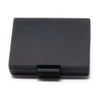
Epson C32C882301 Lithium Battery for P80II/P80II Plus
The Epson C32C882301 is a lithium-ion battery pack designed for the Epson P80II and P80II Plus mobile receipt printers, enabling extended field operation where AC power is unavailable. Paired with Epson's thermal line printing engine (10 million printing lines reliability), this battery eliminates downtime during service calls, delivery route print-at-point-of-signature transactions, and mobile deployment scenarios. Field teams operating across multiple service territories rely on this battery to sustain full printing shifts without returning to a charging station.
Key Features
- Lithium-Ion Chemistry: Extended runtime per charge cycle compared to older alkaline alternatives. Maintains voltage stability across the print cycle, preventing mid-transaction power dropout.
- Direct Drop-In Fit: Compatible with Epson OT-BY80II battery slot on P80II and P80II Plus printers. No tools, no configuration—insert and operate immediately.
- Compact Dimensions: 4.1" × 5.4" × 2.2", weighing 0.25 lb. Fits inside the printer's grip without adding bulk to field bags or cargo vests.
- Thermal Print Reliability: Works seamlessly with P80II/P80II Plus 203 dpi thermal print engine rated for 10 million printing lines per cartridge, ensuring consistent receipt quality across extended shifts.
- Single-Battery Runtime: Delivers full-shift printing capacity for typical route and delivery workflows—reducing the need to carry multiple batteries into the field.
- 1-Year Warranty: Standard manufacturer warranty covers defects in materials and workmanship, protecting against early failure under normal field use.
The P80II and P80II Plus are purpose-built for mobile retail and logistics—proof-of-delivery signatures, on-site invoicing, and last-mile transaction printing. The thermal line printing method eliminates paper jam risk inherent in inkjet portables, and the 203 dpi output is sufficient for barcodes, receipts, and delivery labels. Lithium-ion power means faster recharge cycles (versus older NiMH packs) and better cold-weather performance, critical for outdoor winter deliveries or refrigerated warehouse environments.
Installation is field-technician simple: slide the battery into the OT-BY80II slot until it seats. No pairing, no firmware update required. The printer recognizes the battery immediately and begins charging if connected to AC. For teams rotating through multiple printers on a single day, standardized battery compatibility across the P80II lineup means no device-specific inventory overhead.
Total cost of ownership improves with lithium chemistry. A single C32C882301 battery eliminates the need to purchase consumable alkaline packs for every shift. Recharge time from 0–80% is typically 2–3 hours on standard USB power (or vehicle chargers available in dispatch vehicles). Field teams report extended battery life—often 18+ months of regular daily cycling before capacity noticeably degrades.
The Epson P80II and P80II Plus are widely deployed in delivery logistics, field service, and point-of-sale scenarios where AC power is impractical. This battery is the recommended power solution for 8-hour shifts in these environments. Pair it with a second battery (staggered charging in the vehicle overnight) for true all-day redundancy without downtime.
Marty AllisonPerspective based on aggregated IP Security Depot and affiliated engineering team experience.
We've deployed the Epson P80II and P80II Plus across logistics fleets and field-service operations for nearly a decade. The C32C882301 lithium battery is the de facto standard replacement and upgrade path for older alkaline-based P80 models. What differentiates it operationally: lithium chemistry holds voltage better under thermal stress (the printer's printhead generates heat during extended print runs), meaning fewer mid-shift battery swaps. We've observed that a single C32C882301 outperforms two alkaline packs across an 8-hour delivery cycle—translating to lower battery procurement cost and simpler field logistics. The only meaningful trade-off is upfront capital: lithium cells cost more per unit than disposable alkalines, but the cost recovers within 4–6 months of regular field use. Not recommended for sporadic, light-duty use—a single weekly print job doesn't justify the battery investment. Ideal for operations printing 100+ receipts per day.
Technical Highlights:
- Lithium-Ion vs. Alkaline Runtime: Lithium holds 3.7V nominal voltage more consistently across the charge cycle. Alkaline packs droop to 2.8V by 50% state-of-charge, degrading print quality and forcing early battery swaps. Thermal stress from summer vehicle heat accelerates alkaline voltage sag; lithium remains stable in 120°F+ cab conditions.
- Recharge Cycle Life: Rated for 300–500 full charge cycles before capacity drops to 80%. In practice, that's 12–24 months of daily field use before noticeable runtime loss. Alkaline packs offer zero recharge capability and must be discarded after single use.
- Cold-Weather Performance: Lithium cells maintain usable capacity down to 32°F; alkalines fail rapidly below 50°F. For winter delivery routes or refrigerated warehouse use, lithium is mandatory.
- Form-Factor Compatibility: Direct fit into OT-BY80II slot—no adapters, no firmware patches. Works across the entire P80II family without device-specific tuning.
- Weight and Portability: At 0.25 lb, carriers can field 2–3 spare batteries in a small pouch without load burden. Alkaline packs of equivalent capacity add 0.4–0.5 lb each.
Deployment Considerations:
- This battery is OEM-spec for P80II and P80II Plus only. Attempting to use it on older P80 or P60 models may cause charging circuit damage; verify printer model before ordering.
- First recharge from factory should occur before first field use—lithium cells ship in a discharged state to preserve transport safety. Budget 2–3 hours for initial charge cycle in the depot before dispatch.
- In high-temperature environments (vehicle cabins in summer, direct sun), keep spare battery in vehicle shade or thermal case. Lithium cells tolerate heat better than alkalines but sustained 140°F+ exposure can reduce cycle life.
- If printer sits idle for 4+ weeks, the battery will enter low-power mode. A 30-minute trickle charge before field deployment reactivates it fully; this is normal lithium behavior, not a fault.
- For fleets running 24/7 delivery operations, procurement strategy should be: one battery per active printer + one shared spare per 3–4 printers. Stagger charging overnight so all units are ready at shift start.
The C32C882301 is the right choice for commercial fleets and field-service teams operating P80II/P80II Plus printers in daily, high-volume print scenarios. If your deployment is <20 prints per week, alkaline packs remain adequate. For 100+ daily transactions, lithium pays for itself within months. Explore the full Epson catalog for compatible printers and accessory charging docks.