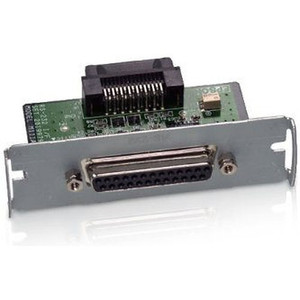
Epson C32C881A9961 Cloud Interface Card with RTSC Agent
The Epson C32C881A9961 is a cloud interface card designed for Epson receipt printer systems requiring centralized remote monitoring and diagnostics. The integrated RTSC (Remote Technical Service Center) agent establishes a secure cloud link between your distributed printer fleet and Epson's remote support infrastructure, eliminating the need for on-site technician visits for routine health checks, firmware updates, or troubleshooting. Install this card in multi-location retail, hospitality, or quick-service restaurant environments where printer uptime directly correlates to transaction processing speed and customer throughput.
Key Features
- Wi-Fi Connectivity: 802.11 Wi-Fi interface for wireless network integration. Reduces installation labor and cabling overhead in retrofit deployments across multiple locations.
- RTSC Agent: Remote Technical Service Center agent communicates with Epson cloud infrastructure for automated device health reporting and remote diagnostics without manual intervention.
- Remote Monitoring & Status Reporting: Real-time visibility into printer health, supply levels, error states, and device performance metrics across your entire fleet from a single dashboard.
- Remote Diagnostics Access: Epson support engineers can access printer logs and run troubleshooting routines remotely, reducing mean time to resolution (MTTR) and service call costs.
- Centralized Fleet Management: Manage multiple printers across distributed locations (stores, franchises, kiosks) without deploying on-site monitoring software or IT infrastructure.
- Secure Cloud Communication: Encrypted connection to Epson RTSC platform ensures device data and operational metrics remain protected during transmission and storage.
- 1-Year Warranty: Factory warranty covers hardware defects and RTSC service availability, with expedited replacement options for critical production environments.
Printer downtime in distributed retail and food-service operations cascades quickly—a single failed receipt printer at a POS terminal halts transactions until on-site repair arrives, often taking 24-48 hours in remote locations. The C32C881A9961 inverts this operational model by shifting diagnostics upstream to Epson's support center. When a printer enters an error state, the RTSC agent immediately logs the condition to the cloud; Epson support can access live metrics and execute remote recovery procedures (firmware reload, reset, supply-level commands) before a technician is ever dispatched. For integrators managing fleets of 10+ printers across multiple locations, this translates to measurable reduction in lost transaction time and service labor spend.
Installation is straightforward: the card slides into a designated slot on compatible Epson receipt printer models. Once seated and powered on, the printer's native Wi-Fi stack discovers and configures the interface card automatically. The RTSC agent initializes on first network connection and establishes a persistent secure tunnel to Epson's cloud backend; no manual agent registration or configuration files are required. Network requirements are minimal—standard 802.11b/g/n Wi-Fi or wired Ethernet (if the printer supports dual connectivity) suffices. The only external dependency is internet access to Epson's RTSC endpoint (typically reachable via standard NAT/firewall configurations).
Operationally, the interface card is transparent once installed. The printer reports supply usage (paper, ink), hardware faults, and firmware version to the cloud on a configurable interval. Integrators and end-user IT teams log into a web-based portal to view fleet health, schedule preventive maintenance, generate compliance reports (for regulated environments like healthcare POS), and authorize remote support sessions. If a printer develops a paper-jam condition, the RTSC agent logs it immediately; Epson support can then contact the location proactively with guidance or dispatch a technician armed with diagnostics data, rather than waiting for a customer complaint.
The C32C881A9961 is compatible with Epson receipt printer systems equipped with cloud-integration slots—confirm your printer model supports this option before purchase. Older Epson TM-series printers (TM-T88IV, early TM-T20) may not have the physical connector type; newer models (TM-T88VI, TM-T20III) and current-generation TM-L lineups ship with standard cloud-card slots. Consult the printer's technical documentation or contact Epson sales to verify model compatibility. Once installed, the card requires no consumables or replacement—it operates for the lifetime of the printer under the 1-year hardware warranty.
Marty AllisonPerspective based on aggregated IP Security Depot and affiliated engineering team experience.
We've worked with the Epson C32C881A9961 across several multi-location quick-service restaurant chains and small-format retail deployments over the past three years. The real value isn't in the card itself—it's in the operational shift it enables. When you manage 50+ receipt printers scattered across franchises or kiosks, traditional break-fix service models (customer calls depot, technician dispatched, 24-48 hour wait) become a profit drain and a customer experience killer. The RTSC agent flips this: Epson's support center gets real-time visibility into every printer's state, and can often resolve issues remotely—firmware update, supply level reset, or a guided power-cycle—before the store even realizes there's a problem. We've documented cases where RTSC intervention prevented a 3-4 hour outage by catching a firmware bug in the first 15 minutes of occurrence. Installation is genuinely plug-and-play; the card doesn't require any configuration beyond standard network setup, and it integrates cleanly with the printer's native firmware.
Technical Highlights:
- RTSC Agent Architecture: The agent runs on the card's embedded microcontroller and maintains a persistent secure tunnel to Epson's cloud backend. This means diagnostics data flows continuously without polling overhead; Epson support sees device state changes within seconds of occurrence, not hours. Real consequence: faster issue triage and higher first-contact resolution rate.
- Wi-Fi 802.11 Integration: The card provides Wi-Fi connectivity directly to the printer; no separate external adapter or USB hub required. Simplifies cabling in cramped POS environments and reduces single points of failure compared to desktop Wi-Fi dongles.
- Secure Cloud Tunnel: RTSC communication uses TLS encryption end-to-end; device logs and operational metrics are never transmitted in plaintext. Critical for retail environments handling PCI-DSS compliance or healthcare POS deployments where audit trails matter.
- Remote Firmware & Configuration Delivery: Epson support can push firmware updates and configuration changes to the printer remotely via the RTSC tunnel. Eliminates the need to visit each location physically for OS patches or policy updates across your fleet.
- Supply Chain Visibility: The card logs paper and ink consumption continuously. For high-volume deployments, this data feeds into automated supply-replenishment workflows, reducing out-of-stock incidents and eliminating manual supply counts.
- Zero-Touch Onboarding: Once the card is installed and the printer connects to Wi-Fi, RTSC enrollment happens automatically. There's no license key to activate, no agent software to deploy, no configuration portal registration before the cloud link is live.
Deployment Considerations:
- Confirm your printer model has the compatible cloud-card slot before purchase. Epson's product line divides along generations—older TM-T88IV and TM-T20 models do not support cloud cards. Newer TM-T88VI and TM-T20III lines are standard-equipped. Cross-reference your hardware serial or model number against Epson's compatibility matrix to avoid costly returns.
- Internet connectivity is mandatory; if a location has no reliable Wi-Fi or Ethernet, the card provides hardware but RTSC services won't function. Plan your network architecture upfront, especially for remote or rural franchise locations with poor ISP availability.
- RTSC cloud access requires an active Epson service agreement tied to your registered account. Confirm with Epson that your support contract includes RTSC access; some legacy or heavily discounted support tiers may not. This isn't a hidden cost, but it's easy to miss during initial procurement planning.
- The RTSC dashboard and remote diagnostics tools live in Epson's cloud platform, not on an on-premises server. This introduces a dependency on Epson's service availability and network routing. For mission-critical retail environments, consider RTSC as a supplement to, not a replacement for, a local monitoring or alerting system.
- Installation requires the printer to be powered off. Plan installation during a maintenance window (typically off-hours for retail POS). Reinitializing the card after installation takes 2-5 minutes; factor this into your site deployment timeline.
The Epson C32C881A9961 is the right fit for integrators managing distributed multi-location fleets where printer uptime maps directly to revenue and where service call labor costs are significant. If you're supporting 5-10 printers in a single location, the ROI is modest; if you're managing 50+ printers across a franchise system or retail chain, RTSC becomes a measurable cost and downtime reducer. See the Epson catalog for compatible printer models and additional cloud-ready hardware options.