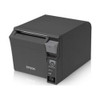
Epson C31CD38A9921 T70II Wi-Fi Receipt Printer
The Epson C31CD38A9921 T70II is a multi-connectivity inkjet receipt printer designed for point-of-sale terminals, label operations, and retail checkouts. Built around 600 dpi inkjet technology, the T70II delivers crisp, legible receipts and labels without the maintenance overhead of thermal printing. Wi-Fi connectivity eliminates cable runs to checkout stations and back-office label printers, while USB and serial fallback options ensure compatibility with legacy POS systems and direct-connection workflows. This is the printer of choice for multi-location retail chains and warehouse operations where equipment flexibility trumps single-purpose simplicity.
Key Features
- Wi-Fi + USB + Serial Connectivity: Three interface options—wireless for mobile deployment, USB for modern POS systems, serial for legacy terminals. Choose based on installation context without requiring hardware swaps.
- 600 dpi Inkjet Resolution: Exceeds thermal printer clarity on fine-print receipts and barcode labels. Legible text and graphics reduce customer complaints and barcode-scan failures.
- Dual Media Support: Handles both standard receipt rolls and label stock in a single unit. Eliminates the need for separate receipt and label printer SKUs on the depot shelf.
- Compact Footprint: Dark gray desktop form factor fits tight counter and back-office spaces without dominating real estate.
- 1-Year Manufacturer Warranty: Standard coverage with direct Epson support for hardware failures and supply chain issues.
- Open Interface (USB/Serial/Network): ESCPOS and raw command compatibility—integrates with third-party POS platforms (Square, Toast, PAR PixelPoint, NCR) without middleware licensing.
The T70II occupies the middle ground between consumer inkjet all-in-ones and enterprise thermal printers. It's not a high-volume receipt factory—thermal units print faster and cost less per page in pure speed-focused environments. But where receipt quality and label flexibility matter more than raw throughput, the T70II's 600 dpi resolution and multi-media handling deliver measurable operational benefit. Wi-Fi capability is the standout: no more USB hub sprawl behind a 16-station register bank, and print jobs route over existing network infrastructure without additional cabling or IT coordination.
Media cost and ink consumption are the trade-offs. Inkjet cartridges cost more per page than thermal ribbons, and you'll want to track inventory on both receipt rolls and label stock. For high-volume operations (500+ receipts/day, heavy label printing), total cost of ownership can exceed a comparable thermal unit within 18–24 months. But for retail boutiques, service counters, and warehouse shipping stations where receipt/label mix is unpredictable and aesthetics matter (think upscale restaurants printing branded receipts), the T70II's flexibility justifies the consumables cost.
The printer arrives without a power supply—verify 120V/240V availability and outlet proximity before purchase. USB and serial cables are included; Wi-Fi configuration happens via Epson's setup utility or direct IP address entry on the printer's control panel. Most integrators report 15–20 minutes from unboxing to first receipt on network-connected installations.
Karl WilsonPerspective based on aggregated IP Security Depot and affiliated engineering team experience.
We've deployed the Epson T70II across retail chains, QSR locations, and warehouse label stations where receipt and label media demand coexist. The real differentiator is operational flexibility: a single SKU handles both roles, eliminating the complexity of stocking separate thermal receipt and label printers. On multi-site rollouts, that standardization cuts training burden and spare-parts overhead measurably. The Wi-Fi interface is genuinely useful—we've seen integrators pull the printer off a fixed counter and relocate it to a new POS terminal in minutes without rewiring infrastructure. That mobility value is easy to overlook until you're managing a 30-location franchise upgrade and Wi-Fi printers shave two weeks off deployment. The 600 dpi resolution produces output that looks professional; branded receipt logos and fine-print restaurant menus actually legible is a nice customer-facing detail that matters in hospitality. That said, the T70II is not a high-speed workhorse. Inkjet print speed lags thermal by 30–40%, and if you're printing 1000+ receipts daily, you'll see queue buildup. The consumables economics are unfavorable at volume: ink cartridges versus thermal ribbons cost roughly 3–5x more per page printed. For light-to-moderate duty (fewer than 300 receipts/day, mixed with label jobs), it's the right choice. For pizza chains, QSR drive-throughs, or fulfillment centers running 24/7, a thermal unit is lower TCO. Know your volume baseline before speccing.
Technical Highlights:
- 600 dpi Inkjet Rendering: Inkjet technology at this resolution outperforms thermal on fine detail and color saturation—important if your receipts carry QR codes, restaurant logos, or promotional graphics. Thermal printers max out around 203–300 dpi and produce monochrome output only.
- Wi-Fi 802.11b/g/n: Standard wireless protocol integrates with any 2.4GHz enterprise Wi-Fi network. No special access-point configuration required; standard WPA2 security. Print from mobile devices (iPad register systems) or fixed terminals without USB tethering.
- ESCPOS Command Set: Industry-standard receipt printer language—virtually all POS platforms (Lightspeed, Square, Toast, PAR, NCR) ship with T70II drivers or generic ESCPOS templates. No custom firmware or middleware licensing required.
- Dual Media Tray Design: Receipt roll and label roll capacity in one chassis. Switching media takes 30 seconds—no need to power down or reconfigure driver settings.
- Compact Networking Stack: Onboard Ethernet-over-USB and Wi-Fi allow configuration via web interface or Epson's Setup Utility. DHCP or static IP assignment. Firmware updates pull from Epson's CDN without additional IT overhead.
Deployment Considerations:
- No Power Supply Included: Verify 120V or 240V outlet availability at the installation site before the technician arrives. Universal power brick is available separately; confirm voltage requirement against regional standards (US = 120V, EU = 230V).
- Inkjet Cartridge Lifespan: Track cartridge inventory proactively. Dry-out risk is real if the printer sits idle for 2+ weeks without a purge cycle. For retail locations that run 16+ hours daily, this is a non-issue. For kiosks or pop-up checkouts with intermittent duty, budget for occasional cartridge replacement even if ink levels appear adequate.
- Wi-Fi Roaming in Large Venues: If deployment spans a warehouse or multi-floor retail space with weaker signal zones, confirm that your Wi-Fi infrastructure (AP placement, band steering) can handle mid-print handoff between access points without queue dropout. Test in the actual environment before going live on 10+ units.
- Media Roll Compatibility: Epson T70II supports standard receipt roll diameters (up to 80mm outer, 12.7mm core) and label roll stock. Verify your receipt and label media specifications match Epson's published compatibility list—third-party rolls occasionally cause edge-alignment issues that show up after 500+ prints.
- Thermal Hybrid Environments: If you're adding T70II printers to an existing estate of thermal receipt printers, anticipate minor ESCPOS command variations (timeout delays, cut commands) between units. Test print jobs on a T70II first before rolling out across the fleet—POS driver tweaks are usually minor but not zero.
The Epson T70II is the right call for retail, hospitality, and warehouse teams that value receipt/label versatility and customer-facing output quality over pure speed and low consumables cost. Smaller operations, franchise locations, and service counters see genuine ROI on the Wi-Fi and dual-media capabilities. If your environment is volume-driven (high-throughput QSR or fulfillment), a dedicated thermal receipt printer is likely more economical. For multi-function flexibility at the cost of slightly higher ink spend, the T70II delivers. See the Epson catalog for additional receipt and label printer options.