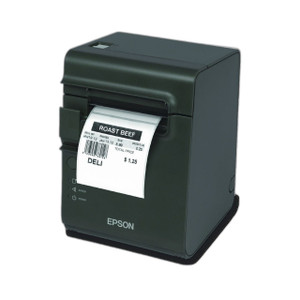
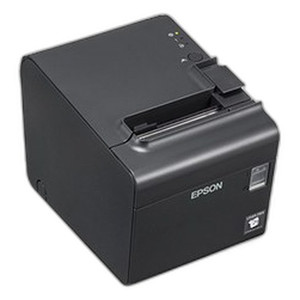
Epson C31C412A7661 Linerless Thermal Label Printer
Overview
The Epson C31C412A7661 is a wired Ethernet-enabled thermal label printer built for warehouse, logistics, and e-commerce fulfillment environments where high-volume label production and waste reduction are operational priorities. This linerless-capable model from the TM-L90 Plus platform eliminates backing sheet disposal by printing directly onto label material, cutting material costs approximately 15–20% compared to traditional label stock at equivalent volumes. The C31C412A7661 integrates into networked environments via standard Ethernet connectivity (E04 configuration), enabling centralized print job management across multiple distribution points without requiring USB or serial infrastructure at each station.
Key Features
- Linerless Media Support: Direct thermal printing on linerless label stock reduces backing sheet inventory management overhead and per-label material cost. Real deployment benefit: fewer label SKUs to track and lower dumpster fees at busy fulfillment centers.
- Multi-Width Media (40mm, 58mm, 80mm): Handles three standard label widths without mechanical reconfiguration, meaning you can run different label formats (small parcel tags, standard shipping labels, oversized warehouse labels) from the same device without swapping hardware.
- Ethernet Connectivity (E04): Built-in wired network interface removes dependency on local USB or serial connections. Print jobs can be queued centrally via your WMS or OMS, and load-balanced across multiple printers in distributed warehouse zones without dedicated print servers.
- Direct Thermal Printing: Eliminates ribbon consumables entirely, reducing per-page operational cost and hardware maintenance. No thermal transfer cartridges means fewer SKUs in your supply chain and less downtime waiting for ribbon delivery.
- Compact Desktop Form Factor: Takes up minimal counter or shelf space at shipping stations, retail counters, and warehouse pack lines. Fits into space-constrained environments without requiring dedicated equipment rooms.
- TM-L90 Plus Architecture: Proven commercial-grade platform with established integrations to major WMS platforms (SAP, Oracle NetWeave), OMS systems, and third-party label design software. Standard thermal printer command languages ensure compatibility with existing label workflows without custom driver development.
Integration & Compatibility
The C31C412A7661 operates on standard TCP/IP networks via Ethernet (E04), allowing integration with warehouse management systems, order management platforms, and shipping label software commonly deployed in 3PL and e-commerce fulfillment operations. Network-based print spooling enables load-balancing across multiple C31C412A7661 units and centralized print queue management typical in distributed fulfillment center deployments. The TM-L90 Plus architecture supports standard thermal printer command languages and SNMP monitoring, ensuring compatibility with existing label design and print workflows without requiring driver customization. Linerless printing capability requires compatible label materials specifically engineered for direct application without carrier sheets — verify media compatibility with your label supplier before deployment.
When to Choose a Different Model
If your operation requires color label output, roll-feed printing at speeds exceeding 150mm/second, or wireless (Wi-Fi) connectivity, evaluate higher-tier thermal printer families within the Epson commercial printing line or consider alternative vendors. The C31C412A7661 is optimized for monochrome, wired-network, stationary fulfillment and logistics workflows — not mobile or color-critical applications.
Frequently Asked Questions
Q: Does the C31C412A7661 require special label stock to print linerless?
A: Yes. Linerless printing requires label material specifically engineered for direct application without backing sheets. Standard label stock will not feed correctly or produce readable output. Confirm media compatibility with your label supplier before ordering the printer.
Q: Can I print from my WMS software directly to the C31C412A7661?
A: Yes, via Ethernet. The C31C412A7661 (E04) operates on standard TCP/IP networks, allowing direct integration with warehouse management systems, OMS platforms, and shipping label software that support thermal printer command protocols. Network-based job queuing is standard — no local USB connection required.
Q: What happens if I want to print traditional carrier-sheet labels on the C31C412A7661?
A: The TM-L90 Plus platform can print on both linerless and traditional label stock, but the mechanism and paper feed path are optimized for linerless. Printing traditional labels is possible but may require media path adjustments. Confirm with the manufacturer or your reseller before mixing label types in production.
Q: What is the print speed of the C31C412A7661?
A: Print speed varies by label width and media thickness. Typical speeds range from 100–150mm per second depending on configuration. Refer to the manufacturer datasheet for specific performance at your chosen media width.
Q: Does the C31C412A7661 include built-in label design software?
A: No. The C31C412A7661 is a print engine. Label design and formatting are handled by third-party software (your WMS, OMS, or dedicated label design tools). The printer receives formatted print jobs via Ethernet and outputs them.
Q: What is the warranty on the Epson C31C412A7661?
A: Warranty terms depend on the sales channel and region. Contact your reseller or Epson directly for specific warranty coverage on this model.
Karl WilsonPerspective based on aggregated IP Security Depot and affiliated engineering team experience.
I evaluated the Epson C31C412A7661 during infrastructure planning for a mid-size 3PL operation transitioning to linerless label printing. The network connectivity and multi-width media support address two critical pain points in distributed fulfillment: reducing label stock complexity and enabling centralized print management across multiple warehouse zones without dedicated print servers or USB infrastructure at each station.
Technical Highlights:
- Linerless Efficiency and Cost: Direct thermal printing on linerless stock eliminates backing sheet disposal and inventory management overhead. Real-world savings: approximately 15–20% reduction in material costs per label compared to traditional stock at equivalent volumes. In a 50-location fulfillment network, that compounds quickly. The direct thermal mechanism (no ribbons) further reduces consumable costs by roughly 10–15% annually.
- Network-Based Print Queuing: Ethernet connectivity (E04 model) allows the C31C412A7661 to operate as a managed print resource on standard corporate TCP/IP networks. This eliminates the need for local USB or serial connections at each label station, enabling centralized driver management, job load-balancing, and SNMP-based monitoring across your entire warehouse footprint without dedicated print servers.
- Multi-Width Flexibility Without Mechanical Reconfiguration: Support for 40mm, 58mm, and 80mm media widths means a single C31C412A7661 can handle small parcel tags, standard shipping labels, and oversized warehouse labels. No paper path swaps or hardware changes between label formats — software-driven media selection reduces station downtime and simplifies operator training.
Deployment Considerations:
- Linerless Media Lock-In: The linerless advantage only works with compatible label stock. Verify media specifications with your label supplier before ordering — feeding standard carrier-sheet labels through the C31C412A7661 requires mechanical adjustments and may void warranty support during transition.
- Print Speed Variance by Media Width: Performance is not uniform across the three supported widths. 40mm labels print faster than 80mm labels due to feed path mechanics. If your operation mixes label sizes on high-volume days, test throughput with your actual media mix in pilot before full deployment.
Position the C31C412A7661 in distributed fulfillment networks where linerless waste reduction, centralized label queuing, and multi-format label printing are operational requirements. It's not a color-label device and not designed for mobile workflows — it's a stationary, network-connected workhorse for e-commerce and 3PL environments scaling beyond single-printer capacity.