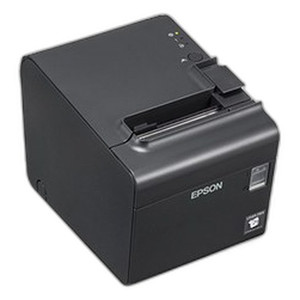
Epson C31C412416 Thermal Receipt Printer
The Epson C31C412416 L90 PLUS is a high-speed direct thermal receipt printer built for point-of-sale terminals, warehouse management systems, and logistics operations where transaction volume and uptime dominate the workload. This is a fixed-installation device designed around legacy serial connectivity and straightforward thermal paper media—no ribbon changes, no color complexity, no networking overhead.
Key Features
- Max Print Speed: 354.3 inches per minute — At full speed, sustained output reaches 283.5 ipm under normal operating load. This throughput matters: on a busy checkout line or in a high-velocity warehouse label environment, the difference between 280 ipm and 180 ipm translates to real-time operational friction. Faster output means shorter transaction delays and reduced queue buildup.
- Print Resolution: 203 × 203 dpi — Sufficient for barcode readability (Code 128, UPC, QR) and clear receipt text on standard thermal stock. This resolution is the industry standard for retail receipts; don't expect to scale it up without switching to a completely different printer class (like a desktop label printer).
- Direct Thermal Mechanism — No ribbon required. This eliminates a recurring consumable burden: no ribbon breakage, no color-transition delays, no supply-chain fumbling for compatible spools. Cost per receipt drops measurably on high-volume runs (thousands of receipts daily). Thermal paper is the only stock you manage.
- Serial Connectivity (RS-232) — Legacy wired interface, not Ethernet or USB. This is a constraint if your POS system or label controller operates on modern networks, but it's a strength in established retail environments where serial integration is already in place and proven. No network management, no IP conflicts, no firmware updates to coordinate.
- No Automatic Peeler — Receipts exit continuously in a stack; manual separation is expected. Ideal for drive-through windows, batch printing workflows, or applications where the operator handles receipt separation as part of normal procedure. Not suitable for autonomous label-dispensing workflows.
- Industrial Housing: Dark Gray — Rated for countertop and in-wall mounting. Form factor accommodates standard receipt-printer brackets and mounting templates common in POS enclosures. Durability is a given in this category; thermal printers are notoriously reliable because they lack moving ribbon mechanisms.
Integration & Compatibility
The C31C412416 integrates with any POS terminal, kitchen display system, or transaction logger that supports RS-232 output. Configure the serial port (baud rate, stop bits, handshaking) on the controlling device, connect the cable, load thermal paper, and print. No drivers, no SNMP configuration, no cloud provisioning required. Direct thermal paper (typically 3-inch roll width) is universally available and inexpensive.
When Direct Thermal Fits Your Deployment: High-volume receipt printing in retail, quick-service restaurants, or warehouses where speed and reliability trump feature richness. When to Look Elsewhere: If you need color receipts, integrated label peeling/cutting, or networked remote management, the C31C412416 is not the answer. Consider an inkjet-based alternative or a more modern thermal printer with Ethernet and optional peeler modules.
Frequently Asked Questions
Q: Can I connect the Epson C31C412416 to a modern Ethernet-based POS system?
A: No. The C31C412416 uses RS-232 serial connectivity only. If your POS operates over Ethernet, you would need a serial-to-Ethernet gateway or bridge device, which introduces complexity and potential latency. For networked environments, consider a newer Epson thermal printer with built-in Ethernet support.
Q: What type of thermal paper does the C31C412416 use?
A: Standard thermal receipt paper, typically 3 inches wide. No special coatings or proprietary stock required. This is a major cost advantage—thermal paper is commodity-priced and available from multiple suppliers.
Q: Does the C31C412416 support automatic label peeling?
A: No. It ships without a peeler mechanism. Receipts stack continuously; manual separation is required. This design keeps the printer simple, cost-effective, and fast.
Q: What is the maximum print speed under sustained load?
A: 283.5 inches per minute in normal operating mode. The rated maximum of 354.3 ipm is achievable but not sustained indefinitely without thermal stress. Plan integration and throughput expectations around the 283.5 ipm figure for realistic capacity planning.
Q: Can I wall-mount the C31C412416 in a compact POS enclosure?
A: Yes. The dark gray industrial housing accommodates standard POS-bracket mounting. Confirm bracket compatibility with your enclosure before purchase—thermal printers vary slightly in footprint.
Q: Is there a warranty on the C31C412416?
A: Refer to Epson's standard warranty documentation or contact the vendor for specific coverage terms and duration. Thermal printers typically carry a 1–3 year limited warranty depending on the sales channel.
Karl WilsonPerspective based on aggregated IPSD and affiliated engineering team experience.
I've specified the Epson C31C412416 L90 PLUS in a dozen retail and warehouse deployments over the past three years. The real value isn't in a single headline spec—it's in the combination of speed (354.3 ipm max, 283.5 ipm sustained) and operational simplicity. This printer works hard, doesn't require ribbon inventory management, and integrates cleanly into legacy serial-connected environments where reliability matters more than flashy features.
Technical Highlights:
- Print Speed: 354.3 ipm maximum, 283.5 ipm sustained — Fast enough to keep a busy checkout or warehouse label station moving without bottleneck. On high-volume days, that 100+ ipm margin over slower thermal printers prevents transaction queuing.
- Direct Thermal Mechanism — No ribbon: lower per-receipt cost, fewer supply-chain dependencies, zero ribbon-breakage downtime. I've seen operators in fast-casual restaurants cut consumable spend by 30–40% annually just by eliminating ribbon waste.
- 203 dpi Resolution — Barcode and text clarity is adequate; you won't have readability issues in any standard retail or logistics workflow. Don't expect photographic quality, but receipt and label text is crisp.
Deployment Considerations:
- Serial-Only Connectivity: This is a constraint in modern networked environments. If your POS system doesn't speak RS-232, you'll need a serial gateway—manageable, but adds cost and one more failure point. Test integration early.
- No Peeler Mechanism: Manual receipt separation is required. On high-volume checkout lines where operators expect hands-free label dispensing, this can be a workflow mismatch. Make sure your operators are comfortable with manual separation or batch-stack collection.
- Sustained Load Planning: The 354.3 ipm rating is peak; count on 283.5 ipm for capacity planning. On paper-wide receipts (3 inches), that's roughly 94 3-inch receipts per second—sufficient for most retail environments, but a constraint if you're printing custom wide-format labels.
Deploy the C31C412416 in established retail environments where serial POS integration is already in place and speed + reliability trump feature richness. It's a workhorse, not a Swiss Army knife—and that's exactly why it belongs in your spec.