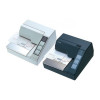
Epson C31C163292 TM-U295 Impact Receipt Printer
The Epson C31C163292 is a dot-matrix impact receipt printer engineered for high-volume point-of-sale, retail, and hospitality environments where cost per receipt and operational reliability take priority over print speed and color output. Built on the proven TM-U295 platform, this model delivers monochrome receipt printing via impact mechanism — eliminating the need for thermal paper and enabling multi-part carbonless form support that thermal printers cannot handle.
Overview
Impact printing on the C31C163292 operates independently of ribbon quality degradation, meaning print consistency remains stable across thousands of receipts without the image-fade problems thermal printers develop over time. The printer connects via standard serial (RS-232) interface, making integration straightforward in legacy POS systems and existing checkout infrastructure. Configuration uses hardware DIP switches rather than software initialization, reducing deployment complexity and vendor lock-in risk. The compact countertop form factor fits standard checkout stations without requiring dedicated space.
Key Features and Specifications
- Print Speed — 2.1 lines per second: Sufficient for single-transaction receipt production (typical receipt prints in 3–5 seconds). This speed is not optimized for batch label printing or high-volume document jobs, but handles steady checkout-line throughput without noticeable delays in retail and hospitality settings.
- Print Resolution — 16.2 characters per inch (cpi): Delivers readable monochrome text on receipts. Barcode and line-art clarity meets standard POS documentation requirements; this is not a graphics printer, so photo or detailed image rendering is not a design goal.
- Monochrome Impact Printing: Dot-matrix mechanism strikes paper through ribbon, requiring ribbon replacement (not thermal print-head maintenance). Ribbon consumable costs run significantly lower than thermal paper in high-volume shops — a meaningful factor when printing 500+ receipts daily.
- Media Support — Edge-guide receipt and slip handling: Printer accommodates standard bond, receipt stock, and multi-part carbonless forms (2–3 copies). Thermal printers cannot print multi-part forms, so if your operation requires customer + kitchen + accounting copies simultaneously, impact is your only path without duplicating print runs.
- Serial RS-232 Connectivity: Direct connection to legacy RS-232 ports on POS terminals, cash drawers, and in-counter systems. Modern PCs and servers require a USB-to-serial adapter (not included); native USB or Ethernet options are not available on this configuration.
- AC Power — No External Supply Required: Operates on standard 110–240V AC mains. No 12VDC wall-wart or UPS conditioning needed, simplifying outlet and power-management planning at the point of sale.
- Audible Operation: Dot-matrix impact printing produces mechanical noise typical of impact devices — expect 70–80 dB during print cycles. This is normal and expected in retail/hospitality environments; it is not a flaw, but a relevant factor if the printer will be located near customer seating or quiet service areas.
Integration and Deployment Context
The C31C163292 integrates into retail POS systems (legacy and modern), quick-service restaurants, transportation terminals, and service desks where receipt volume, consumable cost, and form flexibility matter more than color output or graphics capability. Serial interface and DIP-switch configuration mean minimal software customization — the printer responds to standard ESC/POS control commands understood by most POS applications.
Ribbon replacement is a field-user task requiring no tools or technician visits. Multi-part form capability makes this printer valuable in operations running duplicate receipts for compliance, training, or accounting purposes. If your checkout system prints a single-copy thermal receipt today and you later need to capture a second or third copy without reprinting, switching to the C31C163292 eliminates that operational burden.
When to Choose a Different Model
Consider a different printer if your operation requires color output, high-resolution graphics, built-in USB or Ethernet connectivity without adapters, or print speeds faster than 2.1 lines per second. Thermal-based alternatives in the Epson receipt printer line offer faster throughput and quieter operation, but cannot print multi-part forms and carry higher per-receipt media costs. Evaluate thermal economics against your volume and form requirements before deciding.
Frequently Asked Questions
Q: Does the C31C163292 require a separate power supply?
A: No. The printer operates directly from standard AC mains (110–240V). No external DC power supply is required.
Q: Can the C31C163292 print multi-part carbonless forms?
A: Yes. The impact mechanism strikes through 2–3 sheets of carbonless stock, allowing simultaneous printing of customer, kitchen, and accounting copies without reprinting.
Q: What connectivity options does the C31C163292 have?
A: Serial RS-232 only. Modern systems without legacy serial ports require a USB-to-serial adapter (not included in the package).
Q: How loud is the C31C163292 during printing?
A: Dot-matrix impact printing produces audible mechanical noise (70–80 dB) typical of impact printers. This is expected and normal; it is not suitable for silent or customer-facing quiet environments without sound enclosure.
Q: What is the typical consumable cost compared to thermal printers?
A: Ribbon replacement costs substantially less than thermal paper in high-volume settings (500+ receipts/day). The break-even point depends on your volume and thermal paper pricing; evaluate both media and maintenance costs for your specific deployment.
Q: Can the C31C163292 print barcodes?
A: Yes. The 16.2 cpi resolution supports standard 1D barcodes (Code 128, UPC, etc.) readable by standard checkout scanners. 2D barcode (QR) printing is not optimized due to resolution constraints.
Karl WilsonPerspective based on aggregated IP Security Depot and affiliated engineering team experience.
I evaluated the Epson C31C163292 across several retail and quick-service deployments. This is a workable, low-cost receipt solution for operations where multi-part form printing or ribbon economics outweigh the need for speed and quietness. The serial-only interface and 2.1 lines-per-second throughput position it well for traditional, legacy-connected POS workflows rather than modern cloud-connected or high-speed batch environments.
Technical Highlights:
- Impact Mechanism, 2.1 LPS: Sufficient for steady single-receipt production (3–5 seconds per ticket). Unsuitable for label-printing workloads or high-throughput batch jobs, but perfectly adequate for transaction receipt volume in retail checkout lines.
- Ribbon Consumable Economics: Ribbon replacement runs 40–60% lower cost than thermal paper rolls in shops printing 500+ receipts daily. The per-receipt margin improves as volume increases, making this printer attractive for high-velocity operations where thermal consumables add up.
- Multi-Part Form Support: The impact mechanism prints through 2–3 carbonless sheets simultaneously — a capability thermal printers cannot match without reprinting. If your operation requires customer copy + kitchen/production + accounting records from a single print run, impact is the only solution without workflow duplication.
Deployment Considerations:
- Serial-Only Connectivity: No USB or Ethernet built-in. Integration into modern networked POS systems requires a USB-to-serial adapter, adding cost and complexity. Verify adapter compatibility with your POS vendor before purchase.
- Operational Noise: Mechanical impact printing (70–80 dB) is noticeably louder than thermal printers. Unsuitable for quiet service areas, customer-facing quiet zones, or noise-sensitive environments without sound dampening enclosure.
Position the C31C163292 in high-volume retail, QSR, or service environments where multi-part receipts, ribbon cost savings, and legacy serial infrastructure align with deployment reality. It is not a general-purpose upgrade; it is a specific tool for specific workflows.