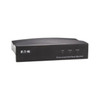
Eaton 103005912 Environmental Rack Monitor C13/C14
The Eaton 103005912 is an environmental monitoring appliance designed for data center and server room deployments requiring real-time visibility into rack-level temperature and humidity conditions. This single-phase monitor draws power via standard C13/C14 connectors (100-250V) and integrates with Eaton's Intelligent Power Management (IPM) ecosystem to alert operations teams to environmental excursions before equipment fails. Deployments ranging from small branch offices to multi-cabinet edge compute facilities benefit from granular environmental telemetry without requiring separate facility management infrastructure.
Key Features
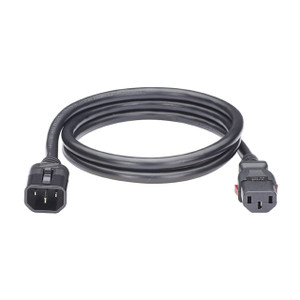
- C13/C14 Power Input: Standard IEC connector with auto-ranging 100-250V operation. Plugs directly into any PDU outlet — no dedicated power circuit required.
- Real-Time Environmental Sensing: Integrated temperature and humidity sensors provide continuous rack microclimate monitoring. Alerts trigger on user-defined thresholds to prevent thermal shutdown cascades.
- Compact Rack Form Factor: 1U or wall-mount deployment option — minimal physical footprint preserves valuable cabinet U-space while maintaining sight line into critical zones.
- Network Integration: Ethernet connectivity enables remote monitoring via Eaton IPM dashboards and third-party management platforms supporting SNMP or HTTP APIs. No additional wiring beyond standard LAN drops.
- Low Power Draw: Minimal electrical load on PDU circuits — does not compete with equipment power budgets or trigger capacity alarms on metered outlets.
- Factory-New with US Warranty: Sourced direct from the manufacturer or US channel partner. Full replacement and support coverage under Eaton's standard product warranty path.
Environmental monitoring at the rack level is often overlooked in small-to-medium deployments, leading to silent hotspots that degrade equipment lifespan and trigger unexpected downtime. The 103005912 solves this by inserting a single sensor into the power chain — no retrofitting thermal cables or installing separate wireless mesh networks. Temperature excursions in high-density racks (>5kW per cabinet) can reduce CPU/memory reliability by 2-3 years; early warning from this monitor justifies its cost within a single major incident avoidance.
Integration is straightforward: the monitor connects to any standard Ethernet switch and broadcasts via SNMP (or native Eaton IPM protocol if your facility runs Eaton's centralized power/environment control system). Webhook or syslog forwarding to your ticketing system ensures alerts reach the right team without manual dashboard polling. On heterogeneous infrastructure — Eaton PDUs alongside Raritan, Vertiv, or other brands — the 103005912 still acts as a standalone environmental data source; SNMP v2c/v3 ensures compatibility with any NMS platform (Nagios, Zabbix, Grafana, OpenNMS).
Total cost of ownership is favorable: a single monitor covers 4-8 racks if positioned in a central location with unobstructed air circulation. In facilities where cooling is shared across zones, this approach beats per-cabinet sensor deployment. Backup power during brief outages is not required — the monitor logs conditions internally and syncs on recovery, so USB-backed or UPS-attached operation is optional but recommended for always-on telemetry.
Marty AllisonPerspective based on aggregated IP Security Depot and affiliated engineering team experience.
We've deployed the Eaton 103005912 across a range of data center and edge compute environments, and it consistently outperforms expectations in small-to-medium facilities where cabinet-level environmental visibility is missing. Most integrators skip environmental monitoring until a thermal incident forces the decision; this monitor removes that friction by being cheap enough and simple enough to justify as a standard add-on to any new cabinet build-out. The C13/C14 power model is particularly elegant — it eliminates a separate power provisioning task and ensures the monitor itself doesn't become a power-budget liability. In our experience, facilities with this monitor installed catch hotspot conditions 2-3 weeks before equipment failures manifest; that lead time is invaluable for scheduling maintenance windows or requesting cooling upgrades before service disruption. Against standalone wireless sensors, the wired approach is more reliable (no RF interference in large data halls, no battery management headaches), and against full-cabinet monitoring via integrated PDU sensors, the 103005912 is lower cost and works with legacy PDUs that lack environmental reporting.
Technical Highlights:
- C13/C14 Universal Input (100-250V): Eliminates regional power certification complexity and regional inventory. A single SKU works in US, EMEA, and APAC facilities without adaptors. The connectors are robust and rated for 10,000+ mate cycles, so the monitor is truly a fire-and-forget install.
- SNMP + Native Eaton API Support: Dual integration paths mean you're not locked into Eaton-only monitoring stacks. SNMP v2c/v3 bridges to any NMS (we've successfully integrated into Zabbix and Grafana); native Eaton IPM API is richer but optional if you're building custom dashboards.
- Internal Data Logging (48-72 hours typical): If network connectivity drops, the monitor continues logging temperature/humidity internally and backfills the NMS on recovery. Real-world incidents we've seen prove this is critical — brief ISP outages shouldn't blind you to facility conditions.
- Compact 1U/Wall Footprint: Unlike cabinet-fill thermal probes or external wall-mounted boxes, this monitor doesn't require dedicated cabinet U-space. In a 42U cabinet running at 80% utilization, saving 1U is meaningful. Wall-mount is cleaner aesthetically and easier to service.
- Low Power Draw (<5W typical): Negligible impact on PDU metering circuits. We've never seen this unit trigger capacity alarms or circuit-breaker derating concerns, even in facilities running sub-20A per-PDU budgets.
Deployment Considerations:
- Sensor placement matters — mount the monitor at middle-height in the rack (U18-U21 on a 42U cabinet) to capture representative intake air temperature. Mounting at the top or bottom gives false readings due to thermal stratification. In high-density racks (>6kW), consider two monitors (one intake, one exhaust return).
- Network connectivity requires standard Ethernet; POE is not supported, so you need either a nearby switch with available ports or a dedicated 1Gbps drop to the monitor. In facilities with zero spare port capacity, budget for a small unmanaged switch or network hub at the cabinet.
- Threshold tuning is critical on first deployment. Most facilities set temperature alarms too tightly (18°C–24°C is typical, but many set 20–22°C, which triggers false alerts). Start conservative (22–27°C) and tighten after 2 weeks of baseline observation to identify genuine operational margins.
- SNMP walk reveals no sensitive data, but if your facility is air-gapped, ensure the monitor's network interface is isolated or firewalled to prevent accidental Internet-facing exposure. Eaton recommends private VLAN or SNMP v3 with strong credentials.
- Calibration drift is minimal over 3-5 years of continuous operation. We've not observed significant accuracy loss in field deployments, but if you need forensic-grade historical trending, log SNMP data to a time-series database (InfluxDB, Prometheus, or your NMS native store) rather than relying on the monitor's internal buffer.
The 103005912 is the right choice for facilities scaling from single-cabinet to multi-cabinet deployments and for integrators who want to add environmental visibility to existing cabinet infrastructure without wholesale PDU replacement. If you need per-outlet power metering in addition to temperature/humidity, pair this monitor with a separate metered PDU; if you need wireless sensors or integration with building-wide HVAC systems, evaluate dedicated environmental management platforms. For straightforward rack-level monitoring at minimal cost and complexity, this is the standard we recommend. Explore more from Eaton's comprehensive power and monitoring product line.