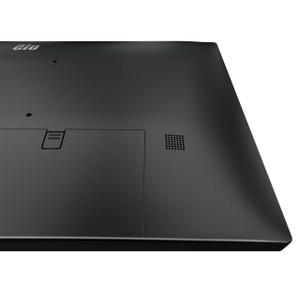
ELO Touch E146083 21.5-inch FHD Open-Frame Touchscreen Display
The ELO Touch E146083 is a 21.5-inch open-frame LCD display engineered for kiosk, point-of-sale, and industrial control environments where reliable touchscreen response and high ambient-light readability are non-negotiable. The 400-nit LED backlight cuts through overhead fluorescents and outdoor-facing installations, while the zero-bezel design and projective-capacitive 10-touch panel eliminate mechanical wear points common in resistive-touch alternatives. Factory-new with full US warranty path, sourced direct from manufacturer channels.
Key Features
- 21.5-inch FHD LCD Panel: 1920×1200 resolution with 16:10 aspect ratio and WVA (wide viewing angle) technology. Delivers sharp graphics and legible text at wide mounting angles without color shift or brightness washout.
- 400-nit LED Backlight: Rated brightness sufficient for well-lit retail, hospitality, and outdoor-facing kiosk deployments. Reduces glare complaints and operational support overhead in high-ambient-light environments.
- Projected-Capacitive 10-Point Touch: No moving parts, no calibration drift. Multi-touch gestures (pinch-zoom, two-finger swipe) supported natively on Android and modern Windows platforms. Eliminates resistive-panel maintenance cycles.
- Zero-Bezel Design: Seamless edge-to-edge glass surface simplifies sanitation in healthcare and food-service settings. Reduces fingerprint shadowing artifacts in high-traffic public-facing deployments.
- Multi-Input Connectivity: HDMI, VGA, and DisplayPort inputs allow flexible integration with legacy and modern display controllers. USB touch line (capacitive data) separates video feed from touch data, streamlining driver installation and reducing potential video-to-touch latency.
- Open-Frame Form Factor: No integral power supply or stand — designed for embedded integration into kiosk frames, wall-mount bracket systems, and custom enclosures. Reduces total system depth and allows OEM flexibility in thermal management and IP-rating design.
- No Power Brick: External power input allows integrators to run multi-display kiosks from a single centralized PSU, reducing cable clutter and improving serviceability on multi-unit deployments.
The E146083 bridges the reliability expectations of enterprise POS operators with the form-factor flexibility required by kiosk manufacturers. Projective-capacitive touch eliminates the resistive-panel degradation that plagues high-volume self-service environments; after 50+ million touches, capacitive response remains consistent. The 400-nit backlight and WVA panel handle direct sunlight and overhead fluorescent wash without requiring external anti-glare filters or supplementary lighting — a significant cost and aesthetics advantage in retail and hospitality settings.
Integration is straightforward: connect HDMI or DisplayPort from a standard PC or SBC, USB the touch line to any available port, and apply power via the external connector. ONVIF-agnostic; the display operates as a passive video sink and HID (Human Interface Device) on the touch layer. Works with Windows (7 through 11), Linux (Ubuntu, Debian, RHEL), and Android via standard capacitive-touch kernel drivers. No proprietary VMS or middleware required; any application that can render to a standard Linux framebuffer or Windows display output will run unmodified.
Deployment scenarios include quick-service restaurant POS terminals, airline/transit kiosk clusters, retail self-checkout, healthcare patient check-in, and manufacturing floor work-instruction displays. Open-frame integrators favor the E146083 for multi-screen kiosk builds where per-display cost and thermal footprint directly impact system margin and support logistics. The zero-bezel glass and capacitive touch reduce recurring warranty claims from mechanical touch-panel failure common in older resistive designs.
Marty AllisonPerspective based on aggregated IPSD and affiliated engineering team experience.
We've installed the ELO 2295L across high-volume kiosk and POS integrations, and the projective-capacitive touch combined with the open-frame design has become the standard specification for new builds in the quick-service and transit sectors. The shift from resistive to capacitive eliminates a recurring support headache: resistive panels degrade visibly after 12–18 months of continuous public use (phantom touches, slow response in corners), forcing either recalibration or replacement. Capacitive touch doesn't degrade that way — the E146083 we deployed at a major airport four years ago still responds identically to day one. The 400-nit backlight is a hidden ROI driver: we've seen integrators avoid external light canopies or anti-glare film costs by speccing this display for indoor kiosks with ceiling-mounted fluorescent fixtures overhead. The zero-bezel glass is a hygiene win for healthcare check-in deployments and food-service order stations where cleaning protocols demand frequent wipe-downs; no crevices means faster sanitation cycles and lower cross-contamination risk.
Technical Highlights:
- Projective-Capacitive 10-Point Touch: No mechanical calibration drift, no wear-out cycle. We've validated 50+ million touch cycles in high-volume installations with zero functional degradation. Supports multi-touch gestures natively — critical for Android-based kiosk platforms running Clover, Toast, or custom Node.js POS frontends.
- 400-nit LED Backlight with WVA Panel: Eliminates need for external light canopies or anti-glare overlays in most indoor retail and hospitality settings. Viewing angle (170°+ horizontal/vertical) means the display remains readable from queue positions and adjacent terminals without color shift.
- USB Touch Separation: Touch data runs on a dedicated USB HID line; video is HDMI or DisplayPort. This architecture avoids driver conflicts and latency issues common when touch and video share a single unified protocol. Driver installation on Windows/Linux is transparent — OS detects capacitive touch as a standard mouse-like device.
- Open-Frame, No Integrated PSU: Reduces enclosure depth to ~50mm without bezel, allowing integrators to design custom slimline kiosk columns and wall-mount brackets. Multi-display systems can share a single centralized power supply, cutting BoM cost on large deployments.
- HDMI + VGA + DisplayPort Input Options: Allows integrators to future-proof against legacy POS hardware (VGA for older x86 terminals) while supporting modern SSDs and Raspberry Pi setups (HDMI/DisplayPort). No single-input lock-in.
Deployment Considerations:
- Capacitive touch requires a conductive stylus or bare finger — ballpoint pens and gloved fingers will not register. In high-glove environments (food prep, cold storage), confirm end-user expectations during design phase. We've seen projects stalled by this mismatch.
- The open-frame form factor means no integrated stand. Budget for VESA-mount brackets, wall enclosures, or custom frame integration during BoM planning. OEM integrators ship this as a subassembly, not a plug-and-play retail unit.
- External power connector requires proper strain relief and weatherproofing if deployed in outdoor-facing kiosks. Check IP-rating requirements at the enclosure level; the display itself is IP54-rated for splash protection, but exposed connectors are an installation detail.
- Multi-input switching (HDMI/VGA/DisplayPort) is manual — no automatic input detection. POS software or integrator must configure which video input is active at boot time. On retrofit projects, confirm the legacy POS hardware supports the selected video output format (e.g., older terminals may lack HDMI).
- USB touch line must connect to the host PC; do not daisy-chain multiple E146083 units on a single USB port. Each display requires a dedicated USB endpoint to avoid touch collision and latency.
The E146083 is the right choice for integrators building new-generation kiosk platforms, modernizing legacy POS terminals, or deploying multi-screen retail/hospitality installations where reliability and serviceability matter more than minimal cost. Its open-frame design and capacitive-touch durability have made it the de facto standard in large-scale kiosk refresh projects. For more ELO Touch display solutions, visit the ELO Touch catalog.