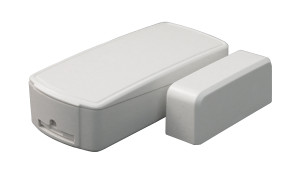
ELK Products ELK-912 Security Controller
The ELK Products ELK-912 is a foundational control component designed for integration within ELK security systems. Operating at 12VDC, this controller serves multi-door access control and alarm management environments, enabling coordinated communication across integrated security deployments in commercial and enterprise installations.
Key Features
- 12VDC Operation: Runs on standard 12-volt DC power, eliminating the need for higher-voltage infrastructure in most commercial security installations. This reduces cabling complexity and aligns with typical access control power budgets in buildings where 12VDC systems are already deployed.
- Multi-Door Access Control Support: The ELK-912 integrates with ELK security platforms to coordinate access across multiple entry points, allowing you to manage credential readers, electric locks, and door sensors from a single controller without separate per-door processors.
- Alarm Management Integration: Handles coordinated alarm signaling and sensor inputs, so access events and alarm triggers communicate through the same control pathway. This reduces wiring runs and simplifies troubleshooting compared to split access and alarm systems.
- Standard Commercial Installation: Built for reliable operation in climate-controlled security rooms and standard commercial environments where 12VDC power supplies and backup batteries are standard infrastructure.
Integration & Compatibility
The ELK-912 integrates natively with the ELK Products security controller family and supports multi-door access control, alarm, and integrated security environments. Installation requires 12VDC power availability and connection to compatible credential readers, door sensors, and alarm devices within an ELK system architecture. For integration guidance in your specific deployment, review your ELK platform documentation or consult with an authorized systems integrator experienced with access control integration design.
Deployment Context
The ELK-912 (often searched as ELK 912) is positioned for commercial sites where access control and alarm systems share infrastructure—warehouses, office buildings, light industrial facilities, and multi-tenant properties. If your environment requires only access control without alarm coordination, or if you need higher-density door count support, consider alternative models within the ELK controller lineup. For sites planning expansion beyond five doors or requiring advanced scheduling and reporting, evaluate higher-capacity ELK controllers early in the design phase to avoid controller replacement later.
Frequently Asked Questions
Q: What power supply rating is required for the ELK-912?
A: The ELK-912 operates on 12VDC. You will need a dedicated 12VDC power supply sized to accommodate the controller, all connected readers, locks, and sensors. Battery backup (UPS) integration is recommended for sites requiring continuous operation during power loss.
Q: Can the ELK-912 support more than four doors?
A: The ELK-912 is designed as a foundational access control controller. For deployments exceeding its native capacity, consult ELK documentation or an integrator to confirm multi-controller networking or upgrading to a higher-capacity platform model.
Q: Is the ELK-912 compatible with third-party credential readers?
A: The ELK-912 integrates with ELK security platforms and readers designed for that ecosystem. Compatibility with non-ELK readers depends on protocol support (Wiegand, RS-485, etc.) in your specific platform. Verify reader compatibility before purchase.
Q: What certifications apply to the ELK-912?
A: Consult the product datasheet or contact the manufacturer for current certifications (UL, FCC, CE, or regional compliance). Certification requirements vary by deployment location and use case.
Q: Does the ELK-912 include built-in battery backup?
A: The ELK-912 is a controller component and does not include integrated battery. A separate 12VDC UPS or battery backup system is required to maintain operation during power loss.
Ted PerryPerspective based on aggregated IP Security Depot and affiliated engineering team experience.
The ELK-912 is a control foundation for access and alarm coordination, and it's straightforward to spec correctly if you front-load the door count and power planning. The 12VDC requirement is not a limitation—it's the standard for commercial access control—but it does mean your 12VDC UPS and power distribution must be sized for the full load: controller draw plus all credential readers, solenoids, and sensor circuits. Undersizing power supplies is the single most common integration failure I see on multi-door rollouts.
Technical Highlights:
- 12VDC DC Operation: Aligns with standard commercial security infrastructure; no exotic power requirements. Simplifies battery backup sizing and reduces cabling cost in buildings where 12VDC systems are already core infrastructure.
- Native ELK Platform Integration: The ELK-912 is built to coordinate with ELK readers, sensors, and alarm devices. Cross-platform compatibility requires protocol bridging, which adds latency and complexity—vet this early if you're mixing ELK and third-party components.
- Multi-Door and Alarm Consolidation: Single controller handling access and alarm flows reduces panel real estate, wiring runs, and failure points compared to split architectures. Real deployment benefit in retrofit or space-constrained sites.
Deployment Considerations:
- Door count is not explicitly spec'd in available documentation—confirm native capacity and multi-controller daisy-chain or networked support with ELK technical resources before finalizing your design. Cheap to verify now, expensive to change in the field.
- 12VDC UPS must be oversized slightly above peak load (reader activation + solenoid + sensor simultaneous). Peak current spikes on door unlocks routinely exceed nominal controller draw. Budget 30–40% headroom on your battery and power supply rating.
Position the ELK-912 for warehouse access control with basic alarm tie-in—where you need coordinated lock and sensor management across 3–5 doors in a single control point. If your site is growing beyond that footprint or requires advanced analytics or cloud integration, evaluate higher-tier ELK models or enterprise access control platforms with native cloud architecture early in your planning cycle. It's easier to oversample capability upfront than retrofit a second controller later.