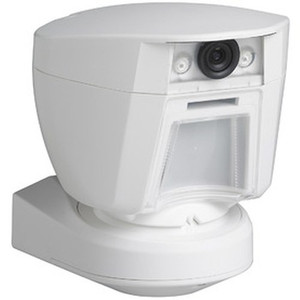
DSC PG9994 PowerG Wireless Outdoor Motion Detector with Camera
Overview
The DSC PG9994 combines motion detection and image capture in a single outdoor-rated wireless device. Built on the PowerG 915 MHz platform, the PG9994 adds a 640×480 integrated camera to dual-technology motion sensing, enabling the monitoring station to capture and verify alarms before dispatch. For high-security or fine-sensitive installations where false alarm fines are a real cost, this combination of detection and visual verification reduces unnecessary police responses and saves money over the system lifecycle.
Key Features
- Dual-technology detection with 12 m (40 ft) range: PIR and microwave sensors work together to reduce false alarms from insects, moving vegetation, or passing vehicles—deploy with confidence in mixed outdoor environments. Mounting height is 2.0 to 3.0 m (6.5 to 10 ft) for optimal coverage.
- Active IR anti-masking: If someone attempts to block or obscure the detector with tape, paint, or a physical obstruction, the built-in infrared anti-mask circuit detects the tamper and triggers an alert. This prevents a bypassed detector from going unnoticed.
- Integrated 640×480 camera captures up to 5 images per event: When motion is detected, the camera automatically captures multiple frames and transmits them wirelessly to the panel and monitoring station. This enables real verification—a dispatcher can see whether an alarm is a genuine intrusion or a false positive before responding.
- PowerG 915 MHz FHSS with 128-bit AES encryption: Frequency-hopping spread spectrum and encryption protect the wireless link from eavesdropping and jamming. The open-air wireless range reaches up to 2 km, so installations on large properties or multi-building campuses are feasible without repeaters.
- IP55 weather rating and -30°C to 60°C operating temperature: IP55 means water spray from any angle won't damage the unit—heavy rain, garden hose, or dock washdown are not concerns. The wide temperature range (-22°F to 140°F) supports year-round deployment in extreme climates without thermal cycling damage or condensation buildup.
- Two CR123A lithium batteries with approximately 3 years of life: Battery life is shorter than indoor PowerG sensors because the camera and dual-tech detection consume more power. Plan battery replacement during routine maintenance windows—most integrators replace both cells at once to avoid mid-cycle failures.
- Front and rear tamper protection with supervisory check-in: Tamper switches on both the front and back of the housing detect removal from the mounting bracket. Periodic supervisory signals confirm the detector is communicating and healthy; loss of supervision alerts the panel to a potential offline or failed unit.
When to Choose a Different Model
If visual verification is not required and budget is constrained, consider a dual-technology outdoor detector in the same PowerG family without the camera—it will reduce false alarms through detection technology alone at a lower cost. The PG9994 is the right choice when the monitoring center or end user wants image evidence to confirm an intrusion before dispatch.
Integration & Compatibility
The PG9994 integrates with any DSC security panel that supports PowerG wireless modules. The detector reports motion events, tamper, supervision, and camera images through the panel to the central station or cloud service. Consult the panel manual for image transmission protocols and storage capacity to ensure the system can handle up to 5 images per event during peak activity.
Frequently Asked Questions
Q: What is the difference between the PG9994 and other outdoor motion detectors?
A: The PG9994 adds an integrated 640×480 camera that captures up to 5 images per event. This enables visual alarm verification at the monitoring station, reducing false dispatches. Other outdoor detectors in the PowerG line provide motion sensing only.
Q: How far does the wireless signal reach?
A: Up to 2 km (1.24 miles) in open air. Obstacles such as buildings, metal structures, and dense vegetation reduce range. Site survey before installation is recommended for large properties.
Q: How long do the batteries last?
A: Approximately 3 years under normal operating conditions. The camera and dual-tech sensors consume more power than passive sensors, so battery life is shorter than indoor PowerG devices. Replace both CR123A cells at the same time.
Q: Can the PG9994 be wall-mounted, or does it require a pole mount?
A: The PG9994 mounts to a standard bracket suitable for walls, poles, or fascia. Mounting height should be 2.0 to 3.0 m (6.5 to 10 ft) for optimal PIR and camera field of view. Aim away from direct sunlight, heat sources, and reflective surfaces to minimize false triggers.
Q: Is the camera image encrypted?
A: Yes. The entire wireless link, including camera images, is protected by 128-bit AES encryption over the PowerG 915 MHz FHSS platform, preventing eavesdropping.
Q: What happens if the detector is tampered with or removed?
A: Front and rear tamper switches detect removal from the bracket or physical manipulation. A tamper event is reported to the panel immediately, alerting the monitoring station and the end user.
James EverettPerspective based on aggregated IP Security Depot and affiliated engineering team experience.
The PG9994 is the most capable outdoor motion detector in the PowerG line because it couples detection with image capture. Visual verification is a significant value-add for monitoring centers—it eliminates false dispatches, saves end users money on fines, and preserves police response priority for real emergencies. I've seen integrators recover the cost of the PG9994 within a year just by reducing false alarm fines on a single high-security account.
Technical Highlights:
- Dual-tech PIR and microwave with active IR anti-masking: Three layers of detection technology reduce false alarms from environmental triggers while preventing bypass attempts. The 12 m (40 ft) range covers typical perimeter setups—parking lot approaches, loading dock entries, and yard boundaries—without needing excessive overlap.
- 640×480 camera captures up to 5 images per alarm event: Multiple frames provide context and evidence quality good enough for visual verification at the monitoring station. Image transmission is encrypted and sent wirelessly, so no separate imaging infrastructure is required.
- 128-bit AES encryption over PowerG 915 MHz FHSS: Frequency-hopping prevents jamming or eavesdropping on the wireless link. The 2 km open-air range is sufficient for sprawling campuses or multi-building properties without repeaters in most environments.
Deployment Considerations:
- Battery life is approximately 3 years—shorter than indoor PowerG sensors due to the camera and dual-tech power draw. Plan battery replacement during routine maintenance cycles; most integrators keep spare CR123A cells on hand for field replacements.
- Mounting height and aiming are critical: place the detector 2.0 to 3.0 m (6.5 to 10 ft) high and away from direct sunlight, reflective glass, or nearby heat sources (HVAC vents, exhaust pipes). Outdoor PIR is sensitive to environmental variation, so field tuning may be necessary in some climates.
- The 640×480 resolution is adequate for alarm verification but not for forensic identification—if you need to recognize a face or read a license plate, combine the PG9994 with a dedicated network camera focused on the same area.
For high-security outdoor perimeter protection where visual verification prevents false dispatches and protects the end user's reputation with local law enforcement, the PG9994 is the right choice. For outdoor monitoring where detection alone is sufficient and image capture is not required, a lower-cost dual-tech sensor without the camera will handle the job—but you lose the verification advantage that makes the PG9994 worth the premium.