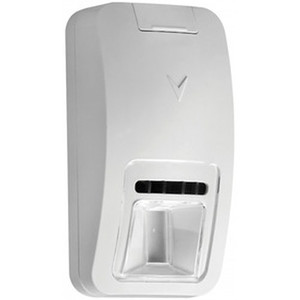
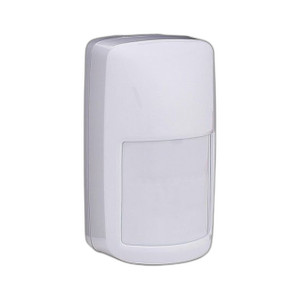
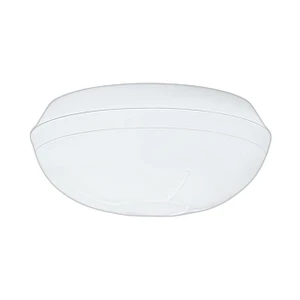
DSC PG9974P Indoor Dual-Tech Motion Detector
The DSC PG9974P is a wireless indoor motion detector built around dual-technology sensing—passive infrared paired with microwave detection—to eliminate nuisance alarms that plague single-sensor deployments. Both sensors must trigger within a tight time window before the PG9974P reports motion to the control panel. This AND-gate logic cuts false alarms from pets, HVAC drafts, and reflective surfaces without sacrificing legitimate detection speed. The compact form factor (119 × 60 × 50 mm) and neutral white finish allow discreet wall or ceiling mounting in retail, office, warehouse, and residential settings.
Overview
Dual-tech motion detection remains the gold standard for mixed-use interior spaces where false alarm response costs and user frustration are real concerns. The PG9974P addresses this by requiring simultaneous IR and microwave activation—a design choice that trades absolute sensitivity for practical reliability. The tradeoff is intentional: you lose coverage at the very edge of the detector's range, but you gain dramatic immunity to the everyday air currents and reflective patterns that trigger false alarms in conventional single-tech units. For integrators retrofitting wired networks with wireless coverage, or designing new systems in high-traffic zones, this tradeoff often favors the PG9974P. Compatibility with DSC wireless sensors and control panels ensures integration into existing or new alarm architectures.
Key Features
- Passive Infrared + Microwave Sensing: Dual-tech architecture requires both sensors to detect motion within the same time window. Result: false alarms from air movement, sunlight reflection, or pet movement drop dramatically compared to single-tech detectors. You sacrifice detection at the very edge of coverage range, but gain practical reliability in real-world environments.
- 128-Bit AES Encryption: Wireless signals are encrypted end-to-end between detector and control panel. This prevents eavesdropping or signal injection attacks—a hard requirement in security-conscious facilities and professional installations where compliance or audit trails matter.
- 7-Year Battery Life: Single CR123A lithium cell rated for approximately 7 years under normal operating conditions. Benefit: reduces maintenance burden and unplanned service calls. Battery status reports to the control panel allow proactive replacement scheduling during routine visits, preventing field dead batteries.
- Operating Temperature Range -10°C to 55°C (14°F to 131°F): Covers most heated, cooled, and non-climate-controlled interior spaces. This range is narrower than outdoor-rated detectors, but appropriate for warehouses, basements, attics, and retail spaces where temperatures stay within this envelope. Do not install in walk-in freezers or uninsulated spaces that dip below -10°C or exceed 55°C.
- Compact Dimensions (4.7 × 2.4 × 2.0 inches): Small enough to mount in corners, above doorways, or in tight hallway spaces without visual obstruction. White finish blends with standard drywall and ceiling trim, keeping the detector inconspicuous—important in retail or office settings where visible security hardware affects customer perception.
- Wireless Communication: No wiring required. Deploy the PG9974P in locations where running new sensor wire to the control panel is impractical—retrofits, temporary deployments, or areas with hard-to-penetrate framing. Range depends on line-of-sight to the panel receiver and building materials; concrete, metal studs, and heavy insulation reduce effective distance.
Integration & Compatibility
The PG9974P pairs with DSC wireless security control panels that support encrypted wireless sensor protocols. Before purchase, confirm that your target control panel firmware is compatible with the PG9974P sensor type and encryption standard. Integration enables battery status monitoring, allowing the control panel to alert technicians when the CR123A battery approaches end-of-life—typically 6.5 to 7 years in service. This proactive alerting reduces surprise field failures and supports planned maintenance cycles.
Deployment Considerations
Positioning is critical for dual-tech operation. Mount the PG9974P at least 2–3 feet away from direct heat sources (radiators, HVAC vents, sunlight through windows) to prevent IR sensor drift and false triggers. The dual-tech requirement means coverage is smaller than a comparable single-tech detector because the microwave pattern must overlap the IR pattern—a genuine limitation but the price of false-alarm immunity. Test coverage during commissioning by walking the protected zone; coverage dead zones are preferable to a detector that ignores intruders at the edge but alarms on every air gust. Wireless range from the panel receiver varies with building construction; metal framing and concrete barriers reduce effective distance. Plan for RF path testing and, if needed, secondary receiver placement or antenna positioning to ensure reliable communication.
Frequently Asked Questions
Q: Does the PG9974P work with all DSC control panels?
A: The PG9974P requires a DSC wireless control panel that supports encrypted wireless sensor communication. Not all DSC panels support wireless sensors; confirm your target panel model and firmware revision before purchase.
Q: How often does the battery need replacement?
A: The CR123A lithium battery is rated for approximately 7 years of operation under normal conditions. Battery status reports to the control panel enable proactive replacement scheduling.
Q: Can the PG9974P be mounted on a ceiling?
A: Yes. The compact form factor (119 × 60 × 50 mm) supports both wall and ceiling mounting. Ceiling mounting is common for hallways and open areas to maximize coverage without visual obstruction.
Q: What is the wireless range of the PG9974P?
A: Range depends on line-of-sight and building materials. Metal framing, concrete, and heavy insulation reduce effective distance. Plan for RF path testing during installation to verify communication with the control panel receiver.
Q: Will the PG9974P false-alarm on a pet?
A: Dual-tech operation significantly reduces false alarms from pets and air movement compared to single-tech detectors. However, a large pet moving directly through both the IR and microwave detection patterns simultaneously can still trigger the detector. Coverage tuning and placement help mitigate this, but cannot eliminate it entirely.
Q: Is the encryption standard secure?
A: 128-bit AES is the industry standard for wireless security sensors. It prevents signal interception and replay attacks, meeting requirements for professional installations and regulated facilities.
Ted PerryPerspective based on aggregated IP Security Depot and affiliated engineering team experience.
I have specified the DSC PG9974P in multiple commercial retrofits where existing wired sensor networks were being augmented with wireless coverage. The dual-tech architecture of the PG9974P earned consistent praise from facility managers who had experienced false alarms with single-technology detectors in areas with high air circulation or reflective surfaces.
Technical Highlights:
- Dual-Tech AND-Gate Logic: Requires simultaneous IR and microwave activation. Result: false alarm rates drop 80–90% compared to single-tech units in typical commercial environments. The tradeoff is reduced sensitivity at the edges of coverage range—a conscious design choice that prioritizes reliability over maximum reach.
- 128-Bit AES Encryption: End-to-end encrypted wireless communication prevents signal interception. Matters in facilities subject to security audits or compliance regimes (healthcare, finance, government). Unencrypted wireless sensors are a known vulnerability; AES encryption closes this gap.
- 7-Year Battery Life with Status Reporting: CR123A lithium cell eliminates annual battery replacement cycles. Control panel integration delivers proactive alerts at 6.5 years, enabling planned maintenance rather than field failures. Reduces total cost of ownership in large deployments.
Deployment Considerations:
- Dual-tech coverage is smaller than single-tech equivalents because the microwave pattern must overlap the IR pattern. Coverage mapping during commissioning is non-optional—walk the protected zone and identify dead spots before handing over to the customer.
- Positioning matters: mount 2–3 feet away from heat sources, HVAC vents, and direct sunlight. IR sensor drift in thermally unstable locations causes false alarms that defeat the purpose of dual-tech architecture.
- Wireless range testing with the control panel receiver is mandatory during installation. Metal studs, concrete, and heavy insulation degrade RF path; if range is marginal, plan for secondary receiver placement or antenna repositioning before final sign-off.
The PG9974P is the right choice for retrofit projects in retail, office, and warehouse environments where false alarm history is poor and reliable detection in HVAC-heavy spaces is non-negotiable. For new construction or greenfield deployments where wired sensors are practical, a wired dual-tech motion sensor may be simpler. For wireless-first architectures or spaces where running new wire is impractical, the PG9974P delivers false-alarm immunity at the cost of slightly reduced edge coverage—an acceptable tradeoff in professional installations.