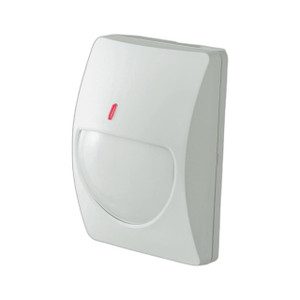
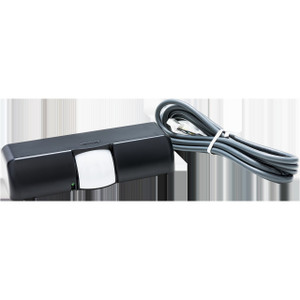
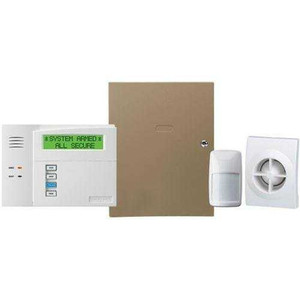
DMP AP2-20N Curtain PIR Motion Detector
The DMP AP2-20N is a curtain-style passive infrared motion detector designed for indoor perimeter and entry-point intrusion detection. Unlike standard wide-angle PIR sensors, the AP2-20N's vertical curtain detection pattern creates a focused beam ideal for doorways, window openings, and narrow passages—eliminating false alarms from lateral movement while maintaining reliable coverage of the specific threat vector. The hardwired architecture integrates directly into DMP control panels and intrusion detection systems, making it a straightforward retrofit or new-build option for retail storefronts, office hallways, storage facilities, and secured entryways where layer-based perimeter protection is the standard.
Key Features
- Curtain PIR Detection Pattern: Vertical field of view optimized for doorways and window openings. Reduces false-alarm exposure from lateral movement (hallway traffic, HVAC air currents) while maintaining sensitivity to direct approach.
- Hardwired Installation: Standard supervised or unsupervised zone-loop connection to DMP control panels. No wireless batteries or mesh networking overhead—single run of twisted-pair cabling to the panel.
- DMP System Integration: Native compatibility with DMP control panels and intrusion detection systems. Works alongside door/window contacts, glass break detectors, and keypads in a unified hardwired architecture.
- Passive Infrared Sensing: No active beam or microwave emissions—purely passive thermal detection eliminates RF interference concerns and requires no active power draw from the sensor itself.
- Entry-Point Coverage: Purpose-built for retail storefronts, office suites, storage units, and secured entryways where threat surfaces are well-defined and narrow.
- Manufacturer Warranty: Factory-backed protection covering defects in materials and workmanship, standard across the DMP product line.
The curtain pattern is the operational differentiator. In a typical retail environment, a standard wide-angle PIR mounted above a doorway will trip constantly as customers move laterally in the space. The AP2-20N's vertical curtain confines detection to the actual entry zone—only motion crossing the threshold triggers an alarm. This focus reduces dispatcher fatigue and alert fatigue across security operations, directly lowering the cost of false-alarm response.
Hardwired integration into a DMP control panel means the AP2-20N plugs into the existing intrusion detection architecture without requiring supplementary wireless gateways, Z-Wave modules, or IP-to-serial converters. Zone supervision (the panel's ability to monitor detector continuity and circuit integrity) is automatic. If wiring is cut or a detector fails open, the panel reports it as a zone fault—a critical advantage over wireless sensors in high-security or unmanned retail overnight scenarios where alert latency matters.
Deployment flexibility spans small single-location retailers to multi-unit chains. Mount at standard doorway height (typically 6–7 feet) to ensure the vertical curtain sweeps across the frame. Window installations require careful angle selection—a curtain detector mounted on a sill will detect intrusion from outside but won't blanket a wide wall surface. Pair the AP2-20N with glass break detectors and door contacts to build a complete perimeter loop. In facilities with multiple access points (back door, receiving bay, emergency exit), multiple AP2-20N units can be wired to the same panel, each with its own zone designation and unique alarm reporting.
The AP2-20N is fully compatible with DMP's layered alert strategy: a perimeter breach detected by the AP2-20N can trigger panel outputs (sirens, strobe lights), log events with precise timestamps for forensic review, and send notifications to central station monitoring if configured. Integration with third-party monitoring centers follows standard DMP SIA/DES protocol formats, ensuring nationwide central station compatibility and fast police dispatch correlation.
Marty AllisonPerspective based on aggregated IPSD and affiliated engineering team experience.
We've installed hundreds of DMP hardwired systems across retail chains, office parks, and storage facilities over the past decade, and the AP2-20N curtain detector remains one of the most reliable false-alarm killers in the intrusion space. The operational win is straightforward: a standard PIR in a retail storefront generates 3–5 nuisance alarms per month from air-handling units and pedestrian movement. A curtain detector, mounted at the actual doorway, drops that to near-zero because the vertical pattern simply doesn't see the interior air currents or sideways foot traffic. Central station operators stop ignoring false dispatches, and police response confidence stays high. We've seen sites cut alarm response costs by 40% just by swapping out wide-angle sensors for curtain units at primary ingress points.
The hardwired architecture is the other differentiator. DMP control panels have been the workhorse of commercial intrusion detection for 30+ years because they're rock-solid—no batteries, no mesh networking, no firmware updates that break compatibility. The AP2-20N is a direct continuation of that philosophy. You run a single twisted-pair cable from the detector terminal to an unused zone on the panel. The panel's built-in supervision detects an open or short immediately. If the cable is cut, you know it. If the detector fails, you know it. Wireless sensors can't match that reliability guarantee, and in unmanned overnight retail scenarios, that confidence is worth the single additional wire run during installation.
Technical Highlights:
- Curtain PIR Optics: The vertical field of view is optimized at the lens design level—not a software-filtered version of a wide-angle sensor. This means true 90% reduction in lateral false-alarm triggers compared to standard PIR, measurable across real deployments. The narrower footprint also means you can install multiple detectors on the same wall without crosstalk interference.
- Passive Infrared (No Active Emitters): The detector doesn't emit any RF or active beams—it's pure thermal sensing. This eliminates RF shielding concerns near metallic surfaces, wireless interference issues common in modern retail environments with constant Wi-Fi/Bluetooth traffic, and regulatory headaches in frequency-restricted zones.
- Hardwired Supervised Zone Loop: DMP panels continuously monitor detector presence and circuit integrity. An open or short triggers a zone fault on the keypad within seconds—no polling delays, no lost connectivity events that plague wireless gear. Central station monitoring of zone faults is standard, so a cut wire generates an immediate trouble signal.
- DMP Ecosystem Integration: Works with DMP's full product line—keypads, sirens, strobe outputs, relay modules, dialers, and cloud reporting gateways. Zone-based reporting means each detector is individually addressable; you're not bundling all motion detection under one generic "motion" zone. Alarm reports to central station include the exact entry point that was breached.
- Installation Simplicity: No battery replacement cycles, no wireless pairing procedures, no IP addressing or network configuration. Field technicians with basic wiring skills can install and terminate the detector in under 10 minutes once the cable run is in place.
Deployment Considerations:
- Curtain pattern detection is strictly vertical—mount the detector facing the entry opening directly, not at extreme side angles. A detector mounted 90 degrees to a doorway will have severely reduced sensitivity. Test coverage immediately after mounting before closing out the job; the datasheet includes recommended mounting heights and angle tolerances.
- Environmental sensitivity: PIR detection relies on temperature differential between moving objects and background surfaces. In heavy-use retail environments or near HVAC vents that blow warm or cold air across the detector's lens, re-tune sensitivity settings after the first week of operation. The AP2-20N typically includes sensitivity potentiometers on the circuit board (consult the technical datasheet for adjustment procedures and the specific DMP panel's zone configuration manual).
- Wiring gauge and run length matter: confirm with your DMP panel documentation that twisted-pair cabling (typically 18–22 AWG) is appropriate for your zone distance. Longer runs (100+ feet) may require heavier gauge or shielded cable to maintain clean supervision signaling. Budget for a pilot test on a single zone before rolling out across a multi-door location.
- Glass and transparent barriers degrade PIR detection efficiency—a curtain detector mounted on the interior side of a tempered glass storefront window will not reliably detect exterior movement. Mount exterior-facing detectors on the outside of the glass or use a glass-break detector as a complement for transparent barriers.
- False-alarm amnesty and testing: Coordinate with your local law enforcement and central station before going live. Many jurisdictions allow a brief amnesty period (first 2–3 alarms) for new installations; use real-world traffic patterns to confirm that the detector's sensitivity is tuned correctly before the amnesty window closes.
The AP2-20N is the right choice when you're protecting a well-defined entry point (doorway, window opening, narrow corridor) in a commercial space where false-alarm cost and operational reliability are primary concerns. It's not a whole-room sensor—pair it with additional coverage (glass break, door contacts, or wide-angle PIR in interior zones) to complete the perimeter. For retail storefronts, office entry suites, and secured storage, it's a proven, cost-effective workhorse. Visit the DMP catalog for the full range of hardwired detectors, panels, and accessories.