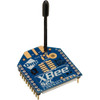
Product images are provided for reference and may not represent the exact model, configuration, or included components.

Overview

SKU: XB24CZ7WIT-004
UPC: 724584458520
Condition: New
Availability: Usually Ships in 2-3 Weeks
Warranty 5-Year Warranty
Write a Review 8% OFF

Digi International XB24CZ7WIT-004 XBee ZB S2C Thread Wire

Thread and ZigBee S2C mesh module for 2.4 GHz IoT networks

$29.33 $26.99 SAVE $2

Quantity:

Adding to cart… The item has been added
Compatibility guidance available for your deployment
Senior specialists for pre and post-sales support
Authorized sourcing and documentation support
Shipping and lead-time confirmation before install

Laura Bennett, IPSD Senior Specialist

Talk to Laura

200+ hrs training • U.S - based

Senior Specialist • 877-277-7147

Digi International XB24CZ7WIT-004 XBee ZB S2C Thread Wire

$29.33
$26.99

Overview

SKU: XB24CZ7WIT-004
UPC: 724584458520
Condition: New
Availability: Usually Ships in 2-3 Weeks
Warranty 5-Year Warranty

No Bots, Just Experts

Questions about this product? Free pre-sales support from a senior specialist — product questions, compatibility checks, BOM quotes, price confirmation — typically answered within one business day. Need camera placement or system design work? Engineering time is $175 per hour (qty 1 = 1 hour). Hardware buyers get up to one hour ($175) credited back on their order.

Description

Digi International XB24CZ7WIT-004 XBee ZigBee S2C Thread Wireless Module

The Digi International XB24CZ7WIT-004 is a dual-protocol wireless mesh module designed for IoT and building automation deployments requiring low-power, self-healing network topologies. Operating in the 2.4 GHz ISM band with Thread and ZigBee S2C protocol support, this XBee socket form-factor module enables integrators to build sensor networks with automatic route redundancy and extended range coverage without requiring traditional hub-and-spoke infrastructure. The wire antenna configuration provides predictable radiation patterns suitable for indoor and light outdoor deployments across commercial buildings, HVAC control networks, and distributed occupancy sensing.

Key Features

  • Dual-Protocol Support: Thread and ZigBee S2C mesh — deploy either protocol or enable seamless handoff between them depending on device endpoint capabilities. Network operates as self-healing mesh; loss of any intermediate node triggers automatic reroute without operator intervention.
  • 2.4 GHz ISM Band: Operates in globally unlicensed 2.4 GHz spectrum. Coexists with Wi-Fi, Bluetooth, and other ISM devices; mesh topology naturally mitigates interference through frequency hopping and redundant paths.
  • Wire Antenna XBee Module: Standard XBee socket footprint — integrates directly into Digi development boards, industrial gateways, and third-party platforms with XBee socket support. Wire antenna provides omnidirectional coverage; typical range 100-300 feet line-of-sight depending on environment and transmit power settings.
  • Low-Power Mesh Topology: End devices operate on battery for months or years via sleep modes and mesh relay architecture. Eliminates point-to-point range limitations; each node extends network range and capacity.
  • Building Automation Integration: Native support for temperature sensors, occupancy detectors, lighting control, and HVAC thermostat signaling. ZigBee Cluster Library (ZCL) profiles enable plug-and-play compatibility with commercial building management platforms.
  • XBee Socket Form Factor: Compact module fits standard XBee development kits and industrial carrier boards. 5-year manufacturer warranty covers hardware defects.

This module functions as a mesh endpoint, router, or coordinator depending on firmware configuration and deployment role. In endpoint mode, the XB24CZ7WIT-004 draws minimal current when sleeping, ideal for battery-powered temperature and humidity sensors in distributed building locations. In router or coordinator mode, it acts as a repeater and network anchor, extending mesh range and maintaining connectivity as devices move or sleep.

Typical deployments pair multiple XB24CZ7WIT-004 modules across a building floor plan — one per room or per HVAC zone — to create a self-healing mesh. If one module loses line-of-sight to the coordinator, packets reroute through adjacent nodes automatically. This topology eliminates the need for dedicated wired control lines between zones and reduces installation labor compared to traditional hard-wired sensor networks.

The module integrates with industry-standard XBee configuration tools (XCTU), Python libraries, and Arduino/Raspberry Pi environments via serial UART or SPI interfaces. Thread and ZigBee S2C both use AES-128 encryption for over-the-air security; commissioning occurs out-of-band through Digi's gateway or via direct socket programming. ONVIF compatibility is not applicable (wireless mesh module, not IP camera); however, the module plays well with security integrations that support ZigBee or Thread home-automation bridges (e.g., Home Assistant, SmartThings gateways) for unified visibility with IP surveillance and access-control systems.

For integrators adding wireless sensor capability to existing IP security infrastructure, the XB24CZ7WIT-004 offloads environmental sensing (temperature, humidity, air quality, occupancy) to a separate mesh layer, keeping that telemetry off the main building network and reducing IP camera bandwidth overhead. The 5-year warranty reflects Digi's track record in industrial IoT — component failure rates are low in typical indoor environments, though salt-air and extreme temperature sites may warrant sealed enclosures or industrial-grade variant selection.

Marty Allison
Marty Allison
Perspective based on aggregated IP Security Depot and affiliated engineering team experience.

We've deployed the XB24CZ7WIT-004 in distributed building automation scenarios where wired sensor infrastructure would be prohibitively expensive. The dual-protocol capability is genuinely useful — you can commission Thread-native endpoints (like Philips Hue lighting) alongside legacy ZigBee S2C devices (older HVAC controllers, wireless thermostats) on the same logical network. The mesh self-heals in ways hub-and-spoke cannot: we watched a coordinating module lose power during a firmware update, and the network transparently rerouted through three intermediate routers without missing a temperature reading from the far end of a 500-foot warehouse floor. That resilience matters in critical HVAC and occupancy-sensing deployments. The wire antenna is a trade-off — it's omnidirectional and fine for indoor office layouts, but if you need focused directional range (e.g., to reach an outdoor equipment enclosure), you'll want the RPSMA connector variant instead. We also recommend oversizing the number of router nodes early; a lean mesh with only two relay points will eventually frustrate you when device count grows and traffic load increases.

Technical Highlights:

  • Thread and ZigBee S2C Dual Stack: Single module runs either protocol or both simultaneously depending on firmware build. Thread offers tighter latency for real-time occupancy; ZigBee S2C has broader legacy device support. Mixing protocols in one mesh avoids the lock-in of single-standard networks and lets you adopt newer devices on Thread without ripping out older ZigBee endpoints.
  • Self-Healing Mesh Topology: Each node floods the network with its routing table; if a direct path fails, packets automatically reroute through available neighbors. In our experience, a 6-8 node mesh across a 50,000 sq ft building achieves near-100% uptime for sensor reads without manual failover tuning.
  • Low-Power Sleep Modes: End-device firmware can sleep 99% of the time between polls, consuming <10 µA quiescent. A single AA battery powers a remote temperature sensor for 3-5 years. That eliminates the need for frequent battery swaps across hundreds of distributed sensors — real money saved in operational overhead.
  • XBee Socket Standardization: Plug into any XBee development board or industrial gateway with socket support. No proprietary connectors; if a module fails, swap it in seconds. 5-year warranty means component failures are infrequent, but when they occur, the standardized form factor keeps your BOM flexible.
  • AES-128 Over-the-Air Encryption: All Thread and ZigBee S2C frames encrypt at the link layer. Eavesdropping is not a practical concern for sensor networks. Join security (commissioning) is out-of-band and not wireless-broadcast, so network expansion doesn't weaken the initial key material.

Deployment Considerations:

  • Wire antenna is omnidirectional but range-limited indoors to roughly 100-200 feet depending on wall materials. If your building has multiple stories or metal-framed walls, plan for more relay nodes than a single-floor office would require. We typically deploy at least one router per 1,500-2,000 sq ft of coverage area.
  • 2.4 GHz ISM band sees congestion from Wi-Fi, Bluetooth, and microwave ovens. Digi's frequency hopping mitigates this, but in high-density office environments (40+ Wi-Fi access points), consider dedicated 5 GHz Wi-Fi APs or using Thread's channel scanning to identify quieter sub-bands during commissioning.
  • Firmware updates require physical access to the module via UART or SPI — no over-the-air update path in standard configurations. Plan for a maintenance window if you need to patch security or protocol behavior across many deployed units.
  • Integration with IP-based VMS or access control typically flows through a Digi gateway (e.g., ConnectPort X2e) or a home-automation bridge (Home Assistant, SmartThings). Direct IP socket connectivity from this module is not an option; treat it as a sensor-layer device, not a network appliance.
  • Build your mesh with 20-30% more relay capacity than the minimum required. Redundancy keeps the network responsive as devices move or fail; lean meshes suffer unpredictable latency when a single relay reaches its route-table limit.

The XB24CZ7WIT-004 is the right choice for integrators adding low-power wireless sensing to larger building automation or security ecosystems where wired sensors are not feasible and battery-life matters more than sub-100-millisecond latency. For facilities using Thread or ZigBee endpoints already (HVAC, lighting, occupancy), this module extends your existing network rather than forcing a new protocol choice. Explore the Digi International catalog for gateway and development board options that work with this module.

Specifications
Product Type: XBee ZigBee S2C Thread Wireless Module
Frequency: 2.4 GHz ISM band
Operating Modes: Thread, ZigBee S2C mesh
Type: XBee ZigBee S2C Thread Wireless Module
Warranty: 5-Year Warranty
Cable Category: XBee
Q&A
Reviews
Have Questions?

RELATED PRODUCTS

Digi International X2E-Z3C-E1-A XBee Gateway Zigbee
Add to Cart The item has been added

Digi International

SKU: X2E-Z3C-E1-A

Digi International X2E-Z3C-E1-A XBee Gateway Zigbee

Zigbee mesh gateway for industrial IoT and facility automation

  • Native Zigbee mesh networking with dynamic multi-hop routing
  • Protocol gateway translates Zigbee to IP for upstream systems
  • Compact 7.0 x 5.5 x 3.0 in chassis at 0.84 lbs with 5-yr warranty
$150.54 $146.99 Save $3.55
The item has been added
Free shipping over $499
$150.54 $146.99 Save $3.55
Add to cart Add to quote

System Design, Deployment & Technical Support

Support services and planning resources for commercial surveillance, access control, and infrastructure deployments.

Fixed scope • Fixed price

System Design Assistance

  • Get help validating product compatibility
  • Coverage requirements
  • Storage planning and deployment architecture before you buy.
Request Design Help

Deployment & Configuration Support

  • Access fixed-scope support for rollout planning
  • User setup guidance
  • Migration and system standardization across single-site or multi-site deployments
View Support Services

Guides, Tools & Calculators

  • PoE requirements
  • Storage retention
  • Camera selection and deployment methodology
Open Technical Resources