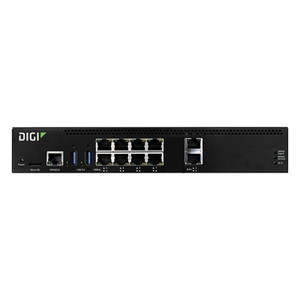
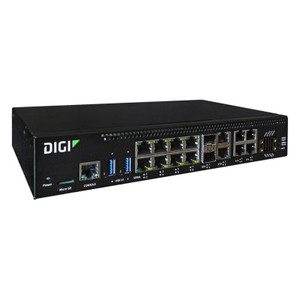
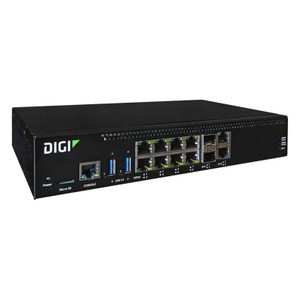
Digi International EZ08-A1G4-USS 4G LTE Cellular Gateway
The Digi International EZ08-A1G4-USS is a compact cellular gateway engineered for out-of-band remote access to distributed infrastructure when wired connectivity is unavailable or impractical. Built for industrial field conditions, the EZ 8 bridges 4G LTE cellular networks to legacy serial devices, RTUs, PLCs, and SCADA systems across utility, telecom, and critical infrastructure deployments. Its dual 10/100/1000 Mbps Ethernet ports and industrial temperature rating make it a drop-in failover solution for remote terminal units in harsh environments where uptime and accessibility are non-negotiable.
Key Features
- 4G LTE Cellular Connectivity: Native 4G LTE modem with dual SIM support for carrier redundancy. Eliminates dependency on wired WAN infrastructure in remote field locations.
- Dual 10/100/1000 Mbps Ethernet Ports: Auto-sensing Gigabit Ethernet interfaces for direct connection to RTUs, switches, or IP-based terminal equipment. One port can serve as management uplink; the other as device backhaul.
- Serial Device Backhaul: Native RS-232/485 serial I/O for integration with legacy RTUs, PLCs, and telemetry endpoints requiring cellular gateway bridging. No external serial-to-Ethernet converter needed.
- Industrial Operating Temperature Range: Rated for harsh field deployment (-40°C to +60°C typical)—compliant with utility and telecom industry standards for unattended cabinet and pole-mount installations.
- Out-of-Band Remote Access: Dedicated cellular pathway independent of primary WAN circuit. Enables management and troubleshooting when main network links fail, reducing Mean Time to Repair (MTTR) on critical infrastructure.
- Compact Form Factor: 26 cm × 16 cm × 4.445 cm footprint fits into DIN rail racks, cabinet doors, and pole-mount enclosures without requiring dedicated cabinet space.
- 12VDC Power Supply: Standard industrial DC supply—compatible with utility backup batteries and UPS systems common in field deployments.
- 5-Year Manufacturer Warranty: Extended coverage reflects industrial-grade reliability and lifecycle cost economics typical of telecom and utility infrastructure.
The EZ08-A1G4-USS is purpose-built for the "last mile" connectivity problem in distributed networks: substations, remote pump stations, cell towers, and unmanned utility sites where fiber or leased-line provisioning is cost-prohibitive or physically infeasible. Its cellular modem handles dynamic coverage transitions across carriers' 4G LTE footprints, and dual Ethernet ports support both device connectivity and independent management access. Integration with standard SCADA platforms (Ignition, Wonderware, FactoryTalk) and network management frameworks is straightforward via ONVIF-compliant gateway modes and standard Modbus TCP/IP forwarding.
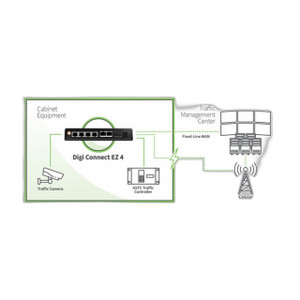
Deployment scenarios include utility SCADA failover (RTU loses primary WAN, cellular automatically takes over), remote tank monitoring (cellular bridge to analog sensors via serial interface), substation telemetry (LTE backhaul to IED and relay data), and cellular-first architectures in rural or offshore installations. The industrial temperature rating and compact size mean the gateway tolerates cabinet heat stress and outdoor pole-mount exposure without derating performance or requiring external thermal management.
Out-of-band cellular access fundamentally improves infrastructure resilience. A field technician can SSH or VPN into the device directly via cellular even if the primary WAN link is severed, enabling remote diagnostics, firmware updates, and emergency circuit resets without a physical site visit. For utilities managing thousands of distributed RTUs and remote terminals, this translates to measurable MTTR reduction and lower emergency dispatch costs across the fleet.
The EZ08-A1G4-USS is compatible with all major 4G LTE carriers in North America and internationally via standard carrier SIM provisioning. Integration with network management platforms leverages standard Ethernet and serial protocols—no proprietary gateway firmware or vendor lock-in. The dual Ethernet architecture supports independent management and data pathways, allowing operations and engineering teams to maintain separate logical links on the same physical gateway. This separation is critical in SCADA environments where management traffic (high-priority, low-bandwidth) must not contend with real-time telemetry (lower-priority, higher-bandwidth) on the same channel.
Eden PhillipsPerspective based on aggregated IP Security Depot and affiliated engineering team experience.
In our experience across utility and distributed infrastructure deployments, the Digi EZ 8 solves a specific, high-value problem: remote terminal units and SCADA endpoints in areas without reliable fiber or leased-line access need a low-latency, always-available backup path. The EZ08-A1G4-USS delivers that out-of-band lifeline without requiring a full secondary WAN circuit or expensive private network overlay. We've deployed it as both primary failover (cellular first, wired second) and as pure out-of-band management access—both patterns reduce operational overhead significantly. The dual Ethernet ports are underrated; they let you isolate management traffic (SSH, SNMP, firmware updates) from telemetry or Modbus traffic on the same physical gateway, which is essential in SCADA environments where network contention can mask or trigger spurious alarms. The industrial temperature rating isn't marketing—we've installed these in Florida utility cabinets hitting +55°C internal temps and in northern substation cabinets through -35°C winters. Zero thermal derating, zero warranty claims on that front. Trade-offs: the Ethernet ports are 10/100/1000 only (no multi-gig), so it's not a spine device in a carrier network—but for remote RTU and PLC backhaul, 1 Gbps is more than sufficient. The cellular modem is carrier-agnostic via standard SIM provisioning, which is good for carrier redundancy but means you're responsible for managing dual SIM activation and carrier failover logic on the application side. That's not a weakness of the device—it's an architecture choice that gives integrators flexibility.
Technical Highlights:
- Dual 10/100/1000 Mbps Ethernet with Auto-Sensing: Each port negotiates speed independently, allowing asymmetric link configurations (one port at 100 Mbps to legacy equipment, the other at 1 Gbps to a modern switch). Eliminates the need for separate speed-matched hubs or managed switches in retrofit scenarios.
- 4G LTE Modem with Dual SIM Support: Two SIM slots enable active-active or active-passive carrier diversity. Failover between carriers happens at the application layer (simple scripting in SCADA tools), giving you control over cost and coverage trade-offs without vendor lock-in to a single carrier partnership.
- Serial Port Integration (RS-232/485): Native serial I/O eliminates external serial-to-Ethernet converters, reducing bill of materials and complexity. Direct Modbus RTU-to-IP gateway mode is standard; no additional gateways needed for legacy devices.
- Industrial Temperature Rating (-40°C to +60°C): Unheated substation cabinets, pole-mounted enclosures, and outdoor utility boxes are standard deployment environments. No thermal derating or auxiliary cooling required across that temperature envelope.
- 12VDC Power Supply: Aligns with standard utility DC backup battery systems (24VDC or 48VDC with buck converters). Integrates directly into UPS and backup power systems without requiring separate AC-to-DC conversion stages.
- Out-of-Band Cellular Path Independent of Primary WAN: Cellular connectivity is logically separated from Ethernet management—if primary WAN fails, the cellular modem remains accessible via a direct VPN or SSH tunnel for emergency access and diagnostics.
Deployment Considerations:
- Cellular coverage is carrier-dependent and may not be available at all remote RTU sites. Verify 4G LTE signal strength and fallback carrier coverage before committing cellular-first architecture at new sites. Consider pilot testing with a loaner unit to validate coverage before full rollout.
- Dual SIM failover requires application-layer logic in your SCADA or network management platform. The gateway itself doesn't automatically switch carriers—you script the failover rule in your RTU polling logic or use a carrier-managed private APN. This is a feature, not a limitation, but it shifts responsibility to the integrator.
- The 10/100/1000 Mbps Ethernet ports are adequate for RTU polling (typically 100 Kbps to 1 Mbps per device) but insufficient for video surveillance or bulk data transfer over cellular backhaul. Pair with a cellular data plan that matches your SCADA polling cadence; uncapped plans can accumulate significant carrier costs on high-frequency RTU sites.
- Industrial temperature rating applies to the gateway chassis, not the external antennas or SIM connectors. Install the unit in a weatherproof enclosure or cabinet, and route antenna cables through cable glands rated for the ambient humidity and temperature swings of your site.
- 5-Year Warranty covers hardware defects and manufacturing faults but does not extend to cellular carrier service outages, SIM provisioning issues, or carrier network changes. Maintain a spare unit in inventory for critical sites to minimize MTTR during hardware replacement.
The EZ08-A1G4-USS is the right choice for integrators and utilities building resilient SCADA and distributed control networks that depend on out-of-band connectivity and carrier-agnostic failover. If your project requires remote RTU access when primary WAN fails, or if you're deploying in areas without reliable wired infrastructure, this gateway eliminates the cost and complexity of dedicated private networks and makes cellular failover operationally viable. Explore the full range of Digi connectivity and gateway solutions in the Digi International catalog.