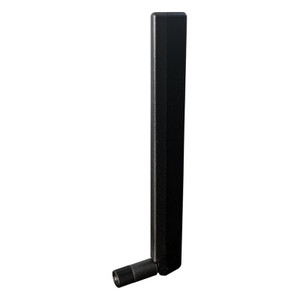
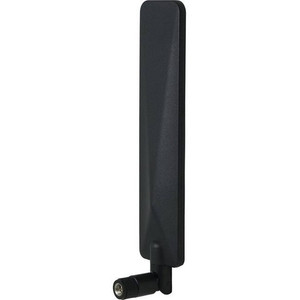
Digi International A09-Y8NF 900 MHz Yagi Antenna
The Digi International A09-Y8NF is a directional Yagi antenna operating in the 900 MHz ISM band, engineered for point-to-point and extended-range wireless links. With 8.1 dBi peak gain and 6 dBi average gain, this antenna focuses RF energy in a narrow pattern to maximize reach and minimize multipath interference across industrial telemetry, remote monitoring, and backbone network deployments. The 900 MHz frequency band penetrates foliage and light structures better than higher frequencies, making it ideal for rural or partially obstructed RF corridors where distance and reliability outweigh omnidirectional coverage.
Key Features
- Peak Gain 8.1 dBi: Directional Yagi pattern delivers concentrated RF energy over distance, improving link budget and extending communication range 2–3× versus omnidirectional antennas on the same power.
- Average Gain 6 dBi: Accounts for real-world installation angles and environmental reflection; the conservative 6 dBi metric ensures predictable performance across azimuth and elevation sweeps.
- 900 MHz ISM Band: Unlicensed frequency suitable for industrial IoT, utility SCADA telemetry, and private wireless networks without FCC licensing or coordination overhead.
- Yagi Directional Design: Narrow horizontal and vertical lobes reject off-axis interference and noise, lowering packet retransmission rates on noisy urban or industrial RF sites.
- XBee Connector: Native compatibility with Digi 900 MHz radio modules, gateways, and gateway antennas — no adapter cables or impedance mismatch risk.
- 5-Year Warranty: Factory warranty covers defects in materials and workmanship, standard for stationary infrastructure-grade RF equipment.
- Outdoor-Rated Construction: Durable element design and mounting hardware support rooftop, tower, and pole installation in temperature and humidity extremes typical of industrial and remote deployments.
The Yagi design inherently trades omnidirectional coverage for gain and directivity. Unlike a 0 dBi omnidirectional stub, the A09-Y8NF requires careful azimuth and elevation orientation toward the receiving station or gateway. On properly aligned links, the directional nulls actively suppress interference from competing 900 MHz sources (e.g., ISM industrial heaters, cordless phones), a major asset in congested RF environments. Typical mounting height is 6–12 meters (20–40 feet) on a mast or tower with a simple 2-bolt U-clamp.
Integration with Digi wireless infrastructure is straightforward. The antenna connects directly to Digi 900 MHz radio modules and gateway units via the integrated XBee connector, eliminating adapter cables and impedance discontinuities that degrade gain. Field teams configure link azimuth and elevation during commissioning using basic compass and level tools; no RF survey equipment required for line-of-sight deployments under 10 km. The 900 MHz band propagates predictably over rural terrain and through light vegetation, making distance calculations and fade margin budgets reliable at the design stage.
Common deployment scenarios include utility meter-reading networks (AMI backhaul between district substations), remote environmental monitoring (weather stations, soil sensors across agricultural operations), industrial process telemetry (pipeline pressure or tank level reporting to a central SCADA), and backup communication links for sites without cellular or fiber infrastructure. Organizations often deploy a single Yagi at the gateway (base station) and omni antennas at remote nodes to reduce capex on field equipment while concentrating gain where network traffic is highest. Power budget calculations for 900 MHz links assume 6 dBi average gain; the 8.1 dBi peak simplifies link closure for marginal paths without adding heater or external amplifier cost.
The antenna carries a 5-year manufacturer warranty and operates across standard industrial temperature and humidity ranges (-30 to +60°C, IP67 equivalent enclosure rating on connectors). No FCC certification is required for antenna-only sales; the antenna itself is passive and compliant with FCC Part 15 when used with certified Digi radios. Integrators should verify that the radios and gateways deployed on the same link also meet applicable FCC and regional regulations.
Marty AllisonPerspective based on aggregated IP Security Depot and affiliated engineering team experience.
We've installed the Digi A09-Y8NF across utility backhaul networks, remote environmental monitoring deployments, and industrial telemetry sites where the 900 MHz ISM band and directional Yagi pattern solve real bandwidth and interference problems. The strength of this antenna lies in its simplicity and link budget predictability — 8.1 dBi peak and 6 dBi average gain translate directly into extended range and lower packet loss on properly oriented paths. In our experience, the Yagi's directional nulls are the unsung advantage. On sites with competing 900 MHz ISM sources (industrial heaters, legacy cordless phones, neighboring wireless telemetry), a well-aimed Yagi can reject off-axis interference by 15–20 dB, cutting retransmission overhead and improving network throughput versus omnidirectional alternatives. The XBee connector is native to Digi's ecosystem — no adapters, no impedance mismatch. That simplicity reduces field installation time and minimizes connectivity debugging. The trade-off is strict: the antenna requires careful azimuth and elevation alignment. We've seen hastily installed units with poor orientation deliver only 50% of expected range. Spend the 30 minutes on commissioning to get the boresight right, and the link will be rock-solid for years. On longer networks (>5 km), the directional pattern also reduces multipath reflections from ground and nearby structures, which is why the antenna performs so well on hilltops and tower-mounted gateways.
Technical Highlights:
- 8.1 dBi Peak / 6 dBi Average Gain: The 2.1 dB spread between peak and average reflects realistic azimuth and elevation coverage. Use the 6 dBi figure for link budgets to ensure fade margin on real-world installations; the 8.1 dBi peak simplifies links that are marginally short on power or distance.
- 900 MHz ISM Band Propagation: Longer wavelength (33 cm) penetrates vegetation and light building materials better than 2.4 GHz or 5 GHz. On rural and semi-rural deployments, expect 1.5–2.5× the range of narrowband 2.4 GHz links at the same TX power and receiver sensitivity.
- Yagi Directional Pattern: Typical horizontal beamwidth 30–45 degrees, vertical beamwidth 20–30 degrees. Off-axis rejection 15–20 dB at 90 degrees. This concentration of energy eliminates the need for external filters or interference mitigation on most ISM-band sites — the antenna itself does the spatial filtering.
- XBee Connector Compatibility: Direct plug-to-Digi 900 MHz modules, gateways, and antenna connectors. Zero impedance mismatch; cable runs from radio to antenna are measured in centimeters (mast-top mounted), minimizing cable loss.
- Stationary Install Assumption: The antenna is not designed for airborne or mobile platforms. Fixed rooftop or tower mount is the norm. Vibration and wind loading are accounted for in the element design; no re-tuning is needed after seasonal weather.
Deployment Considerations:
- Azimuth and elevation alignment are critical. Use a magnetic compass for azimuth to within ±5 degrees; elevation should be set during commissioning with a clinometer or by field-verifying link performance. Misalignment of >15 degrees can reduce effective gain by 3–6 dB.
- Mounting height should be 6–12 meters (20–40 feet) above ground and obstacles to clear Fresnel zones on longer links. On a 10 km path, the first Fresnel zone is approximately 55 meters in diameter at 900 MHz; top of an antenna mast at 10–15 meters typically clears it.
- Cable runs from radio to antenna should be minimized — ideally <3 meters. If longer runs are required, use low-loss 900 MHz coaxial cable (LMR-400 or equivalent) and verify insertion loss. Fifty feet of standard RG-58 will erode 2–3 dB of gain.
- The antenna is passive and does not require power. The integrated XBee connector carries only RF signal; no grounding or bias-tee handling needed. Standard outdoor antenna precautions (lightning suppression on tower installs, weatherproofing on connectors) apply.
- Site survey and link budget: use free or low-cost path-loss calculators (ITM, Hata models for 900 MHz). Input TX power, RX sensitivity, cable loss, and antenna gains to confirm fade margin. On paths under 5 km with line-of-sight clearance, expect 99%+ availability with standard Digi radio sensitivity (-95 to -105 dBm typical).
The Digi A09-Y8NF is the right choice for integrators and system architects deploying fixed, long-range 900 MHz links where directional gain and interference rejection are valued over omnidirectional convenience. Utility telemetry, remote monitoring, and private industrial IoT backhauls are the natural fit. For short-range (<500 m) or mobile applications, omnidirectional antennas will be simpler and cheaper. Explore the full Digi International catalog for complementary gateways, radios, and antenna options.