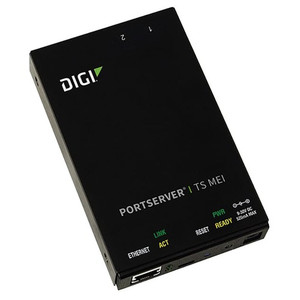
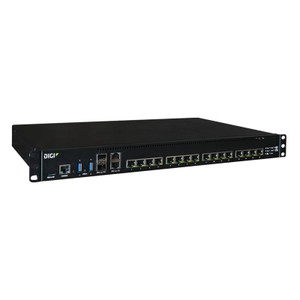
Digi International 70001999 One SP IA Serial Device Server
The Digi International 70001999 One SP IA is a single-port serial device server designed to bridge legacy RS-232, RS-422, and RS-485 serial equipment into modern Ethernet-based networks. This compact appliance enables remote access, monitoring, and control of legacy serial devices via TCP/IP without requiring direct serial cabling or console server infrastructure. It serves integrators deploying SCADA systems, telemetry collectors, industrial control devices, and security monitoring equipment across distributed sites where Ethernet is available but serial-native equipment cannot be retired or relocated.
Key Features
- Software-Selectable Serial Modes: Single DB-9 port supports RS-232, RS-422, and RS-485 via configuration — no hardware jumpers or physical swaps required. Eliminates inventory fragmentation when supporting multiple legacy serial standards across a deployment.
- 1 DB-9 Serial Port: Dual-purpose interface handles one serial device with flow control and signal integrity across all three standards. Field-proven connector that integrators understand and stock.
- TCP/IP over Ethernet: Native Ethernet connectivity converts serial traffic to network packets, enabling remote monitoring from a central NOC or geographically distributed access points without long RS-232 runs.
- Compact Single-Port Design: Footprint (10.25 x 8.0 x 3.25 in) fits into space-constrained equipment cabinets, pole-mounted enclosures, and field electrical boxes — ideal for outdoor or distributed deployments where rack-mounted multi-port servers are overkill.
- Flexible Mounting: Rack, wall, and DIN rail options accommodate cabinet integration without custom brackets. Minimizes installation labor on retrofit projects.
- 5-Year Warranty: Extended coverage typical of industrial-grade serial infrastructure, reducing replacement CAPEX over device lifetime in 24/7 operations.
The One SP IA addresses a specific but persistent integration challenge: legacy serial devices (access control readers, SCADA RTUs, telemetry sensors, alarm panels) that cannot be easily replaced, but whose data and commands need to be accessed from a modern network. Rather than running 500 feet of RS-232 cable or deploying a full console server, this single-port appliance solves the bridge problem in a compact, cost-effective footprint. Software-selectable modes mean you don't need to stock three different SKUs for three different serial standards — one device adapts.
Deployment scenarios include: retrofitting aging access control or intrusion equipment into IP-based security management platforms; extending SCADA RTU reach in utility substations or industrial sites; centralizing telemetry from distributed environmental monitors or flow sensors; and bridging legacy fire alarm panels or nurse-call systems into modern building automation networks. In each case, the device acts as a transparent TCP/IP-to-serial gateway, allowing software running on an NVR, VMS, SCADA master, or centralized monitoring system to query and command serial devices as if they were native network clients.
Integration is straightforward: the server accepts standard TCP/IP socket connections on configurable ports, passes data directly to the serial port, and returns responses to the originating TCP client. No special protocol translation is required for most legacy equipment — the appliance simply moves bits between Ethernet and RS-232/422/485 domains. Documentation includes IP configuration, port mapping, and serial parameter setup (baud rate, parity, stop bits) via embedded web interface or CLI. Support for DHCP and static IP ensures compatibility with both managed corporate networks and field-deployed ad-hoc setups.
Total cost of ownership is favorable for single-device integrations: lower capex than a full multi-port console server, zero licensing overhead, and minimal power draw (typical of industrial serial appliances). Five-year warranty coverage minimizes unplanned downtime on mission-critical serial bridges — particularly important in 24/7 monitoring, telemetry, and safety-interlocked control scenarios where serial device outages cascade into facility-level incidents.
Marty AllisonPerspective based on aggregated IP Security Depot and affiliated engineering team experience.
We've deployed the Digi One SP IA in dozens of retrofit and brownfield projects where legacy serial equipment needed to be centrally monitored without tearing out infrastructure. The software-selectable RS-232/422/485 modes are a genuine timesaver — you're not calling procurement to source three different models or managing SKU confusion on the warehouse shelf. Swap a jumper in the web UI, reboot, and the port shifts standards. It's simple enough that field technicians get it right the first time. The compact form factor has saved us real estate in stuffed electrical cabinets on industrial sites and utility substations where every cubic inch counts. On access control retrofit jobs, we've used this to bridge 1980s and 1990s serial readers into modern Genetec or Milestone platforms without ripping out the existing hardwiring — just plug the serial line into the device, give it an IP address, and the VMS software reads the input stream as if it were a native network camera. The five-year warranty gives end-users confidence in the serial bridge staying live for the duration of a typical system lifecycle, which matters in critical environments like utilities and healthcare where a downed serial gateway can cascade into operational problems.
Technical Highlights:
- Software-Selectable Serial Modes (RS-232/422/485): Configuration-based mode switching means you don't need to stock separate hardware. When you're supporting a mixed legacy environment (an old access control panel on RS-485 and a telemetry RTU on RS-232), one device bridges both — cut capex and inventory overhead.
- Single DB-9 Port with Full Signal Set: The serial port carries Request-To-Send, Clear-To-Send, and Data-Carrier-Detect signals. Important for devices that rely on hardware handshake (older modems, some industrial controllers). Transparent pass-through means no signal loss or timing issues.
- TCP/IP Transparency (No Protocol Overhead): The device is a true serial-to-Ethernet gateway — it doesn't inject its own packets or require application-layer protocol support. Whatever your legacy device sends on the serial line exits as-is over TCP. VMS, SCADA, monitoring software, or a raw socket client all work identically.
- Compact Footprint + DIN Rail Option: 10.25 x 8.0 x 3.25 inches. DIN rail mounting means you slot it into existing cabinet rail infrastructure — no drill-and-tap. Wall mount and rack mount options let you adapt to whatever enclosure you're retrofitting.
- Low Power / Industrial Duty: Typical serial device server draws minimal current (well under 1A). No fans, no moving parts. Rated for extended temperature range and industrial environments. The 5-year warranty reflects that — Digi doesn't warranty devices for 60 months unless they're built to survive the duty cycle.
Deployment Considerations:
- Serial port configuration (baud rate, data bits, parity, stop bits) must match the legacy device exactly — an 9600-8-N-1 reader won't talk to a 19200-7-E-1 RTU. Before installation, measure the source device settings or consult its manual. Mismatched serial parameters are the #1 cause of integration failures on our retrofit jobs.
- RS-422 and RS-485 require proper termination (120Ω resistor across the pair) at the device endpoints on long cable runs (>100 feet). The server provides the DB-9 connector; you supply the twisted pair and termination resistor. Unterminated RS-485 buses are prone to reflection noise and data corruption.
- TCP firewall rules must permit the device to reach your NVR, VMS, or SCADA master on the configured port. If the appliance and the master are on different subnets or behind a restrictive firewall, network traffic will be blocked despite the device functioning correctly. Verify IP routing and port 22 (SSH) or 80 (HTTP) access before declaring installation complete.
- This is a single-port device — it bridges one serial device at a time. If you have multiple legacy serial endpoints, you need multiple One SP IA servers or a multi-port Digi console server. Assess your serial equipment inventory before specifying.
- The device expects Ethernet to be available at the installation site. If the legacy serial equipment is in a remote field location without network connectivity, you'll need to run Ethernet to the device or use a wireless bridge — serial-only sites won't work with this appliance.
The Digi One SP IA is the right choice for integrators and end-users with one or two legacy serial devices that need to be bridged into a modern IP network without full-scale system replacement. If you're retrofitting access control, SCADA, telemetry, or monitoring equipment and your serial devices are still reliable but not networked, this is a proven, cost-effective path forward. For more options across Digi's serial and networking product line, see the Digi International catalog.