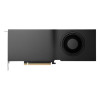
Dell 490-BKFX NVIDIA RTX 4500 Ada Generation Professional GPU
The Dell 490-BKFX is a professional-grade discrete graphics card built around NVIDIA's RTX 4500 Ada Generation processor, delivering 7,680 CUDA cores and 24 GB of GDDR6 memory across a 192-bit bus. Designed for workstation-class compute workloads — including AI inference, visualization, and multi-display professional deployments — this is a full-height, full-length PCIe 4.0 x16 card that slots into standard workstation and tower chassis without modification. If you're speccing a multi-display video wall controller, AI-assisted analytics server, or GPU-accelerated VMS workstation, the 490-BKFX gives you dense compute and display headroom in a single dual-slot card.
Overview
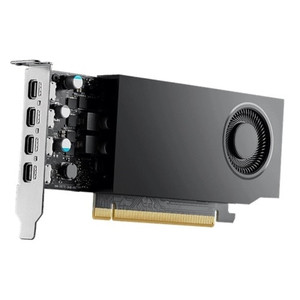
The RTX 4500 Ada sits in NVIDIA's professional RTX lineup, distinct from consumer GeForce cards in driver certification, ECC memory support, and long-term platform stability — factors that matter in 24/7 operational environments. At 210 W typical power draw, it's a meaningful load on your workstation's PSU but well within the envelope of any modern professional tower. The full-height/full-length form factor means it occupies two expansion slots and requires a chassis with adequate PCIe lane allocation — confirm your platform before ordering. Connectivity is handled via four DisplayPort 1.4a outputs, supporting up to four simultaneous displays from a single card.
Key Features
- 7,680 CUDA Cores (Ada Architecture): The Ada Lovelace generation's CUDA core count at this tier translates to parallel compute throughput well above prior-gen cards — relevant if you're running AI inference tasks, GPU-accelerated video analytics, or real-time transcoding alongside display output. This isn't a gaming GPU; the driver stack is tuned for sustained professional workloads.
- 24 GB GDDR6 at 432 Gbit/s: Most professional visualization and AI inference bottlenecks at VRAM capacity, not raw core count. 24 GB gives you headroom to load large AI models, multiple high-resolution video streams, or complex 3D scene graphs without spilling to system RAM. The 432 Gbit/s memory bandwidth keeps that VRAM fed fast enough that you won't be waiting on data movement.
- 192-Bit Memory Bus: Wider than the 128-bit buses found on entry professional cards, the 192-bit interface sustains higher sustained read/write throughput under parallel workloads — important when multiple processes are competing for GPU memory access simultaneously.
- PCIe 4.0 x16 Interface: Full PCIe 4.0 x16 doubles the host bandwidth of PCIe 3.0 at the same lane count. For workloads that stream large datasets from NVMe storage to the GPU — point cloud processing, large-frame video analytics — the gen-4 interface removes a potential throughput ceiling present in older platforms.
- Four DisplayPort 1.4a Outputs: Drive up to four independent monitors or displays directly from one card, at resolutions up to 8K per output. For a video wall operator or a multi-screen SOC workstation, this eliminates the need for a separate display expansion card and keeps cabling simple.
- VR-Ready: The 490-BKFX meets NVIDIA's VR-ready specification, which is relevant for simulation, training, and digital twin environments where immersive output is part of the workflow — not just for consumer gaming.
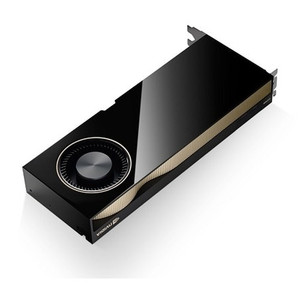
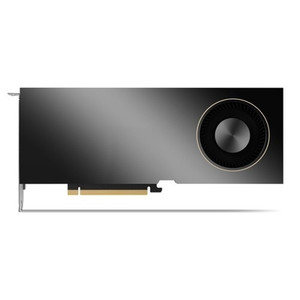
- Single Active-Cooling Fan, Dual-Slot: One fan in a dual-slot form factor keeps the thermal envelope predictable. Ensure your chassis has at least 160 mm of clearance behind the PCIe slot and adequate case airflow — a 210 W card in a poorly ventilated tower will throttle under sustained load.
- 210 W Typical Power Draw: This is the sustained operating figure, not peak. Your workstation PSU needs sufficient headroom above this plus the platform's CPU and storage draw. Plan for a PSU rated at least 100 W above total system TDP to avoid stability issues under full load.
Integration & Compatibility
The 490-BKFX connects via PCIe 4.0 x16 and is backward compatible with PCIe 3.0 slots at reduced bandwidth. It also carries an Ethernet interface designation in the distribution specs — confirm with your platform documentation whether this refers to an RDMA/networking capability or an onboard management interface, as this varies by workstation SKU. The card supports CUDA, making it compatible with NVIDIA's full professional software stack including CUDA-accelerated VMS analytics, TensorRT inference engines, and professional visualization platforms. Four DisplayPort 1.4a ports are directly driven from the GPU with no active adapter required for standard DP monitors; HDMI and DVI require passive or active adapters depending on the downstream display.
For AI-accelerated security camera analytics servers or network video recorder workstations running GPU-accelerated decoding, the 490-BKFX fits into standard tower workstations in the Dell workstation and compatible third-party platforms. If you're planning a multi-GPU analytics deployment, review your chassis PCIe slot spacing — dual-slot cards require unobstructed neighboring slots. For a broader view of GPU and compute options in professional surveillance infrastructure, the NVR and server category covers companion hardware.
Frequently Asked Questions
Q: What is the typical power draw of the Dell 490-BKFX, and what PSU capacity is recommended?
A: The 490-BKFX has a typical power consumption of 210 W. For stable operation, plan for a workstation PSU with at least 100 W of headroom above total system TDP (CPU + storage + GPU), so a 750 W or higher PSU is generally advisable in a fully configured tower.
Q: How many displays can the 490-BKFX drive simultaneously?
A: The card supports up to four simultaneous displays via its four DisplayPort 1.4a outputs. DisplayPort 1.4a supports resolutions up to 8K per output, making it suitable for high-resolution multi-monitor or video wall configurations.
Q: Is the 490-BKFX compatible with PCIe 3.0 motherboards?
A: Yes — PCIe 4.0 x16 cards are backward compatible with PCIe 3.0 x16 slots. You will operate at PCIe 3.0 bandwidth limits in that configuration, which may affect throughput for data-intensive workloads but does not prevent operation.
Q: Does the 490-BKFX support CUDA for AI and analytics workloads?
A: Yes. The RTX 4500 Ada supports CUDA with 7,680 CUDA cores, making it compatible with NVIDIA's professional software stack including CUDA-accelerated video analytics, AI inference engines such as TensorRT, and professional visualization platforms.
Q: What is the form factor and slot requirement for the 490-BKFX?
A: The 490-BKFX is a full-height, full-length (FH/FL) card occupying two expansion slots, measuring 10.50 x 2.00 x 4.40 inches (L x W x H). Confirm your chassis has at least two adjacent open PCIe slots and sufficient clearance behind the slot area before ordering.
Q: What memory capacity and bandwidth does the 490-BKFX provide?
A: The card carries 24 GB of GDDR6 memory on a 192-bit bus with 432 Gbit/s of memory bandwidth. This VRAM capacity supports large AI model inference, multi-stream high-resolution video processing, and complex professional visualization workloads without spilling to slower system memory.
The 490-BKFX (also searched as 490 BKFX) is the card I'd spec into a dedicated GPU-accelerated analytics workstation when the job demands sustained compute rather than burst gaming peaks — 7,680 Ada-generation CUDA cores backed by 24 GB of GDDR6 at 432 Gbit/s is enough headroom to run concurrent AI inference pipelines without starving individual streams of memory bandwidth. That 192-bit bus is the spec most buyers overlook; it's what keeps the VRAM throughput honest when you're pushing multiple high-resolution decode threads simultaneously.
Technical Highlights:
- 24 GB GDDR6 / 432 Gbit/s: VRAM is the real constraint in multi-stream GPU analytics; 24 GB gives you enough to load large detection models alongside active video decode without thrashing system RAM, and the 432 Gbit/s bandwidth keeps latency low under concurrent access from multiple inference threads.
- 7,680 CUDA Cores (Ada): Ada Lovelace's architectural improvements over the prior generation deliver meaningfully higher per-core throughput on matrix operations — relevant for TensorRT-based inference workloads where the GPU is doing structured matrix math rather than general-purpose compute.
- Four DisplayPort 1.4a Outputs: Driving a four-screen SOC operator console or a compact video wall from one card eliminates a display expansion card entirely, simplifying the chassis build and reducing a failure point in a 24/7 environment.
Deployment Considerations:
- At 210 W typical draw and a full-height/full-length dual-slot form factor (10.50 in long), verify both your PSU headroom and physical chassis clearance before procurement — this card does not fit short-depth or low-profile enclosures.
- The Ethernet interface listed in the distribution spec should be confirmed against your specific workstation platform documentation; not all PCIe GPU cards expose a user-accessible network interface, and this may refer to RDMA capability or an onboard management path depending on the Dell workstation SKU.
This card is the right fit for a dedicated GPU-accelerated VMS analytics workstation or multi-display security operations center console build — not a general-purpose server add-in card, and not a substitute for a purpose-built AI appliance in large-scale deployments with hundreds of camera streams.