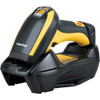
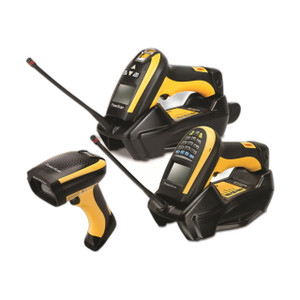
Datalogic PBT9100-RBK10US PowerScan 9600 Industrial Handheld Barcode Scanner
The Datalogic PowerScan 9600 Series, represented here by the PBT9100-RBK10US, is a ruggedized 2D area imager built for high-velocity industrial capture—manufacturing floors, distribution centers, logistics yards, and pharmaceutical warehouses. This scanner combines flexible 2D barcode imaging with genuine industrial survivability: IP65 sealing against dust and washdown spray, 2.5 m drop survival, and a 10 million trigger press durability rating that translates to roughly 5+ years of heavy daily use. The lightweight 440 g (0.97 lb) form factor minimizes operator fatigue during shift-long scanning, while Bluetooth 5.0 and dual wired connectivity (USB, RS-232) accommodate both wireless mobility and fixed-station integration without vendor lock-in.
Key Features
- 2D Area Imager: Captures both 1D barcodes (UPC, Code 128) and 2D symbologies (QR, DataMatrix, PDF417) in a single device configuration. No lens swaps or mode changes required—critical when production codes evolve or logistics partners introduce new label formats.
- IP65 Environmental Rating: Dust-sealed and water-jet resistant per IEC 60529. Deploy in washdown zones, food processing lines, and outdoor receiving areas without risking premature failure. Eliminates the need for protective housings in wet or dusty environments.
- 2.5 m (8.2 ft) Drop Resistance: Survives concrete floor impacts typical of warehouse and production line deployment. Reduces unplanned replacement frequency and downtime—critical when operators work at height on platforms or in fast-paced picking environments.
- Bluetooth 5.0 Wireless Connectivity: Modern, long-range wireless protocol with lower power draw than older Bluetooth generations. Supports STAR Radio alternatives (433/910 MHz) for facilities requiring spectrum diversification or regulatory compliance outside standard ISM bands.
- USB and RS-232 Wired Connectivity: Dual wired options eliminate single-point-of-failure dependency on wireless infrastructure. Deploy scanners directly to legacy systems (RS-232 serial terminals) or modern USB docking stations without adapters or middleware.
- 10 Million Trigger Durability: Mechanical durability specification ensures predictable operational life. At 500 scans per shift, this equates to 40,000 shifts—roughly 5 years—before trigger wear becomes a lifecycle cost factor. Plan device replacement confidently across multi-year fleet management cycles.
- Multiple Optical Modes (Standard, High-Performance, Document): Three predefined imager configurations optimize read distance and accuracy for specific barcode densities and label types. No hardware swaps required—firmware selection adjusts performance for tight manufacturing labels, distant logistics codes, or document-embedded barcodes.
- Green Spot Good-Read Feedback: Visual confirmation LED on successful scan reduces erroneous data entries and operator uncertainty. Particularly valuable in noisy production environments where audio feedback is masked or unreliable.
- Inductive Charging Support (on applicable models): Eliminates mechanical connector wear from repeated dock mating cycles. Reduces maintenance labor and extends dock station lifespan in high-volume scanning operations.
- Compact 71 x 203 x 107 mm Footprint: Balanced ergonomics for all-day handheld use. Fits securely in cargo pockets or on wrist straps without bulk; reduces operator musculoskeletal strain during extended shifts.
Integration & Deployment Context
The PBT9100-RBK10US operates across wide temperature ranges typical of uncontrolled warehouse and manufacturing environments—critical for outdoor receiving docks, refrigerated storage, and hot production zones. Connectivity flexibility allows phased deployment: pilot wireless zones in high-mobility areas (picking lines, assembly) while maintaining hardwired scanners at fixed checkpoints (shipping dock, inbound receiving). Organizations standardizing on the Datalogic PowerScan 9600 family consolidate spare parts, operator training, and device management across multiple facilities and verticals, simplifying total cost of ownership calculations across distributed operations.
When to Choose a Different Model
If your application requires IP67 (temporary submersion) rather than IP65 spray sealing, or if you need scanning capability optimized purely for 1D barcodes at fixed read distances, consider a lighter-duty variant within the Datalogic portfolio. For ultra-high-volume sorting or line-mounted fixed scanners (non-handheld), dedicated fixed-position imaging engines may offer better throughput. If your facility operates in explosion-hazard zones (chemical plants, grain silos), you will need a specialized intrinsically safe certified model outside this series.
Frequently Asked Questions
Q: What barcode formats does the PBT9100-RBK10US read?
A: The 2D area imager captures 1D symbologies (UPC-A/E, Code 128, Code 39, EAN) and 2D codes (QR, DataMatrix, PDF417, Aztec). All are read natively without reconfiguration—switching between formats is purely software-selectable.
Q: Is the PBT9100-RBK10US waterproof for outdoor use?
A: IP65 protection seals against dust and direct water spray (washdown, light rain), but the scanner is not submersible. For submerged or prolonged wet-environment use, specify an IP67-rated variant.
Q: How often should I replace the device based on trigger durability?
A: At 10 million trigger presses, a device scanning 500 items per shift will operate roughly 40,000 shifts, or approximately 5+ years of heavy daily use. Plan replacement cycles and budget accordingly for fleet refresh.
Q: Can the PBT9100-RBK10US pair with existing wireless infrastructure or does it require dedicated STAR Radio?
A: Bluetooth 5.0 operates on standard 2.4 GHz ISM—compatible with most enterprise wireless networks. STAR Radio (433/910 MHz) is an alternative, not a requirement. Choose based on your existing RF environment and regulatory constraints.
Q: What happens if the scanner is dropped on a concrete floor?
A: The 2.5 m drop specification means the scanner survives concrete impacts from typical shoulder-height falls and platform drops. This is a durability specification, not a guarantee of zero damage—extreme impacts may cause cosmetic wear or component stress, but the device is engineered to restart and function normally after rated drops.
Q: Does the device require special licensing or certification to operate in wireless mode?
A: Bluetooth 5.0 requires standard FCC/CE compliance (typically included). STAR Radio (433/910 MHz) operation may require frequency licensing depending on your geography and regulatory authority—verify with your local telecommunications commission before deploying STAR-equipped units.
Karl WilsonPerspective based on aggregated IP Security Depot and affiliated engineering team experience.
The PBT9100-RBK10US represents a deliberate platform choice for enterprises standardizing on true industrial barcode capture. A 2D area imager is inherently future-proof—it handles both legacy 1D UPC codes and modern QR/DataMatrix formats without hardware reconfiguration, eliminating the need to redeploy when suppliers shift to 2D labeling. The 10 million trigger durability specification is not marketing; it's a direct cost lever. At heavy scanning volumes (500+ scans per shift), you're looking at a realistic 5-year lifecycle before trigger wear becomes a depreciation factor. That translates to lower per-scan cost-of-ownership compared to light-duty alternatives that fail at 2–3 years.
Technical Highlights:
- IP65 + 2.5 m Drop Rating: This scanner is engineered for genuine warehouse floors and production lines, not light-duty office use. The combination means you can deploy at receiving docks with active washdown, outdoor staging areas, and food-processing lines without protective housings or sealed cabinets adding cost. That's a materials and labor saving most people miss.
- Bluetooth 5.0 + Dual Wired Connectivity: The option to deploy both wireless (for mobile picking) and hardwired (for fixed checkpoints like shipping docks) in the same fleet eliminates vendor lock-in and gives you flexibility when RF interference or regulatory restrictions emerge. STAR Radio alternatives (433/910 MHz) provide spectrum diversification—valuable if your 2.4 GHz channel is congested.
- Multiple Optical Modes: Standard, High-Performance, and Document modes mean you configure performance in firmware, not by hardware swaps. Standard handles general-purpose barcodes; High-Performance optimizes for dense manufacturing labels at short range; Document mode handles embedded codes in shipping documents. One device handles three use cases.
- Green Spot Feedback: Real-time visual confirmation on successful scan reduces erroneous data entry and operator uncertainty. In noisy manufacturing floors where audio cues are masked, this is a must-have for data integrity.
Deployment Considerations:
- IP65 seals against spray and dust, but is not submersible. If your application involves dunking or extended immersion (e.g., wet-process production), you need IP67 or higher—clarify before purchase.
- Inductive charging is available on applicable models within this series—confirm dock and cradle support with your supplier if charge-wear reduction is a priority in high-volume docking environments.
- Temperature range must be verified against your specific operating zones. Uncontrolled warehouses and outdoor receiving areas vary widely; confirm minimum/maximum specs align with your facility profile before deployment.
Position the PBT9100-RBK10US as the consolidation point for facilities running mixed 1D/2D barcode ecosystems across multiple warehouses or production lines. The true win is standardization: one device type, one spare parts bin, one operator training profile across distributed operations. That simplicity compounds over a 5-year fleet lifecycle.