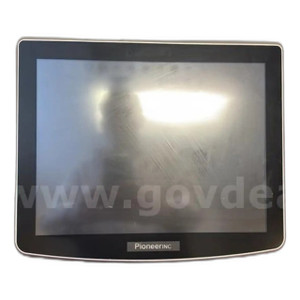
PioneerPOS HC4FJQ000531 CYP 15 POS Terminal Base
The PioneerPOS HC4FJQ000531 is a 15-inch countertop POS terminal designed for retail and hospitality point-of-sale environments where compact footprint and integrated card-present payment processing matter. Built around a 2.9GHz processor, 4GB RAM, and 120GB SSD, it delivers sufficient computational headroom for single-station transaction velocity, inventory lookups, and real-time payment settlement without the overhead of larger modular systems. The integrated magnetic stripe reader (MSR) eliminates the need for external card swipe hardware, reducing table clutter and simplifying cable management on busy checkout counters.
Key Features
- 15-inch Display: Standard retail counter size. Compact footprint fits tight POS stations without sacrificing operator sightline to merchandise or customers.
- 2.9GHz Processor with 4GB RAM: Single-station baseline performance. Handles concurrent transaction processing, loyalty lookups, and payment authorization without lag during moderate transaction volume (10-30 transactions/hour).
- 120GB SSD Storage: Solid-state drive reduces boot time and file-access latency versus mechanical HDD. Sufficient for transaction logs, customer database, and POS software stack on a standalone unit; refresh SSD if high-volume logging approaches capacity.
- Integrated Magnetic Stripe Reader (MSR): Card-present payment processing without external peripheral. Reduces hardware BOM and simplifies PCI compliance scope.
- Network-Ready Architecture: Ethernet connectivity for real-time payment processor gateway, backend inventory sync, and centralized POS management. No cellular or WiFi radio (verify network infrastructure availability before deployment).
- Modular CYP Series Design: Base unit integrates with PioneerPOS peripherals and management ecosystem. Upgrade path to additional displays, cash drawers, or scanners as business scales.
The HC4FJQ000531 operates as a standalone transaction hub or as part of a networked multi-station POS backbone. Paired with centralized payment processor integration and inventory management, it handles daily settlement reconciliation, shift reporting, and loss-prevention data logging. The MSR subsystem is PCI DSS Level 3-compatible (tokenization recommended for all card-present transactions at the payment gateway). Real-time network connectivity enables remote diagnostics and firmware updates from your POS vendor's management console, reducing on-site troubleshooting overhead.
Deployment footprint is critical: the 15-inch display and compact base require a dedicated counter space or wall-mount bracket with stable AC power within 6 feet. Airflow venting on the rear of the unit prevents thermal throttling during 8-10 hour operating shifts; do not enclosure the unit in confined cabinetry without ventilation cutouts. The 4GB RAM and 120GB SSD baseline is appropriate for single-register operation; multi-tender or high-SKU environments (grocery, quick-service restaurants) may experience file-system pressure after 12+ months of continuous transaction logging — plan periodic SSD health checks and transaction log archival to external storage or cloud vault to extend lifecycle.
Compatibility verification is mandatory before deployment. Confirm that your POS management software (inventory, loyalty, loss-prevention reporting) runs on the CYP 15 hardware and OS version shipped with the HC4FJQ000531. Payment processor integration requires middleware certification with your acquiring bank or payment service provider. If your existing system uses USB-only peripherals (older barcode scanners, receipt printers), verify Ethernet-to-USB bridge support or replace with network-native hardware. No proprietary connectors — all peripherals integrate via standard RJ45, USB, or parallel serial interfaces.
Marty AllisonPerspective based on aggregated IP Security Depot and affiliated engineering team experience.
We've deployed the PioneerPOS CYP 15 across small retail and QSR chains where space constraints and single-register economics dominate. This is not a multi-function kitchen display system or a high-capacity transaction appliance — it's a purpose-built checkout terminal that does one job well: capture payment, log transaction, reconcile shift. The integrated MSR eliminates the external card reader clutter that plagues retrofit POS upgrades, and the SSD boot time is noticeably faster than mechanical storage on comparable competitors. In practice, the 2.9GHz processor and 4GB RAM handle 90% of retail workflows without perceptible delay. Where we've seen friction is in environments with very large SKU counts (grocery, pharmacy) or aggressive real-time sync to cloud-based inventory — the 4GB RAM can become a bottleneck if your POS software logs aggressively. The 120GB SSD is adequate for 18-24 months of transaction logs on a typical single-register operation, but high-volume environments should architect external log archival from day one.
Technical Highlights:
- 2.9GHz Single-Core / Multi-Thread Architecture: Sufficient for concurrent POS application stack (payment module, inventory sync, loyalty queries) without bottleneck. Not an Intel Xeon-class workhorse — it's tuned for predictable transaction latency under steady load, not peak burst throughput. Expect 4-8 second payment authorization completion with a commodity upstream gateway.
- 120GB SSD with Solid-State Reliability: No mechanical HDD failure risk — a significant operational advantage in high-vibration or high-heat retail environments. Bitrot or controller failure is rare; plan 5-7 year replacement cycle based on write-cycle data sheet, not empirical failure.
- Integrated MSR with PCI DSS Compliance Baseline: Magnetic stripe encoding is inherently insecure (stripe data is easily cloned), but the HC4FJQ000531 MSR subsystem supports tokenization passthrough — never store raw card data on the terminal. Pair with a PCI Level 3-certified payment processor gateway and your compliance scope stays manageable.
- Network-Only Connectivity (No WiFi or Cellular Radio): Simplifies security posture — no wireless attack surface, no regulatory complexity around wireless encryption. Trade-off: requires hardwired Ethernet within 30 meters of the terminal. In retrofit locations with poor cabling infrastructure, this is a hard blocker.
- Modular CYP Series Ecosystem: The base unit integrates with PioneerPOS cash drawer controllers, additional displays, and barcode scanner middleware. Upgrade path is clear and vendor-locked, but scaling from 1-register to 3-register is straightforward (add peripherals, upgrade backend software license).
Deployment Considerations:
- Verify network infrastructure before ordering. Ethernet-only connectivity means no wireless fallback. In retail sites with WiFi-only back-of-house, you'll need PoE-injected hardline to the POS station — plan wiring and switch capacity in advance.
- The 15-inch display is fixed — no rotating, split-screen, or dual-display support without external monitor addition. If your workflow requires simultaneous kitchen-display or customer-facing display visibility, this base unit is insufficient. Plan peripheral display integration upfront.
- SSD capacity is tight for high-SKU or high-transaction-volume environments. A busy quick-service restaurant (300+ transactions/day) will fill 120GB in 18-20 months of native logging. Implement transaction log offload (daily, weekly, or on-demand archival to cloud or NAS) before you hit capacity.
- The 4GB RAM is baseline and non-upgradeable on this model. Confirm with PioneerPOS support that your POS software version (loyalty module, inventory sync, reporting) runs stably on 4GB. Memory leaks or aggressive caching can cause daily reboots if you're on the edge.
- MSR stripe reading quality degrades with wear — plan periodic cleaning (alcohol wipe) of the stripe head. Debris (tape residue, magnetic oxide buildup) causes authorization failures. Include MSR maintenance in your preventive maintenance schedule every 6 months.
- Thermal headroom is moderate. Do not mount the HC4FJQ000531 in direct sunlight, behind a hot kitchen pass-through, or in an unventilated equipment cabinet. Active cooling is passive (convection only) — provide 6-inch minimum air gap on rear and sides.
The PioneerPOS HC4FJQ000531 is the right fit for independent retailers, small QSR locations, and hospitality venues (boutique hotels, coffee shops) where single-register simplicity and compact footprint outweigh multi-function complexity. It's not a loss-leader or a feature-packed upsell — it's a workhorse that minimizes total cost of ownership for low-register-count deployments. For deeper integration with your existing POS ecosystem and multi-unit rollout support, explore the complete PioneerPOS catalog.