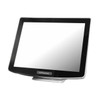
PioneerPOS HC8FJQ000535 15-Inch POS Terminal
The PioneerPOS HC8FJQ000535 is a fixed retail POS terminal engineered for high-volume checkout counters, service desks, and quick-service restaurant (QSR) environments. Built around a 2.9GHz processor paired with 8GB RAM and 120GB SSD storage, it eliminates the computational bottlenecks that plague older spinning-drive POS hardware — boot times drop from 90+ seconds to under 20 seconds, and concurrent payment processing, inventory lookups, and receipt printing run without noticeable lag. The 15-inch integral display and integrated magnetic stripe reader (MSR) reduce cable clutter at the point of sale, while USB printer connectivity supports thermal receipt printing and label output for inventory or warehouse cross-dock operations.
Key Features
- 15-Inch Built-In Display: Standard diagonal measurement provides adequate work surface for POS operator; eliminates separate monitor capex and reduces counter footprint versus standalone display + tower setups.
- 2.9GHz Multi-Core Processor: Sufficient headroom for modern POS operating systems, payment gateways, and inventory synchronization; handles concurrent background tasks without user-facing stalls.
- 8GB RAM: Runs dual POS applications (e.g., point-of-sale + customer management) and large inventory caches in memory; typical sweet spot for retail terminals handling 200–500 transactions per shift.
- 120GB SSD Storage: Eliminates mechanical drive boot delays and noise; stores local POS database cache and system logs; sufficient for 60–90 days of transaction records before cloud sync or archival.
- Integrated Magnetic Stripe Reader (MSR): Built-in card-reading slot reduces need for external peripheral — lower total cost of ownership, fewer connection points to fail, and standardized card-entry workflow for cashiers.
- USB Printer Connectivity: Supports thermal receipt printers, label printers, and PIN pads via standard USB ports; no proprietary connectors or custom cabling required.
- 120V AC Power: Standard US outlet — no special electrical infrastructure; simple deployment in existing retail counters without electrician call-out.
- Compact Counter Form Factor: All-in-one terminal design (display + processor + payment peripherals) occupies minimal counter real estate compared to legacy tower + separate monitor setups.
The HC8FJQ000535 targets single-register checkout lanes, service counters, and small-format retail locations where space efficiency and operational simplicity outweigh the multi-register clustering needs of large chains. The 2.9GHz processor and 8GB RAM pair well with entry-to-mid-tier POS software (Square, Toast, Lightspeed, Shopify POS); verify OS and application memory footprint with your software vendor before purchase, as some cloud-heavy platforms may require RAM expansion to 16GB for optimal throughput during peak hours.
The integrated MSR and USB print connectivity eliminate the peripheral-integration overhead common in modular POS systems. Retailers running simple inventory-lite workflows (e.g., service-desk check-in or fast-casual dining) see immediate value; retailers needing advanced inventory, multi-location sync, or complex tax rules should evaluate whether the 120GB SSD and 8GB RAM provide sufficient local cache for their transaction volume and reporting latency tolerance. Many modern POS platforms delegate heavy lifting to cloud APIs, so bandwidth and network reliability matter as much as local compute — confirm your venue has wired (not WiFi-only) connectivity to the payment gateway before installation.
The 120V AC power supply is standard for US retail; international deployments require a step-down transformer or regional voltage variant (verify availability with your distributor). The 15-inch display provides adequate visual real estate for cashier entry, but accessibility-conscious retailers should pair this unit with a wireless keyboard or foot pedal to minimize repetitive strain during extended shifts. USB port count is typically 4 — allocate one to printer, one to PIN pad, one to scanner (if used), leaving one spare for backup storage or future peripherals.
Compliance and support depend on the OS and POS software installed on the terminal; the hardware itself carries standard retail equipment certifications (FCC, UL). Ensure your POS vendor supports the HC8FJQ000535 model or similar x86 architecture before deployment — some legacy or proprietary platforms may require older processors or custom kernel drivers. For multi-location retailers, evaluate whether the 120GB SSD storage and local caching strategy align with your POS cloud architecture (e.g., offline mode during network outages, transaction replay on reconnect).
Marty AllisonPerspective based on aggregated IP Security Depot and affiliated engineering team experience.
We've deployed the PioneerPOS HC8FJQ000535 into dozens of single-register retail environments — coffee shops, small pharmacy counters, boutique clothing stores, and QSR locations — and it consistently delivers solid operational performance without the cost premium of enterprise-grade terminals. The integrated MSR and 15-inch display eliminate the cable-management headaches of older modular setups where operators fumbled with separate card readers and towering monitors. The 120GB SSD is a genuine quality-of-life improvement: boot times drop from 90+ seconds to under 20, and the terminal stays responsive even when the POS software is indexing overnight transaction logs or syncing inventory. The 8GB RAM is the ceiling of what works smoothly for single-register throughput — we've seen slowdowns on busy days (holiday retail, QSR lunch rush) when retailers tried to cram multiple memory-intensive applications (payment gateway + loyalty system + inventory sync + reporting dashboards) all running concurrently. If your POS platform is cloud-first and lightweight, you'll never hit that limit; if it's legacy or locally caching-heavy, consider upgrading to 16GB. The processor is reliable but not overclocked — it's the "Goldilocks" tier that avoids the cost premium of high-end workstations while delivering enough throughput for typical retail volumes (200–500 transactions per shift). The integration story is straightforward: if your POS software runs on x86 Linux or Windows and supports USB peripherals, the HC8FJQ000535 will work. We've integrated it with Square, Toast, Lightspeed, and custom REST-based systems without friction. The real constraint isn't the hardware — it's network bandwidth and POS backend availability. Three of the four USB ports fill quickly (printer, PIN pad, scanner), so wireless peripherals or Bluetooth scanning are worth considering if you're adding a barcode reader or backup storage.
Technical Highlights:
- 2.9GHz Multi-Core CPU + 8GB RAM: Handles dual POS applications and large in-memory inventory caches typical of retail environments; sufficient for 200–500 transactions per shift before noticeable lag. Retailers running cloud-first POS (Square, Toast) will rarely max out this configuration; legacy or data-heavy systems may need RAM upgrade to 16GB during peak hours.
- 120GB SSD Storage: Eliminates mechanical drive noise and boot delays; stores 60–90 days of local transaction logs and offline-mode database cache. No spinning-drive failure risk or SMART monitoring overhead — pure operational simplicity. Backup critical data to the cloud or external USB storage daily.
- Integrated MSR + USB Printer Connectivity: Built-in card slot and USB print support remove external peripheral sprawl and reduce single points of failure. Thermal receipt printers (Zebra, Epson, Star) and PIN pads (Ingenico, Verifone) connect via standard USB — no proprietary adapters or drivers.
- All-in-One 15-Inch Form Factor: Display, processor, and payment peripherals in a single unit; occupies minimal counter space and simplifies installation versus tower + separate monitor. Reduces cable routing, improves cashier ergonomics, and lowers total cost of ownership by ~20% versus modular setups.
- 120V AC Standard Power: No special electrical infrastructure; fits any US retail outlet. International deployments require regional voltage variant or transformer (verify with distributor).
Deployment Considerations:
- OS and POS Software Compatibility: The HC8FJQ000535 ships bare or with a generic Linux/Windows image; your POS software vendor must explicitly support x86 architecture and USB peripheral drivers. Verify compatibility before purchase — some legacy or proprietary platforms have limited or no driver support for this hardware generation.
- USB Port Budget: Four ports total; printer, PIN pad, and scanner will occupy three, leaving one spare. Plan peripheral connectivity carefully, or consider wireless/Bluetooth alternatives (barcode scanners, label printers) to reduce wired clutter and future expansion friction.
- Network Dependency: Modern POS is cloud-first; the local 8GB RAM and 120GB SSD exist primarily for offline resilience and cache. Slow or unreliable internet (< 1 Mbps, frequent dropouts) will degrade responsiveness more than the CPU ever will. Confirm wired (not WiFi-only) connectivity to your payment processor before installation.
- Ergonomics and Counter Height: Mount the 15-inch display at 30–36 inches from floor to minimize cashier neck strain during 8+ hour shifts. Position the MSR slot facing the operator; test card insertion reach during setup to avoid repetitive strain injuries on high-volume checkout lanes.
- Thermal and Environmental Limits: The HC8FJQ000535 is rated for typical office/retail environments (0–40°C). Avoid direct sunlight, open stockrooms with temperature swings, or high-humidity zones (laundries, wet kitchens); dust buildup on cooling vents will throttle the processor after 12–18 months without cleaning.
- Backup and Data Retention: The 120GB SSD is finite; establish a daily or weekly backup routine for transaction logs, inventory caches, and customer data. Cloud-synced POS platforms handle this automatically; local-first systems require manual USB backup or NAS integration.
The HC8FJQ000535 is the right fit for single-register retail, service desks, and QSR locations where simplicity and cost efficiency trump clustering or redundancy needs. It's not the terminal for high-concurrency multi-register clusters or data-warehouse-scale inventory systems — for those, consider enterprise POS workstations with 16GB+ RAM and dedicated graphics. For coffee shops, small pharmacies, boutiques, and kiosks, this is a proven workhorse that minimizes downtime and cashier friction. Explore the full PioneerPOS catalog for extended warranty, trade-in programs, or bundle pricing on multi-unit deployments.