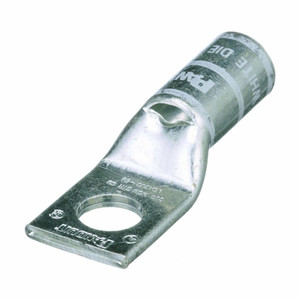
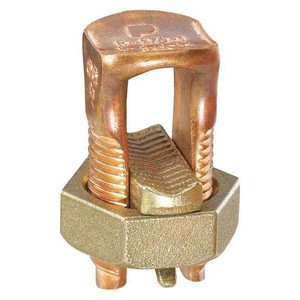
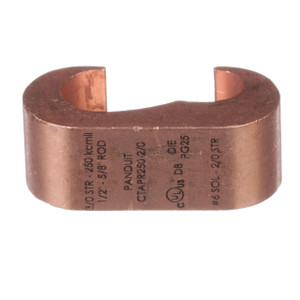
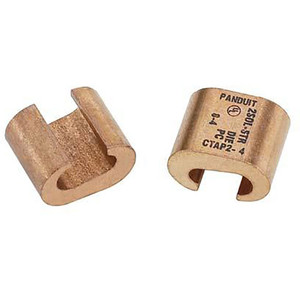
Panduit CTAPR500-2/0-X Copper Compression Tap Connector
Overview
The Panduit CTAPR500-2/0-X is a copper compression tap connector designed for utility grounding grids and heavy industrial ground applications where wire-to-wire connections must hold at high voltage and survive permanent earth or concrete burial. This is the component you reach for when tapping a 300–500 kcmil main run with a 2/0 AWG branch — a common junction in substation grounding mats, telecommunications ground rings, and industrial equipment grounding systems. The CTAPR500-2/0-X (often searched as CTAPR500 2/0 X) is UL486 listed, rated to 36kV, and carries a 90°C temperature rating, making it a code-compliant choice for both power utility and commercial construction grounding assemblies.
Key Features
- All-Copper Construction: The connector body is solid copper — not aluminum, not plated steel. Copper-to-copper compression joints eliminate galvanic corrosion at the interface, a real failure mode in buried grounding assemblies that see ground faults over decades of service life.
- UL486 Listed: UL486 is the wire connector standard that inspectors and AHJs check. This listing means the connector has been independently tested for current-carrying capacity and pull-out strength at the rated conductor sizes — you're not guessing at ampacity or mechanical retention.
- 36kV Voltage Rating: Rated for 36kV class systems, this connector is appropriate for medium-voltage substation grounding, utility transmission ground grids, and industrial facilities operating on 15kV–35kV distribution. Don't use a low-voltage connector and hope for the best in these environments — the voltage rating matters during fault events.
- 90°C Temperature Rating: The 90°C thermal class aligns with THHN/THWN-2, USE-2, and other 90°C-rated conductors common in grounding applications. This means the connector won't become the thermal bottleneck in the circuit — the wire reaches its own limit before the tap does.
- Wire-to-Wire Compression Tap Design: The tap geometry connects a branch conductor to a through-run main conductor without cutting the main. That's critical in ground grid construction where you're adding tap connections to a continuous ring conductor — the main stays intact and current paths are preserved.
- Direct Burial Rated — Earth and Concrete: Approved for burial in both native soil and concrete encasement. Grounding electrodes and ground rings routinely get poured into foundation slabs or buried in trenches — a connector that isn't rated for both burial conditions is a compliance and longevity problem. This one covers both.
- 300–500 kcmil Main / 2/0 AWG Branch Range: This specific size combination is a standard pairing in utility ground grids where the main grid conductor is typically 4/0 or 350 kcmil and branch taps drop to equipment grounding conductors in the 2/0 range. Verify your exact conductor sizes before ordering — Panduit publishes the full range of CTAPR family sizes for adjacent combinations.
Integration and Compatibility
The CTAPR500-2/0-X is a compression-type connector and requires a compatible hydraulic or mechanical compression tool and the correct die set for the conductor sizes being terminated. Verify the die specification against your crimping tool manufacturer's die selection chart — an incorrect die produces a connection that can pass visual inspection but fail under fault current. Panduit's compression connectors are engineered for use with standard industry compression tooling; consult the die selection guide for the specific tool in your kit.
This connector is suited for grounding and bonding applications in utility substations, commercial building ground grids, industrial power distribution, and telecommunications facilities. It belongs in the same installation package as ground rods, ground rod clamps, and irreversible compression lugs — the broader Panduit grounding and bonding line covers the complementary components. For infrastructure and data center grounding work, pair with rack and cabinet grounding accessories from the same family to maintain a consistent compression standard throughout the installation.
Installations subject to NEC Article 250 grounding and bonding requirements will find this connector's UL486 listing and burial ratings directly address the code sections covering grounding electrode conductor connections and exothermic or compression-type fittings for buried applications. Always verify local AHJ acceptance of compression-type buried connections — most jurisdictions accept UL486 listed compression taps without additional review, but requirements vary.
Frequently Asked Questions
Q: What conductor sizes does the CTAPR500-2/0-X accept?
A: The CTAPR500-2/0-X is designed for a main (run) conductor in the 300–500 kcmil range and a branch (tap) conductor of 2/0 AWG. Verify both conductor sizes against the connector markings before crimping — using the wrong size voids the UL listing and compromises the mechanical connection.
Q: Is the CTAPR500-2/0-X approved for direct burial?
A: Yes. It is rated for direct burial in both earth (native soil) and concrete encasement, which covers the two most common burial conditions in grounding electrode and ground grid installations.
Q: What voltage rating does the CTAPR500-2/0-X carry?
A: It is rated to 36kV, making it appropriate for medium-voltage utility and industrial grounding systems operating up to 35kV class distribution.
Q: Does the CTAPR500-2/0-X require a specific compression tool?
A: Yes — this is a compression-type connector and requires a hydraulic or ratcheting compression tool with the correct die for the conductor sizes being terminated. Consult the die selection chart for your specific tool. An incorrect die produces a mechanically inadequate crimp even if the connector appears correct visually.
Q: What standard is this connector listed under?
A: The CTAPR500-2/0-X is UL486 listed, the standard covering wire connectors for electrical wiring. This listing is what most AHJs and inspectors require for buried and exposed grounding connections in commercial and utility installations.
Q: What temperature rating does this connector carry?
A: The connector is rated to 90°C, which matches the temperature class of THHN/THWN-2 and USE-2 conductors commonly used in grounding applications. The connector will not be the thermal limiting element in a properly sized installation.
The CTAPR500-2/0-X covers a conductor combination I see constantly in substation and data center grounding work — a 350–500 kcmil main ring tapped with 2/0 AWG branch runs down to equipment pads. The 36kV voltage rating is the spec that matters most here: during a ground fault in a medium-voltage system, this connector sees the full fault current path, and a connector rated for distribution voltage handles that event without becoming a weak point in the grounding system.
Technical Highlights:
- UL486 Listing: This is a pass/fail gate for most commercial and utility inspections on buried grounding connections — the listing confirms independently tested current-carrying capacity and pull-out strength at the rated conductor range, not just a manufacturer claim.
- 36kV Rating: Positions this connector for 15kV–35kV class distribution grounding, which covers the overwhelming majority of utility substation and industrial switchgear installations where buried ground grids are required.
- Dual Burial Rating (Earth + Concrete): Most grounding projects mix both — earth trenches in the yard, concrete encasement at the building perimeter or foundation. A connector rated for only one burial medium creates a materials management problem on site. This one handles both.
Deployment Considerations:
- Die selection is the single most common installation error with compression taps. Always pull the die selection chart for your specific tool model — a die that's one size off produces a crimp that looks complete but won't hold mechanically under thermal cycling from fault events.
- The 90°C temperature rating is the thermal ceiling — make sure your conductor insulation rating also matches or exceeds 90°C if insulated conductors are in the run. Bare copper ground conductors are unaffected, but any insulated tap branch needs the right thermal class.
This connector is the right call for utility substation ground mat construction and commercial building grounding electrode systems where NEC Article 250 compliance, direct burial approval, and medium-voltage fault current capacity all need to be satisfied by a single listed component.