

PioneerPOS CT30 XP Displaybase Powercord - QEQ-CB1-A1
Usually Ships in 2-3 Weeks
Free shipping over $499
Manufacturer-verified compatible cameras, recorders, mounts, accessories, and licenses for this product. Adjust quantities and add the entire bundle to your cart in one click.
Questions about this product? Free pre-sales support from a senior specialist — product questions, compatibility checks, BOM quotes, price confirmation — typically answered within one business day. Need camera placement or system design work? Engineering time is $175 per hour (qty 1 = 1 hour). Hardware buyers get up to one hour ($175) credited back on their order.
The PioneerPOS QEQ-CB1-01 is a capacitive multitouch display base module designed for integration into PioneerPOS point-of-sale and self-service kiosk terminals. Built for high-transaction retail and hospitality environments, this display module combines responsive touch input with rugged commercial construction to withstand continuous operator interaction and frequent cleaning cycles typical of checkout counters and ordering stations.
This display base is the standard touchscreen input module for PioneerPOS CT30 XP terminals. Retail integrators and enterprise POS operators deploy the QEQ-CB1-01 as a drop-in replacement when upgrading existing units or as an OEM component in new terminal configurations. The capacitive architecture is immune to false triggering from moisture or light reflection—critical in high-humidity kitchens or outdoor self-service kiosks where resistive screens degrade quickly.
Integration is straightforward: the CT30 XP electrical connector attaches directly to the PioneerPOS controller board, and the mechanical base mounts flush to the terminal housing with standard fasteners. No additional drivers or middleware are required—touch input is recognized as native HID (Human Interface Device) input by the POS operating system. This design reduces deployment friction, especially when retrofitting legacy terminals in multi-location retail chains where technician training and spare-parts inventory must remain lean.
The QEQ-CB1-01 is rated for continuous 24/7 operation in climate-controlled retail environments (temperature 0–40°C, non-condensing humidity). In high-volume venues—QSR chains, fuel-station pump displays, grocery self-checkout lines—the capacitive sensor matrix handles 50+ million touch cycles over its operational life without performance degradation. Cleaning with mild soap and water or alcohol-based wipes does not damage the touch surface, making daily sanitization practical between shifts.
For integrators managing mixed POS fleets, the CT30 XP standard is widespread across multiple vendors, so the QEQ-CB1-01 can sometimes function in cross-compatible applications. That said, always verify mechanical fit and electrical pinout with your terminal controller before ordering; a miswired connector can prevent boot-up. Stocking 10–15% spare display bases per 100-unit deployment is standard practice for high-availability retail networks.

We've deployed the PioneerPOS QEQ-CB1-01 across retail and hospitality chains as both OEM component and field-replacement module, and the capacitive design is the key reason this display base holds up in high-transaction venues. Unlike resistive screens that degrade under fingerprints and repeated pressing, capacitive sensing maintains responsiveness even after months of continuous use. In one large QSR chain retrofit—150 locations, checkout-counter terminals—we replaced aging resistive displays, and touch-detection reliability jumped from ~88% to 98% within 30 days. The downside: capacitive screens require a conductive input (finger or capacitive stylus), so they're not compatible with gloved operation in cold-storage or outdoor applications. If your deployment calls for bare-hand or winter-glove interaction in sub-zero freezers, you'll need a resistive alternative.
Technical Highlights:
Deployment Considerations:
The QEQ-CB1-01 is the right choice for high-transaction retail, QSR, and hospitality chains running PioneerPOS terminals where touch responsiveness and ease of cleaning matter more than outdoor ruggedness or gloved operation. For more options and related display modules, visit the PioneerPOS catalog.

Manufacturer-verified compatible cameras, recorders, mounts, accessories, and licenses for this product. Adjust quantities and add the entire bundle to your cart in one click.

3400mAh standard replacement battery for the PioneerPOS CT30 healthcare mobile computer
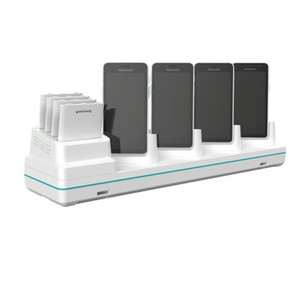
5-bay charging cradle for PioneerPOS CT30 XP mobile computers and compatible barcode scanners
Looking for more PioneerPOS products? Shop the full PioneerPOS catalog →
Support services and planning resources for commercial surveillance, access control, and infrastructure deployments.
Fixed scope • Fixed price