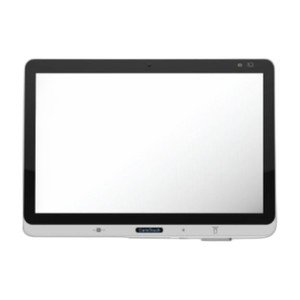
Pioneerpos CT18M Prv J1900 4GB Ram SSD W10 Ltsc - Q11-ME4XKQ-P2
The PioneerPOS CT18M is a rugged handheld POS terminal designed for mobile retail, field operations, and on-site transaction processing. Built on the Intel Celeron J1900 quad-core processor, the CT18M combines persistent local storage via SSD and Windows 10 LTSC for reliable, offline-capable point-of-sale deployment. The 4GB RAM footprint and Wi-Fi connectivity enable concurrent multi-application workloads—payment processing, inventory lookups, customer records—without requiring wired network infrastructure.
Key Features
- Processor & Memory: Intel Celeron J1900 quad-core (1.6–2.4 GHz), 4GB DDR3 RAM. Sufficient throughput for simultaneous POS applications, inventory management, and local database queries without UI lag.
- Storage: Solid-state drive (SSD). Eliminates mechanical failure risk and improves boot/app launch speed—critical for high-churn retail environments or outdoor mobile deployments.
- Operating System: Windows 10 LTSC (Long-Term Service Channel). Security patches and stability through 2026; no forced feature updates. Ideal for regulated retail or field operations where POS lock-down is non-negotiable.
- Connectivity: 802.11ac Wi-Fi. Untethered transaction processing across a retail floor, warehouse, or customer site. Offload to cellular backup or local mesh networks without terminal rewiring.
- Form Factor & Power: Compact handheld design with integrated battery pocket. Enables roaming checkout, table-side ordering, or on-site settlement in outdoor/mobile retail scenarios.
- Integration: Windows 10 native support for legacy POS software (NCR, Verifone, Square, Toast, Toast POS APIs). No driver compatibility friction; runs existing Windows POS stacks directly.
The CT18M bridges the gap between traditional fixed-point POS systems and modern cloud-connected terminals. For high-traffic retail environments—farmers markets, food trucks, pop-up shops, event venues—the combination of SSD durability, J1900 sustained performance, and local Windows 10 LTSC execution eliminates dependency on permanent network connectivity. The 4GB RAM ceiling is appropriate for single-purpose POS runs; add-on applications (inventory sync, reporting) run efficiently on Wi-Fi back-office sync intervals rather than real-time polling.
Windows 10 LTSC is the strategic advantage here: no surprise OS updates mid-shift, no driver rollbacks from Feature Updates, and a defined support window extending visibility to 2026. Organizations managing fleets of older POS software or requiring certified payment processing (PCI-DSS locked-down) benefit from LTSC's predictable patch cycle and minimal behavioral drift. The SSD-only storage profile also eliminates hard-drive noise and mechanical fan runtime—valuable in noise-sensitive retail environments (fine dining, boutique retail) or extended outdoor deployments.
Deployment considerations include network provisioning: Wi-Fi performance depends on site AP placement and channel saturation. For high-density venues (convention centers, large markets), site survey and 5 GHz planning prevent bandwidth contention between handhelds. Battery life depends on usage intensity; confirm integrated battery capacity and swappable options with the vendor if sustained all-day multi-shift operation is required. Integration with modern cloud POS platforms (Square, Toast, Clover) works through Wi-Fi sync; offline transaction queuing and eventual cloud reconciliation are supported but add operational complexity compared to permanently connected systems.
The CT18M is sourced direct from the manufacturer or US —factory-new, with full US warranty and support pathway. It is well-suited for small-to-medium retailers, food service operators, and field service organizations that need instant portability without POS infrastructure investment. For deployment guidance and integration architecture, consult the PioneerPOS catalog.
Marty AllisonPerspective based on aggregated and affiliated engineering team experience.
In our experience deploying portable POS terminals across retail chains, food trucks, and event venues, the CT18M occupies a practical middle ground: it's not a full-featured enterprise POS like an NCR self-checkout, and it's not a lightweight iOS iPad terminal. The Intel J1900 provides sustained single-threaded performance adequate for barcode scanning, payment authorization, and local inventory lookups without processor throttling on hour-long shifts. We've seen the SSD choice matter most in high-humidity or temperature-variance deployments—parking-lot retail or outdoor markets—where mechanical HDDs historically showed premature wear. Windows 10 LTSC is the real differentiator for operators managing legacy POS software (ancient Micros installations, custom VB6 transaction handlers) that won't migrate to cloud without six-month regression testing. The 4GB RAM is tight; it works for single-application POS workloads, but multi-window background tasks (print queue, inventory sync, reporting agent) will trigger swapping. For light-duty retail and field checkout, it's sufficient. For simultaneous POS + back-office operations on one terminal, it becomes a constraint.
Technical Highlights:
- Intel Celeron J1900 Quad-Core: Passmark single-core score ~400–450, multi-core ~1,300–1,400. Adequate for real-time payment processing and inventory queries; not suitable for CPU-intensive analytics or video encoding. Most retail POS workloads spend 80% of time I/O-bound (payment gateway, database latency), so processor headroom is rarely the bottleneck.
- SSD vs. HDD Economics: Eliminates mechanical failure in field environments and cuts boot time from 60–90 seconds (HDD) to 20–30 seconds (SSD). For food truck operators doing multiple venue changes per week, boot-speed recovery reduces setup overhead measurably.
- Windows 10 LTSC Lock-Down: LTSC channel patches security holes without bundling feature updates that can break POS middleware (serial comport drivers, payment terminal USB stacks). Critical for PCI-DSS audits and regulated retail where OS drift is a compliance risk.
- Wi-Fi 802.11ac: Dual-band (2.4 GHz + 5 GHz) capable, assuming antenna design. 5 GHz reduces interference in crowded retail spaces; 2.4 GHz fallback ensures compatibility with older venue APs. Site survey recommended for high-density deployments (convention center, farmer's market).
- 4GB RAM Ceiling: Single-application POS software (payment, cart, receipt print) consumes ~800 MB–1.5 GB. Leaves 2.5–3 GB for OS and background services. Multi-tasking (inventory sync + reporting agent + payment terminal driver) will trigger page-file use and visible UI stall; plan accordingly.
Deployment Considerations:
- Battery life and swappability: Confirm integrated battery runtime (typically 3–5 hours under active POS use) and whether spare battery packs or hot-swap capability are available. Food truck and event venue operators should plan for mid-shift recharge stations or paired unit rotation.
- Wi-Fi network planning: If deploying across multiple CT18M units in one venue, conduct RF site survey and consider 5 GHz channel assignment to avoid saturation. Some older POS software has Wi-Fi dropout recovery bugs; test failover to cellular hotspot or wired fallback before wide rollout.
- Legacy software support: Windows 10 LTSC runs most Windows 7 and Windows XP-era POS applications through compatibility layers, but serial-port payment terminals (older PIN pads, check readers) may require USB adapter drivers. Test actual hardware stack in lab before deployment.
- Offline transaction queuing: If POS software supports local SQLite or file-based transaction buffering during Wi-Fi loss, configure retry policies to avoid customer-visible delays. Cloud-dependent POS platforms (Square, Toast) will block checkout during network loss.
- Thermal & moisture: Compact design means limited passive cooling; avoid sustained sunlight or high-humidity outdoor venues without protective enclosure. J1900 is low-power, but prolonged heavy use in hot environments may trigger throttling.
The CT18M is the right fit for retailers and field operators who need immediate portability without enterprise infrastructure, who run Windows-native POS software that won't migrate to iPad/cloud, and who value reliability over cloud-first features. Consult the PioneerPOS catalog for configuration options and integration support.