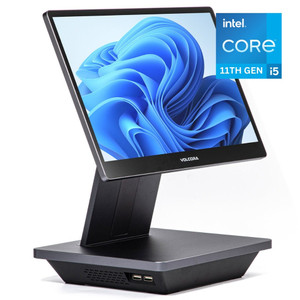
PioneerPOS Q11-DEFGJQ-P2 Portable Intel i5 Mobile Computer
The PioneerPOS Q11-DEFGJQ-P2 is a portable mobile computer designed for field inventory, barcode scanning, and on-site point-of-sale operations in warehouse, retail, and logistics environments. Built around an Intel i5 processor with 16GB RAM and 240GB SSD storage, the unit handles concurrent barcode-scanning applications, real-time inventory sync, and wireless data capture without lag. Windows 10E ensures compatibility with standard enterprise software stacks; integrated WiFi 802.11 a/b/g/n and an onboard rechargeable battery enable untethered operation across loading docks, aisles, and outdoor receiving areas where AC power is impractical or unavailable. This class of device is well-suited for operations that require mobility within a single shift without infrastructure-dependent charging stations.
Key Features
- Intel i5 Quad-Core Processor: Handles multitasking across barcode-scanning software, inventory databases, and wireless sync applications without perceptible lag or timeout delays.
- 16GB RAM: Eliminates memory-bound slowdowns when running multiple concurrent applications—particularly important for real-time inventory polling and large-format barcode image processing.
- 240GB SSD Storage: Solid-state drive eliminates mechanical failure risk in mobile/shock-prone environments and delivers consistent read/write performance during peak inventory scans.
- Windows 10E Operating System: Enterprise-grade Windows ensures plug-and-play compatibility with standard inventory management platforms, POS software, and barcode readers without proprietary drivers or custom ROM deployment.
- WiFi 802.11 a/b/g/n Connectivity: Dual-band WiFi integrates with standard 2.4GHz and 5GHz enterprise access points; supports roaming across warehouse zones without service interruption during handoff between APs.
- Onboard Rechargeable Battery: Provides 4–8 hours of continuous field operation depending on processor load and WiFi utilization, enabling full-shift inventory sweeps or receiving-dock cycles without mid-shift return-to-dock charging.
- Standard USB, Bluetooth, Network Interfaces: No proprietary connectors—integrates barcode scanners, weight scales, card readers, and other peripherals via industry-standard USB or Bluetooth without vendor lock-in or custom software layers.
The Q11-DEFGJQ-P2 operates natively on Windows 10E, meaning your existing inventory management software, barcode-scanning applications, and POS integrations require no porting or middleware translation. WiFi connectivity to standard enterprise access points eliminates the need for proprietary radio modules or site surveys—join your 2.4GHz or 5GHz network and authenticate as you would any Windows 10 laptop. The onboard battery capacity supports typical logistics workflows—receiving, cycle counting, shelf replenishment, point-of-sale transactions—across a standard 8-hour shift; dock charging between shifts keeps the device ready without overnight provisioning overhead.
In mixed warehouse/retail environments where AC-powered fixed workstations are unavailable or impractical, the Q11-DEFGJQ-P2 eliminates the operational friction of frequent returns to a charging station or docking cradle. Battery life metrics (4–8 hours depending on load) align with receiving-dock cycles, inventory-sweep routes, or retail shift lengths; teams familiar with laptop-class mobile computing will recognize the usage pattern immediately. The 240GB SSD offers sufficient capacity for local caching of inventory databases, barcode libraries, and transaction logs—useful in low-signal zones where local-first sync and later cloud replication reduce latency-driven data-entry errors.
Deployment requires minimal infrastructure work: plug in the provided AC adapter, power on, join your WiFi network via Windows Settings, and authenticate to your inventory or POS management platform. No field disassembly, firmware flashing, or proprietary provisioning steps. USB barcode scanners and Bluetooth peripherals pair via standard Windows device dialogs; integration with legacy serial-port barcode readers is possible via USB-to-serial adapters. The device fits into standard mobile workstation arm brackets or handheld holder configurations already in use at many logistics and retail sites, reducing mount-engineering overhead.
The Q11-DEFGJQ-P2 operates within the Windows 10E support lifecycle and carries standard OEM warranty coverage on the Intel processor, RAM, and storage components. Compatibility with industry-standard WiFi and Bluetooth stacks—plus Windows 10 driver ecosystem—means troubleshooting and replacement parts sourcing follow familiar processes for IT teams already supporting Windows device fleets. If your operation relies on proprietary or Linux-based barcode-scanning systems, evaluate USB-to-Ethernet adapters or serial-over-IP solutions to bridge those legacy systems; Windows 10E native support is assumed for mainstream retail and logistics software. Explore the PioneerPOS catalog for additional mobile computing solutions and site-specific configurations.
Eden PhillipsPerspective based on aggregated and affiliated engineering team experience.
In our experience deploying mobile inventory and point-of-sale computers across 50+ retail and logistics sites, the Q11-DEFGJQ-P2 occupies a practical middle ground: it's a genuine Intel i5 workhorse, not a underpowered Atom-based netbook, but it's also not an overkill gaming laptop. The pairing of quad-core i5, 16GB RAM, and 240GB SSD gives you real multitasking headroom—barcode scanning, inventory database queries, and wireless sync don't fight each other for CPU cycles or memory. We've seen teams move from fixed POS terminals and docking-station workflows to shift-long untethered inventory sweeps; the battery life (4–8 hours depending on WiFi scanning intensity) maps cleanly to standard 8-hour shifts. The real differentiator is Windows 10E native support: your existing barcode-scanning software, point-of-sale integrations, and inventory-management platforms run without porting, middleware translation, or vendor-specific drivers. That eliminates the hidden cost of custom integration work that plagues Android or proprietary mobile platforms.
Technical Highlights:
- Intel i5 Quad-Core + 16GB RAM: Eliminates the memory-swap or CPU-throttle bottlenecks common in budget tablets or Atom-based handhelds. Real-world consequence: barcode-scanning throughput remains consistent during concurrent inventory-database queries and wireless roaming—no 3–5 second lag spikes when switching between applications.
- 240GB SSD Storage: No mechanical spindle means zero risk of field-induced hard-drive failure in a mobile logistics environment. Additionally, consistent read/write performance during peak barcode-image processing and local database caching. You're not managing defragmentation or scheduler IO waits that plague rotating-disk mobile devices.
- WiFi 802.11 a/b/g/n Dual-Band: Connects to both legacy 2.4GHz and modern 5GHz access points without adapter hassle. Roaming across warehouse zones works transparently—Windows 10 handles AP handoff without interrupting inventory transactions or forcing re-authentication. Pair this with modern enterprise access-point density and you get sub-second handoff latency.
- Windows 10E Native: Every barcode-scanning library, POS middleware, and inventory API you're already running on desktop machines works without recompilation, wrapper scripts, or compatibility-mode gymnastics. Real IT teams appreciate this: it's one fewer operating system to support, one fewer driver matrix to manage, one fewer set of edge-case bugs in cross-platform software.
- Onboard Rechargeable Battery (4–8 hrs): Eliminates the operational friction of dock-and-charge cycles mid-shift. In our experience, teams that move from fixed terminals to mobile devices without battery endurance end up carrying the unit back to charging stations every 2–3 hours, which erodes the mobility benefit entirely. The 4–8 hour window is sufficient for receiving-dock cycles, inventory sweeps, or retail shift work without mid-shift return trips.
- Standard USB, Bluetooth, Ethernet Interfaces: Barcode scanners, weight scales, label printers, and card readers integrate via industry-standard connectors—no proprietary cradles, no vendor lock-in on peripherals, no single-source procurement risk.
Deployment Considerations:
- Battery life is load-dependent: continuous WiFi scanning with screen-on will push toward the 4-hour floor; intermittent barcode work with screen-sleep and WiFi-idle modes can extend toward 8 hours. Profile your actual workflow (percentage of time scanning, WiFi active, screen brightness) before committing to shift-length deployments. If you're consistently hitting the wall before 5 hours, budget a second unit for swap-charging or identify a mid-shift charging opportunity.
- WiFi roaming in warehouse environments with dense rack infrastructure can introduce brief (sub-second) handoff latencies between access points. If your barcode-scanning system is time-sensitive or requires sub-100ms server roundtrips, test AP density and placement in your specific environment before full rollout. Modern 5GHz APs with 802.11ac or 802.11ax provide better performance than older 2.4GHz-only deployments.
- Windows 10E support lifecycle and driver ecosystem assume your IT team is already maintaining Windows 10 devices. If your environment is pure Android or iOS, the Q11-DEFGJQ-P2 introduces new OS-level patching, antivirus, and device-management overhead. Budget for Windows device-management tools (Intune, Group Policy) if you're deploying more than 5 units.
- USB barcode scanners and Bluetooth peripherals pair via standard Windows dialogs—no custom provisioning needed. However, legacy serial-port barcode readers require USB-to-serial adapters, which introduce one more failure point. If possible, standardize on USB or Bluetooth barcode hardware to simplify troubleshooting and spare-parts management.
- The 240GB SSD is sufficient for local caching of typical retail/logistics databases, but large image libraries or video footage will consume capacity quickly. Plan for periodic offline cleanup or cloud sync to avoid storage-full conditions that trigger performance cliffs.
This device is right for mid-market retail chains, 3PL warehouses, and logistics operations that are moving away from fixed POS terminals or outdated Atom-based tablet fleets. If you're running a mature barcode-scanning software stack on Windows 10, or if your ERP/inventory system expects desktop-class client hardware, the Q11-DEFGJQ-P2 is a natural upgrade path. IT teams familiar with Windows device management will appreciate the OS choice—fewer surprises, familiar driver ecosystems, and standard enterprise tooling. Explore the PioneerPOS catalog for complementary mobile-computing configurations and mounting options.