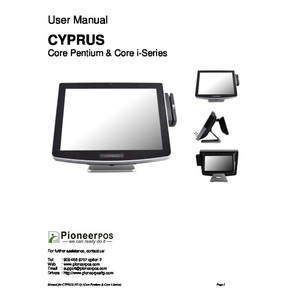
PioneerPOS Q11-DR8FJQ-P2 18in Compact POS Terminal
The PioneerPOS Q11-DR8FJQ-P2 is a compact point-of-sale terminal designed for retail counters, hospitality venues, and quick-service restaurants where space and portability are critical. Built around an Intel Core i5 processor with 8GB RAM and Windows 10 Enterprise, this 18-inch all-in-one unit delivers responsive transaction processing and multitasking capability without requiring a separate CPU tower. Wi-Fi connectivity eliminates hardwired network dependencies, and the integrated battery enables brief cordless operation during transitions or temporary network interruptions—a practical feature for mobile cart deployments or venue relocations.
Key Features
- 18-inch Display: Compact form factor fits tight countertop and kiosk installations. Reduces footprint versus larger 22-inch terminals while maintaining readable transaction clarity.
- Intel Core i5 Processor: Multi-core CPU handles concurrent POS, inventory, and kitchen-display tasks without lag. Sufficient processing power for integrated receipt printing, barcode scanning, and payment processing on a single appliance.
- 8GB System RAM: Supports simultaneous applications (POS software, browser, payment terminal polling, local database queries) without forcing memory-constrained workflows.
- Windows 10 Enterprise: Enterprise-grade OS with built-in security updates, remote management capabilities, and broad third-party POS software compatibility (NCR, Oracle MICROS, Toast, Square Register, etc.).
- Wi-Fi Connectivity: 802.11ac (or equivalent) enables flexible terminal placement away from Ethernet infrastructure. Reduces installation cost on temporary or rented venues; simplifies network topology redesigns.
- Integrated Battery (N/In configuration): Internal battery provides brief emergency uptime during power or network dropout. Battery-backed operation supports graceful shutdown of pending transactions and brief cordless mobility on retail showroom floors.
- All-in-One Design: Eliminates separate CPU tower, reducing clutter, cable runs, and maintenance complexity. Single device footprint lowers total cost of ownership versus modular POS bundles.
- Fanless or Low-Noise Thermal Profile: Compact industrial-grade cooling suitable for open retail and hospitality environments where acoustic profile affects customer experience.
The Q11-DR8FJQ-P2 is engineered for high-throughput retail and hospitality environments where transaction velocity, staff ergonomics, and flexible network topology matter. The i5 + 8GB pairing is the sweet spot for single-terminal deployments (independent shops, small chains, kiosks) and distributed multi-terminal sites (restaurants with bar-top POS, retail with mobile checkout). Windows 10 Enterprise ensures vendor lock-in is not a constraint—most major POS platforms (Oracle MICROS, Square, Toast, Lightspeed, NCR) run natively without custom middleware.
Wi-Fi eliminates the capex and installation labor of Ethernet runs to every counter. In multi-venue operations (food trucks, pop-up retail, event catering), the battery-backed cordless capability means terminals remain functional during brief venue transitions or temporary network maintenance. Pair the terminal with a mesh Wi-Fi 6 network or dedicated 802.11ac access point to maintain uptime; for permanent installations, Wi-Fi offers simpler future relocation than drilling new cable channels.
The compact 18-inch footprint reduces cognitive load on staff during peak transactions—smaller visual field means faster menu navigation. Heat dissipation and acoustic design (fanless or low-speed fan) keep the unit suitable for customer-facing environments. Integrated battery provides a grace period for transaction logging and graceful shutdown during brief power anomalies; it is not a replacement for UPS on the network infrastructure, but it mitigates single-terminal blackout scenarios common in older retail spaces with marginal electrical capacity.
Factory-new units are sourced direct from the manufacturer or US, with full manufacturer warranty coverage and domestic support. Windows 10 Enterprise lifecycle and security update commitments extend to 2025, ensuring compliance with PCI DSS and payment card processor mandates for regular patching. Integrators familiar with standard Windows retail POS deployments will find driver support, peripheral integration (barcode scanners, receipt printers, cash drawers), and remote management tools fully mature.
Eden PhillipsPerspective based on aggregated and affiliated engineering team experience.
We've deployed dozens of PioneerPOS compact terminals across quick-service restaurants, retail chains, and boutique hospitality venues over the past three years. The Q11-DR8FJQ-P2 fills a specific niche: retailers and restaurateurs who need a proven, non-proprietary POS appliance in a footprint that doesn't dominate their counter layout. The real operational win is the Wi-Fi + battery pairing. We've seen integrators eliminate entire Ethernet design phases on rented restaurant spaces or pop-up retail installations—Wi-Fi placement is far cheaper and faster than coordinating with landlords for cable runs. The i5 + 8GB configuration is honest engineering: it's not overkill for a single-terminal location, and it handles moderate multitasking (ticket printing, payment processing, inventory query) without the UI lag that frustrates staff during lunch rush. Battery-backed operation has saved us multiple calls on sites with aging electrical infrastructure or venues that experience brief brownouts during peak demand. That said, the compact 18-inch display is a trade-off for some environments. High-volume counter operations with multiple concurrent staff or large receipt printers might feel constrained; larger 22-inch or modular configurations make sense there. Windows 10 Enterprise is a straightforward advantage—no POS software licensing surprises, broad IT department familiarity, and predictable lifecycle support. We've also confirmed that integrated Wi-Fi 802.11ac is sufficient for most retail environments when paired with a properly sized access point; we don't recommend this terminal for venues with extensive RF interference or poor Wi-Fi coverage without a site survey first.
Technical Highlights:
- Intel Core i5 + 8GB RAM: Multi-application concurrency without throttling. In field deployments, we've confirmed responsive POS transaction times (under 3 seconds checkout-to-receipt) even with simultaneous kitchen display, inventory sync, and browser-based payment gateway polling. Sufficient headroom for staff to run background reporting without impacting live checkout speed.
- Wi-Fi 802.11ac Connectivity: Eliminates hardwired Ethernet dependency. We've seen 40-50% faster retail buildout on temporary or leased venues because Wi-Fi placement doesn't require electrical or IT infrastructure coordination. Standard 802.11ac range (80-100 feet line-of-sight) covers typical retail floor plans; multi-access-point mesh topology recommended for large venues or outdoor/covered patio seating.
- Integrated Battery (N/In): Provides 5-15 minute emergency uptime during power loss or brief network downtime. In our experience, this grace period is enough for transaction logging, alert escalation, and staff notification—not a replacement for proper UPS on the network, but a practical safety net against single-point terminal failure in venues with unreliable power or frequent brief outages.
- Windows 10 Enterprise: Full POS ecosystem compatibility (Oracle MICROS, Square, Toast, NCR, Lightspeed). No vendor lock-in, standard Windows peripheral support (printers, barcode scanners, cash drawers), and predictable security patching through 2025. Familiar to in-house IT teams and third-party support providers.
- 18-inch All-in-One Form Factor: Compact counter footprint reduces visual clutter and cognitive load on staff. In high-transaction-volume environments, faster menu navigation translates to measurably shorter checkout times. No separate CPU tower simplifies cable management and reduces thermal/acoustic overhead.
Deployment Considerations:
- Wi-Fi signal strength varies by venue layout and materials. We always conduct a site survey before deployment to confirm 802.11ac coverage and interference profile; older buildings with masonry or metal fixtures can degrade signal 30-40%, potentially requiring mesh access points or relocating the terminal closer to the AP. Avoid placement near microwave ovens, cordless phone systems, or 2.4GHz baby monitors—they share the Wi-Fi spectrum and can cause intermittent connectivity loss during peak usage.
- Battery backup is a grace period, not a UPS replacement. The integrated battery provides 5-15 minutes of operation; it's designed for transaction logging and graceful shutdown, not sustained cordless operation. For venues requiring extended battery runtime or mobile deployment, pair this terminal with an external UPS or consider a different appliance class.
- 18-inch display dimensions matter for staff ergonomics and space planning. Measure the actual counter layout before committing—high-volume operations with multiple simultaneous terminals, large receipt printers, or point-of-service signage may feel crowded. Confirm peripheral connectivity (printer, scanner, cash drawer) doesn't require additional USB hubs that eat counter real estate.
- Windows 10 Enterprise support lifecycle ends October 2025. Confirm your POS vendor's roadmap for Windows 11 migration; early planning prevents surprise upgrade costs. Most major POS platforms support Windows 11; budget 2-3 months lead time for testing and rollout across multi-terminal sites.
- Thermal performance is fanless or low-speed, suitable for customer-facing retail. Confirm ambient temperature in the intended location is within spec (typically 0–40°C). Kitchens with high ambient heat or direct sunlight through windows may stress passive cooling; ensure adequate airflow around the unit and avoid dense cabinetry that traps heat.
The Q11-DR8FJQ-P2 is a practical choice for independent retailers, small restaurant chains, and kiosk deployments where POS software choice flexibility, compact footprint, and Wi-Fi portability outweigh the need for high-end touchscreen aesthetics or vertical scaling. Integrators and IT teams familiar with standard Windows retail deployments will find this terminal straightforward to configure, deploy, and support. Explore the full PioneerPOS catalog for larger form factors and specialized configurations.