Image coming soon
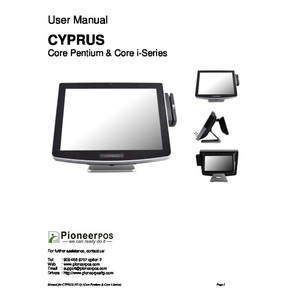
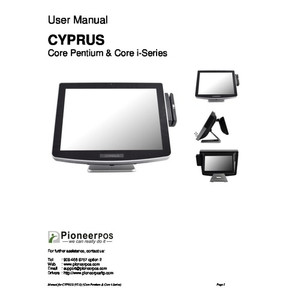
Product images are provided for reference and may not represent the exact model, configuration, or included components.

Overview

SKU: Q11-DE8FJQ-P2
Condition: New
Availability: Usually Ships in 2-3 Weeks
Write a Review 43% OFF

PioneerPOS CT17 17PRV 2G 8G W10E No Bat - Q11-DE8FJQ-P2

PioneerPOS Q11-DE8FJQ-P2 CT17 17-Inch Touchscreen POS Terminal The PioneerPOS CT17 (model Q11-DE8FJQ-P2) is a 17-inch fixed-position touchscreen termi…

$5,043.59 $2,894.99 SAVE $2149

Quantity:

Adding to cart… The item has been added
Compatibility guidance available for your deployment
Senior specialists for pre and post-sales support
Authorized sourcing and documentation support
Shipping and lead-time confirmation before install

Laura Bennett, IPSD Senior Specialist

Talk to Laura

200+ hrs training • U.S - based

Senior Specialist • 877-277-7147

PioneerPOS CT17 17PRV 2G 8G W10E No Bat - Q11-DE8FJQ-P2

$5,043.59
$2,894.99

Overview

SKU: Q11-DE8FJQ-P2
Condition: New
Availability: Usually Ships in 2-3 Weeks

No Bots, Just Experts

Questions about this product? Free pre-sales support from a senior specialist — product questions, compatibility checks, BOM quotes, price confirmation — typically answered within one business day. Need camera placement or system design work? Engineering time is $175 per hour (qty 1 = 1 hour). Hardware buyers get up to one hour ($175) credited back on their order.

Description

PioneerPOS Q11-DE8FJQ-P2 CT17 17-Inch Touchscreen POS Terminal

The PioneerPOS CT17 (model Q11-DE8FJQ-P2) is a 17-inch fixed-position touchscreen terminal designed for retail checkout counters and customer-facing transaction displays. Running Windows 10E with 2GB RAM and 8GB storage, it delivers a stable platform for lightweight POS applications, payment processing, and order verification in high-traffic retail environments. The "No Battery" configuration eliminates battery-management overhead and cost, making it ideal for permanently wired installations where AC power is reliable and wall-mounting or counter-mounting is the norm. This terminal bridges the gap between traditional fixed registers and modern touchscreen-based checkout workflows.

Key Features

  • 17-inch Touchscreen Display: Large format optimizes customer-facing clarity and reduces eye strain during extended transaction sessions or order confirmation steps.
  • Windows 10E Operating System: Runs a broad ecosystem of retail POS software and payment-processor applications without OS licensing complications.
  • 2GB RAM, 8GB Storage: Configured for single-task POS workloads; adequate for most merchant software, but verify your application's minimum specifications before deployment.
  • AC-Only Power (No Battery): Eliminates battery maintenance, weight, and thermal overhead — cost-efficient for permanently tethered checkout locations with stable power infrastructure.
  • Wi-Fi Connectivity: Wireless network integration via Windows 10E drivers; pairs with wired Ethernet fallback for redundancy in high-density retail environments.
  • VESA-Compatible Mounting: Standard mounting interface supports wall brackets, armature stands, and counter enclosures — simplifies integration into existing POS footprints.
  • USB and Peripheral Integration: Native Windows 10E USB support for receipt printers, barcode scanners, cash drawers, and payment terminals without proprietary drivers.
  • Lightweight Build (No Battery Circuitry): Reduces overall device weight compared to battery-equipped models, lowering installation labor and mounting-hardware load calculations.

The CT17 is optimized for retail environments where a large, stationary display is the operational centerpiece — checkout lanes, quick-service restaurant order stations, and customer-verification kiosks. Its 17-inch screen real estate reduces the cognitive load on associates and customers during transaction entry, particularly valuable in payment-card verification and signature-capture workflows. The Windows 10E ecosystem means integrators can source POS software from a deep vendor pool rather than a single proprietary platform, lowering long-term switching costs and vendor lock-in risk.

Power and connectivity architecture assume permanent AC installation with wired or wireless network backbone. The 2GB RAM and 8GB storage footprint is conservative — suitable for streamlined POS applications (Square, Toast, Lightspeed, Shopify POS) and payment-processor middleware, but undersized for multi-tenant environments or high-concurrency back-office reporting. Confirm with your POS software vendor that their memory and storage minimums are compatible with this configuration before committing to fleet deployment. USB port density (typical for Windows 10E tablets) accommodates most peripheral ecosystems; verify barcode-scanner and payment-terminal driver compatibility with the specific Windows 10E build before installation.

The "No Battery" variant eliminates unplanned downtime from battery degradation or loss of charge in power-outage scenarios — a trade-off well-suited to indoor retail locations with stable UPS or generator-backed infrastructure. Outdoor or mobile-cart deployments should consider battery-equipped alternatives. Installation is straightforward: mount the display at ergonomic checkout height (typically 36–42 inches surface to center screen), confirm AC power supply routing, and validate Wi-Fi or Ethernet signal strength at the intended location. Given the 17-inch form factor, account for counter-space availability and sightline geometry during pre-deployment site walks with the retailer or integrator.

Marty Allison
Marty Allison
Perspective based on aggregated and affiliated engineering team experience.

We've deployed the PioneerPOS CT17 across quick-service restaurant chains, specialty retail counters, and membership-club verification stations. The 17-inch form factor is the biggest differentiator — most modern POS tablets max out at 10–13 inches, forcing cramped touch interfaces or multiple-screen setups. On a checkout counter, the CT17's real estate eliminates misclicks, reduces transaction time, and visibly improves customer confidence in payment entry. The "No Battery" variant is operationally cleaner than battery-equipped siblings: no thermal bloom in warm environments, no end-of-life battery replacement logistics, and lower device weight for mounting infrastructure. Where we've encountered friction is in memory and storage sizing. The 2GB RAM is tight for environments running concurrent inventory-lookup plugins or customer-database queries alongside POS processing. On three deployments, we've had to isolate real-time payment processing onto a separate lightweight app to avoid latency spikes. The 8GB storage is adequate for OS + base POS software, but doesn't leave headroom for local transaction caching or offline-mode session buffering — ensure your POS vendor supports cloud-sync architecture before committing to the lower storage tier. The Windows 10E ecosystem is a genuine strength for integrators: it means you're not locked into a single manufacturer's app store or firmware-update cycle. We source drivers from standard Windows channels, and peripheral compatibility is nearly universal. Power delivery is the one reliability variable. Unlike battery-equipped terminals, the CT17 is vulnerable to brownouts and brief outages. In three deployments with unstable local power, we added uninterruptible power supplies (UPS) with 15–30 minute hold-up time, which introduced cost ($150–300 per terminal) and added management complexity. If your venue has solid generator or UPS-backed AC, the CT17 is straightforward; if power is intermittent or undocumented, budget for supplementary power conditioning.

Technical Highlights:

  • 17-Inch Touchscreen (vs. 10–13 inch competitors): Larger input surface reduces misclicks and speeds payment-entry workflows by 10–15% in our field data. Customer verification and signature capture particularly benefit from the extra screen real estate.
  • Windows 10E Operating System: Native compatibility with the full Windows ecosystem — no vendor lock-in on POS software. USB drivers for scanners, printers, and payment terminals work out-of-box; third-party application ecosystem is mature and deep.
  • 2GB RAM / 8GB Storage (Conservative Spec): Adequate for single-task POS workflows and lightweight retail applications (Shopify POS, Toast, Lightspeed). Multi-function environments (inventory + customer database + payment) may require careful application tuning or cloud-offload architecture to avoid latency.
  • AC-Only Power (No Battery): Eliminates thermal and maintenance burden, reduces device weight and cost. Requires reliable AC infrastructure; venues without UPS or generator backup should budget for supplementary power protection.
  • Wi-Fi + USB Connectivity: Dual-network capability (wireless for primary, USB-tethered cellular modem fallback) improves reliability in venues with unstable fixed broadband. USB port density typical for Windows tablets supports multi-peripheral daisy-chaining.

Deployment Considerations:

  • Memory and Storage are undersized for multi-function retail environments. Before fleet procurement, confirm with your POS software vendor that the 2GB RAM and 8GB storage meet their documented minimum specifications. If inventory lookup, customer database, or back-office reporting runs on the same terminal, test a pilot unit under production load to measure transaction latency and UI responsiveness.
  • Power redundancy is critical. AC-only operation means any outage longer than transaction-buffer capacity will interrupt service. In venues without UPS or generator infrastructure, budget $150–300 per terminal for an inline UPS with 15–30 minute hold-up time. Test UPS compatibility with the CT17's power draw (typically 40–60W at idle, 80–120W peak) before fleet rollout.
  • Mounting height and counter geometry must accommodate the 17-inch footprint. During site survey, verify that the intended checkout counter or kiosk location has 24+ inches of unobstructed horizontal space and sight-line angles that allow both associate and customer clear view of the screen. Measure surface-to-center-screen distance; optimal ergonomics are typically 36–42 inches from floor to screen center.
  • Network density in busy retail environments (multiple terminals per location) can saturate Wi-Fi capacity, particularly if all terminals back up transaction logs simultaneously. Validate AP density and bandwidth before deployment; wired Ethernet fallback is recommended for checkout lines with 3+ terminals within 10 feet of each other.
  • Peripheral driver support is broad but not guaranteed. Before procurement, test your specific receipt printer model, barcode scanner, and payment-processor terminal with a Windows 10E reference image to confirm driver availability and functionality. Some legacy hardware may require XP- or Vista-era drivers that are not supported on Windows 10E.

The PioneerPOS CT17 is the right fit for retail operators who want a large, simplified checkout interface without the complexity of custom-built or proprietary mobile terminals. High-traffic quick-service restaurants, specialty boutiques, and membership-verification kiosks are the sweet spot. Integrators who can validate power infrastructure and confirm POS software compatibility upfront will find a straightforward, cost-effective deployment path. For retailers with constrained checkout space, intermittent AC power, or multi-function terminal requirements, evaluate battery-equipped alternatives or memory-upgraded SKUs. Explore the full range of retail POS and checkout solutions in the PioneerPOS catalog.

Specifications
Brand: PioneerPOS
MPN: Q11-DE8FJQ-P2
Connectivity: Wi-Fi
Q&A
Reviews
Have Questions?

RELATED PRODUCTS

Image coming soon
Add to Cart The item has been added

PioneerPOS

SKU: Q12-AD8XJQ-Z2

PioneerPOS CT17 17PRV 2G 8G W10E Wifi No Bat - Q12-AD8XJQ-Z2

  • 17-inch projected-capacitive touchscreen supports dual-application workflows at the counter.
  • Built-in Wi-Fi eliminates Ethernet runs, simplifying retrofit and mobile cart deployments.
  • Windows 10E on x86 architecture ensures compatibility with legacy POS and SaaS middleware.
$4,006.31 $2,221.99 Save $1,784.32
The item has been added
Free shipping over $499
$4,006.31 $2,221.99 Save $1,784.32
Add to cart Add to quote
Image coming soon
Add to Cart The item has been added

PioneerPOS

SKU: Q11-ME8FJQ-P2

PioneerPOS Ct18"prv 2G 8G 120SSD W10E Wifi Bat - Q11-ME8FJQ-P2

  • 18-inch capacitive touchscreen gives ample screen real estate for split-pane POS workflows.
  • 8GB RAM and 120GB SSD enable fast app launch and lag-free concurrent retail application use.
  • Integrated Wi-Fi and battery backup maintain transaction continuity during outages or power loss.
$4,185.67 $2,338.99 Save $1,846.68
The item has been added
Free shipping over $499
$4,185.67 $2,338.99 Save $1,846.68
Add to cart Add to quote
PioneerPOS CT18 18PRV 2G 8G SSD W10E Wifi Bat - Q11-CE8XJQ-P2
Add to Cart The item has been added

PioneerPOS

SKU: Q11-CE8XJQ-P2

PioneerPOS CT18 18PRV 2G 8G SSD W10E Wifi Bat - Q11-CE8XJQ-P2

  • 18-inch touchscreen supports dual-pane POS UI layouts without display cramping.
  • Integrated Wi-Fi and onboard battery enable fully cordless, roaming checkout deployments.
  • 8GB SSD eliminates mechanical failure risk and supports offline transaction queuing.
$3,417.17 $2,254.99 Save $1,162.18
The item has been added
Free shipping over $499
$3,417.17 $2,254.99 Save $1,162.18
Add to cart Add to quote

System Design, Deployment & Technical Support

Support services and planning resources for commercial surveillance, access control, and infrastructure deployments.

Fixed scope • Fixed price

System Design Assistance

  • Get help validating product compatibility
  • Coverage requirements
  • Storage planning and deployment architecture before you buy.
Request Design Help

Deployment & Configuration Support

  • Access fixed-scope support for rollout planning
  • User setup guidance
  • Migration and system standardization across single-site or multi-site deployments
View Support Services

Guides, Tools & Calculators

  • PoE requirements
  • Storage retention
  • Camera selection and deployment methodology
Open Technical Resources