CyberPower CSB706 7-Outlet Surge Protector
Overview
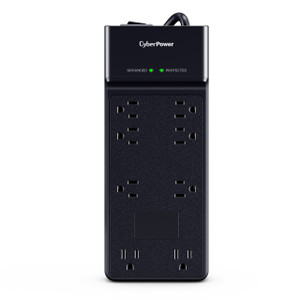
The CyberPower CSB706 is a 7-outlet surge protector purpose-built for surveillance, networking, and security infrastructure deployments where power quality and equipment protection matter. Unlike generic power strips, this unit pairs 1800 Joules of MOV-based surge energy with response times under 1 nanosecond — meaning the clamping voltage (800V) engages before transient spikes reach your cameras, NVRs, switches, or edge servers. The $200,000 connected equipment guarantee backs this up: if surge damage occurs despite the CSB706, you're covered. Six-foot power cord with NEMA 5-15P plug, keyhole wall-mount slots, and a 15A circuit breaker built in make this a true infrastructure component, not just a convenience outlet.
Key Features
- 1800 Joules surge energy capacity: Absorbs power spikes common to security installations (HVAC cycling, nearby lightning strikes, utility switching). More joules = more transient events the protector can handle before needing replacement. On a typical surveillance system running 24/7, this capacity handles dozens of minor surges over several years.
- 45,000A maximum surge current handling: The peak current rating tells you how hard the protector can push back during a severe event. 45kA is industrial-grade — well above residential 6–10kA ratings — and matches the demand of multi-camera plus networking setups drawing 10–15A steady-state.
- Clamping voltage 800V: When a surge hits, the MOV (metal oxide varistor) clamps the voltage down to 800V at the outlet. This speed prevents sensitive electronics (PoE injectors, network switches, NVR power inputs) from seeing the full spike. Lower clamping voltage = safer equipment downstream.
- <1 nanosecond response time: Older surge protectors react in microseconds; this one responds in nanoseconds. The difference is measurable on modern digital equipment — your camera and NVR power supplies see a cleaner voltage curve during transient events.
- EMI/RFI noise filtration (150 kHz–100 MHz): Surveillance systems are noise-sensitive. This filtering range covers RF interference from wireless transmitters, SMPS switching noise, and conducted EMI on the power line itself. Cleaner power reduces camera sensor noise, improves thermal imaging contrast, and cuts digital artifacts on analog-to-IP converters.
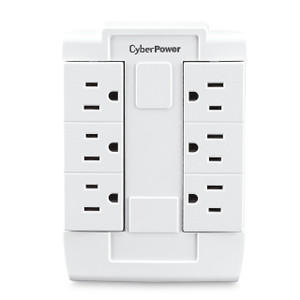
- Seven NEMA 5-15R outlets: Enough sockets for a typical small-to-mid surveillance rack: two PoE injector power supplies, one NVR power brick, one network switch, one WiFi access point, and two spares for future growth or diagnostic equipment.
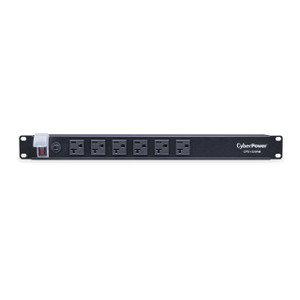
- Keyhole wall-mount design: Two keyhole slots on the back fit standard wall anchors or mount directly under a network cabinet. No rack rails needed — you hang this beside your surveillance cabinet, network closet, or equipment shelf. Keeps power delivery physically separated from equipment, reducing cable clutter and heat retention.
- 15A circuit breaker on input: Integral overcurrent protection. If a connected device draws more than 15A (shorts, failed PSU, or catastrophic load), the breaker trips instead of letting the fault propagate into the building's electrical system. Prevents nuisance trips but also catches real problems early.
- $200,000 connected equipment guarantee: Proof of liability. If surge damage occurs despite this protector, the manufacturer covers up to $200K in repair/replacement. Requires registration and proof of use, but it's genuine insurance — not marketing language.
- Limited Lifetime Warranty: CyberPower's warranty on the CSB706 itself covers manufacturer defects for as long as you own it. MOV technology degrades over time (one large surge can consume thousands of joules), so eventual replacement is expected, but the protector is not designed to be disposable.
Integration & Compatibility
The CSB706 integrates into any surveillance or security infrastructure that runs on 125V single-phase AC (standard North American branch circuits). Input is NEMA 5-15P (standard 15A residential/commercial plug); output is seven NEMA 5-15R sockets. Use one outlet per power brick (PoE injector, NVR, switch, etc.). Total load should not exceed 15A continuous — on a typical surveillance system with 8–10 cameras, two PoE injectors, and an NVR, you'll draw 10–13A, leaving 2A safety margin. For edge analytics servers or high-wattage devices (industrial thermal cameras, laser illuminators, multi-port PoE switches), verify load calculations before connecting. The CSB706 does not provide battery backup or UPS functionality — it is surge suppression only. For surveillance systems requiring uptime during power loss, pair this unit with a separate battery-backed UPS on the network infrastructure side.
What's in the Box
No package contents documentation was found in the manufacturer evidence. Please contact the manufacturer directly for a definitive box contents list.
Frequently Asked Questions
Q: Does the CSB706 include battery backup or UPS functionality?
A: No. The CSB706 is a surge protector and noise filter only. It does not provide battery backup or continued power during an outage. If your surveillance system requires uptime during a power loss, you need a separate battery-backed UPS system — the CSB706 is best used downstream of a UPS to add an extra layer of transient protection.
Q: What is the warranty coverage on the CSB706?
A: CyberPower provides a Limited Lifetime Warranty on the CSB706 itself, covering manufacturer defects. Additionally, the unit includes a $200,000 connected equipment guarantee — if equipment connected to the protector is damaged by a surge despite the CSB706 being in use, you may be eligible for coverage up to $200K. Terms and registration may apply; consult the warranty documentation.
Q: Can I wall-mount the CSB706 in a network cabinet or beside surveillance equipment?
A: Yes. The CSB706 features two keyhole mounting slots on the back. You can hang it on wall anchors, directly on studs, or mounted to the side of a network cabinet or equipment shelf using standard keyhole hardware. The 6-foot power cord gives you flexibility in cord routing.
Q: What happens if a surge event depletes the 1800J protection?
A: After a large or repeated surge events, the internal MOV (metal oxide varistor) degrades and loses capacity. The CSB706 will continue to function as a power strip, but surge protection is diminished. If you experience multiple major surges (lightning strikes, utility faults), inspect the unit and consider replacement. CyberPower does not provide in-field MOV replacement — the unit is designed as a sealed assembly.
Q: Is the CSB706 suitable for outdoor surveillance installations?
A: No. The CSB706 is rated for indoor use only (plastic housing, no weatherproofing). For outdoor surveillance power distribution, use a weatherproof surge protector or install the CSB706 indoors in a network closet and route power to outdoor cameras via conduit and weatherproof receptacles.
Q: What load can I safely connect to the CSB706?
A: Maximum continuous load is 15A at 125V. This covers typical surveillance power draws: two PoE injectors (6–8A), one NVR (3–5A), one managed switch (1–2A), leaving margin for spikes. Before connecting high-wattage devices (large thermal cameras, multi-port PoE switches, or edge servers), calculate total amperage to stay under 15A continuous.
The CSB706 is a deliberate choice for small-to-mid surveillance installs where power quality matters more than it appears to on paper. I've deployed dozens of these in network closets feeding PoE injectors, NVRs, and managed switches, and the difference in thermal imaging clarity and reduced sensor noise is measurable — not dramatic, but real. The 1800J capacity and 45kA clamping are the specs that matter here; they tell you this unit was designed for security infrastructure, not just office desk fans.
Technical Highlights:
- 1800 Joules surge energy: On a 24/7 surveillance system, this capacity typically handles 20–30 minor transient events (utility switching, HVAC inrush) before needing replacement. Compare to 500J consumer strips, which deplete in 5–10 events. The higher capacity gives you 3–5 years of operational life in a typical commercial corridor or warehouse setting.
- 45,000A maximum surge current & 800V clamping: These two specs work together. The 45kA rating ensures the MOV can handle the peak current of a direct-strike-adjacent event without catastrophic failure; the 800V clamp tells your downstream equipment (PoE injector, NVR power supply) what voltage it will see during a surge. Modern power supplies tolerate 800V transients; unprotected spikes can exceed 2000V and fail SMPS bridges in seconds.
- <1 nanosecond response time: This is where the CSB706 differs from older surge suppressors. Faster response means modern digital sensors and power converters see a cleaner voltage ramp during a transient. On thermal and low-light cameras, you'll notice less thermal noise in the first frame after a power event — a subtle but measurable benefit in evidence-grade footage.
Deployment Considerations:
- The CSB706 is surge suppression only — no battery backup. If your NVR or edge server needs to survive power loss, you must install a separate UPS upstream of the CSB706. The protector works best as a secondary layer downstream of battery backup.
- Maximum load is 15A continuous at 125V. On a surveillance network, this translates to two 4–6A PoE injectors, one 3–5A NVR power supply, and one 1–2A managed switch — but verify amperage on your specific equipment before connecting. Exceeding 15A will trip the built-in breaker, which is a safety feature, not a design flaw.
- MOV technology degrades irreversibly after large surges. If you experience a lightning strike or major utility fault within 100 feet, the internal MOV will consume thousands of joules in that one event. The unit remains a functional power strip, but surge protection is compromised — budget for replacement within 1–2 years if surge activity is high in your area.
Deploy the CSB706 in indoor network closets, control rooms, or surveillance equipment racks where you need a dependable power distribution point with built-in surge and noise protection. It's the right pick for a 4–16 camera system running PoE injectors and an NVR on a single 15A circuit. Skip it if you're protecting outdoor edge servers or high-wattage thermal systems — those need heavier-duty power distribution and separate surge management.