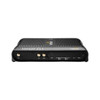
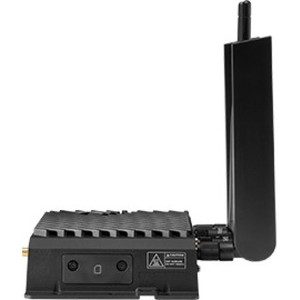
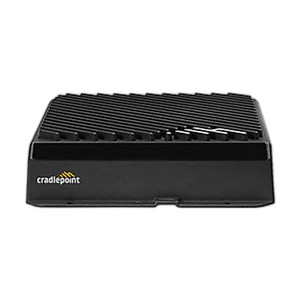
Cradlepoint TAA-MAA5-1700120B-NA 4-Port Gigabit Integrated Switch
Overview
The Cradlepoint TAA-MAA5-1700120B-NA is a compact 4-port Gigabit Ethernet switch built into the IBR1700 series mobile broadband router. It's designed for in-vehicle and mobile infrastructure deployments where you need wired connectivity without the weight and complexity of external switching hardware. If you're integrating security cameras, access control readers, or sensors into a vehicle or remote site with cellular backup, this switch eliminates one layer of gear to manage.
TAA compliance means this device meets federal procurement rules — relevant if your project involves government funding or contracts. The switch supports IEEE 802.11a/g/n wireless protocols alongside Gigabit Ethernet, so it bridges cellular, Wi-Fi, and hardwired traffic on one platform. The 1.2 Gbps modem transmission data rate handles typical mobile broadband speeds without becoming a bottleneck for local switching.
Key Features
- 4-Port Gigabit Ethernet Architecture: Each port runs at 1 Gbps full-duplex. In a vehicle-mounted or compact outdoor installation, this means you can wire four cameras, readers, or sensors directly without hunting for a separate switch. Saves space, reduces power draw, and cuts interconnect complexity.
- Integrated Switch Design: The switch is built into the TAA-MAA5-1700120B-NA router itself — no external box required. For mobile deployment scenarios (trailer, vehicle, temporary command post), fewer separate components mean faster commissioning and fewer points of failure.
- 1.2 Gbps Modem Transmission Rate: The integrated cellular modem handles standard LTE/broadband speeds. This is sufficient for streaming multiple IP camera feeds or real-time sensor data back to a central management server, provided your cellular provider's signal is stable. Don't oversell the modem throughput — if you're pushing multiple 4K streams, you'll quickly hit carrier-side bandwidth limits, not the router.
- IEEE 802.11a/g/n Wireless Support: Built-in Wi-Fi 5 (802.11n at 5 GHz and 2.4 GHz). Useful for pairing mobile devices or sensors during installation, but rely on Ethernet for critical camera or access-control traffic — Wi-Fi adds latency and is more prone to interference in vehicle or outdoor environments.
- TAA Compliance: Meets Trade Agreements Act requirements for federal procurement. If your project involves GSA Schedule, government agency contracts, or NDAA-sensitive procurement rules, this certification removes a compliance hurdle. Non-government integrators can usually ignore this — it doesn't affect performance.
- Black Enclosure, Standard Mounting: The compact form factor fits standard cabinet, wall-mount, or mobile rack installations. Verify mounting orientation with your cabinet layout — mobile environments have specific vibration and thermal profiles.
Integration & Compatibility
The TAA-MAA5-1700120B-NA is part of the Cradlepoint IBR1700 series, a family of mobile routers widely deployed in field service, public safety, and vehicle-mounted surveillance. It works with any standard IP camera, NVR, or access-control reader that uses Gigabit Ethernet and ONVIF or proprietary discovery protocols.
Since this is a managed switch, you can configure VLANs and traffic shaping through the IBR1700's web interface to prioritize video traffic or isolate access-control traffic from general IoT devices. If you're building a network switch infrastructure that must survive power loss or cellular outage, pair this with battery backup and a local NVR for failsafe recording.
Power delivery: Confirm your router's power source (12VDC vehicle supply, PoE injection, or AC mains). The switch itself consumes minimal power — the bulk draw comes from attached cameras and readers. Plan your power budget accordingly in mobile installations where battery or solar backup is the primary source.
When to Choose a Different Model
If you need more than 4 Gigabit ports, source a standalone managed switch and pair it with the IBR1700 — you'll gain flexibility in port count and QoS options. If you're deploying in a fixed facility with commercial power and wired internet, consider a full-featured commercial-grade network infrastructure setup rather than relying on cellular as a primary link. If your application demands sub-50ms latency (real-time industrial control, high-frequency trading), cellular backhaul is not suitable — stick to fiber or private WAN.
Frequently Asked Questions
Q: Is the TAA-MAA5-1700120B-NA NDAA Section 889 compliant?
A: The device is TAA-compliant, which addresses trade agreement requirements. For NDAA Section 889 (Chinese component restrictions), review the full supply-chain documentation with Cradlepoint or consult your compliance officer — TAA compliance and NDAA compliance are related but not identical.
Q: Can I use the TAA-MAA5-1700120B-NA in a vehicle with no external power?
A: Yes, provided you supply 12VDC from the vehicle battery or a dedicated automotive power system. The integrated switch draws minimal power; most current will go to attached cameras and readers. Plan battery sizing to support the total load, including idle drain during the vehicle's stationary periods.
Q: Does the TAA-MAA5-1700120B-NA support PoE injection on its Gigabit ports?
A: No. The four Gigabit ports are standard Ethernet only — they do not inject PoE. If your cameras require PoE, you'll need a separate PoE injector or PoE switch inserted between this device and the cameras. This is a common gotcha in vehicle-mounted installs.
Q: What is the maximum cable run length from the TAA-MAA5-1700120B-NA to a camera?
A: Standard Gigabit Ethernet (Cat5e or Cat6) is rated to 100 meters (328 feet) without loss. In vehicle or mobile installations, keep runs under 50 meters to avoid signal degradation over rough wiring paths.
Q: Can the four ports operate independently (isolated VLANs) or do they all bridge to one uplink?
A: The IBR1700 router's management interface allows VLAN configuration, so yes — you can isolate ports. This is useful for separating camera traffic from access-control traffic. Consult the IBR1700 user guide for VLAN provisioning steps.
Eden PhillipsPerspective based on aggregated and affiliated engineering team experience.
The TAA-MAA5-1700120B-NA is built into the IBR1700 router platform, so you're not buying a standalone switch — you're buying the switch feature set of a mobile broadband gateway. That distinction matters. If your deployment is already committed to cellular backup (vehicle, temporary field site, disaster-response trailer), this integrated approach is smart: one device to power, mount, and manage. The 1.2 Gbps modem throughput is honest broadband speed, not a lab number — it reflects real-world LTE performance on most carriers.
Technical Highlights:
- 4-Port Gigabit Switching: Each port is a full 1 Gbps connection. That's enough for two simultaneous 4MP 30-fps camera streams (roughly 20–30 Mbps each) with headroom for access-control and sensor traffic. The Ethernet backplane is non-blocking, so you won't see collisions even under peak load.
- 1.2 Gbps Modem with Cellular Failover: The router automatically switches between LAN uplink (hardwired or Wi-Fi) and LTE/cellular if primary link drops. For vehicle-mounted surveillance, this is your insurance policy — you lose hardwired internet, the system stays live on cell data. Confirm your carrier's data plan has unlimited or high-cap allowance if you're streaming video continuously.
- TAA Compliance, Not NDAA: This is compliance with U.S. federal trade agreement rules, not NDAA Section 889. If your buyer demands NDAA certification, ask Cradlepoint directly whether this SKU has been NDAA-screened. TAA alone doesn't guarantee Chinese-component-free sourcing.
Deployment Considerations:
- No PoE on the switch ports. If you're wiring four PoE cameras, you'll need a separate PoE injector or PoE switch in the middle. This adds a box and a power cable — plan for it in your BOM and power budget.
- The Wi-Fi radios (802.11a/g/n) are handy for pairing a laptop during commissioning, but don't rely on Wi-Fi for critical video or access-control traffic in a vehicle. Cellular interference, metal enclosures, and motion all degrade Wi-Fi. Ethernet is your friend here.
- Mobile broadband latency is not predictable. If any of your attached devices (NVRs, access-control panels, sensors) demand sub-200ms response times, test your specific carrier's latency in the deployment area before commission. Some carriers add 300–500ms during congestion.
This TAA-MAA5-1700120B-NA is the right choice for vehicle-mounted mobile surveillance, field service trucks requiring real-time camera or sensor telemetry, and temporary command-post deployments where cellular is the only connectivity option. Skip it if you have fixed power and fiber or hardwired broadband — standard enterprise routers and switches will give you more port density and QoS control.