Cradlepoint MB-RX30-POE Managed PoE++ Gigabit Switch
Overview
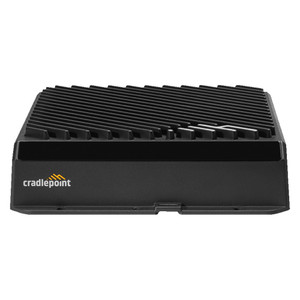
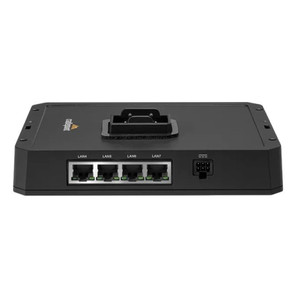
The Cradlepoint MB-RX30-POE is a managed Gigabit PoE++ switch engineered as a deployment accessory for Cradlepoint wireless gateways and routing platforms in branch, remote, and security integration environments. Built to centralize power delivery across networked endpoints—IP cameras, access control readers, wireless access points, and VoIP infrastructure—the MB-RX30-POE (often searched as MB RX30 POE) supports IEEE 802.3bt high-power over Ethernet, eliminating the need for dedicated power supplies at each device. Managed switching capability enables real-time network visibility and segmentation control, critical when integrating diverse security and enterprise systems under a single gateway.
Key Features
- IEEE 802.3bt PoE++ Power Delivery: Supplies up to 90W per port (Class 4 capability) to power high-draw devices such as pan-tilt-zoom cameras, multi-sensor systems, and powered access control units without additional AC outlets. Reduces installation complexity and cost in remote branch locations where power infrastructure is limited.
- Gigabit Port Switching: Delivers 1 Gbps per-port throughput, ensuring sufficient bandwidth for multiple simultaneous video streams without congestion. Critical when deploying 4K or dual-compression cameras that demand consistent bitrate.
- Managed Switching & VLAN Support: Enables network segmentation by VLAN, isolating camera traffic from corporate data and access control systems on the same physical infrastructure. Improves both security posture and troubleshooting visibility—IT and security teams can monitor and control traffic flow independently.
- Designed for Cradlepoint Integration: Functions as a line-of-business extension to Cradlepoint router and gateway deployments, allowing unified management through Cradlepoint's cloud control plane. Simplifies remote provisioning, firmware updates, and diagnostics across multi-site installations.
- Compact Form Factor: Occupies minimal rack or shelf space, fitting inside existing equipment enclosures or wall-mounted telecom cabinets typical in warehouse, retail, and branch office security deployments.
- Supports Mixed PoE Legacy & High-Power Devices: Backward-compatible with 802.3af (15.4W) and 802.3at (30W) endpoints, so existing IP phones, entry-level turret cameras, and wireless APs can coexist on the same switch alongside new high-power PoE++ devices.
Integration & Compatibility
Deploy the MB-RX30-POE as a satellite switch in remote branch locations where a single Cradlepoint gateway manages multiple security and networking functions. It pairs with IP cameras and security endpoints that support PoE or PoE+ input, including Axis, Hikvision, Hanwha, and Dahua models. Managed switching enables integration with NVR systems that rely on VLAN tagging for traffic isolation. The switch itself connects upstream to the Cradlepoint gateway via Gigabit Ethernet, receiving both data and management commands over a single cable.
Typical deployments include warehouse facilities requiring surveillance camera power and network separation, multi-tenant retail locations needing independent access control circuits, and logistics hubs where PoE++ powers both cameras and mobile handheld scanners at dock doors. When combined with PoE power planning for multi-camera sites, the MB-RX30-POE eliminates power-budget constraints that often force installers to deploy multiple smaller switches or resort to hybrid power architectures.
When to Choose a Different Model
If your deployment is Cradlepoint-agnostic or standardized on a different router brand, consider a standalone managed PoE++ switch from vendors like Netgear, D-Link, or Ubiquiti that doesn't assume Cradlepoint upstream management. If you need more than 16 ports (a typical configuration for the MB-RX30-POE family), or if your site requires industrial-grade fanless operation in extreme temperatures, evaluate stackable or modular switch lines designed for those constraints.
Frequently Asked Questions
Q: Can the MB-RX30-POE power a PTZ camera directly without a separate injector?
A: Yes, provided the PTZ draws under 90W at 48VDC. Most PTZ cameras (regardless of brand) accept PoE++ input and draw 40–70W depending on zoom range and heater capability. Verify the camera's power requirement against the switch's per-port wattage rating in the datasheet.
Q: Does the MB-RX30-POE work with non-Cradlepoint routers?
A: Yes, the switch is a standard managed Gigabit PoE++ device and will function on any network with Ethernet uplink. However, Cradlepoint's unified management console won't automatically discover or provision it if your gateway is a different brand. You'll manage it independently via its own web interface or SNMP.
Q: What is the maximum total power budget across all ports?
A: Consult the MB-RX30-POE datasheet for the total system power supply rating and per-port allocation rules. Simultaneous 90W draws on every port exceed typical power budgets, so prioritize allocation to high-draw devices (PTZ, multi-sensor cameras) first.
Q: Does it support 802.1X port-based authentication for access control?
A: Check the switch's management manual for 802.1X and other security features. Managed switches in this class typically support 802.1X, but verify before design if network-based authentication is a requirement.
Q: Can I daisy-chain multiple MB-RX30-POE switches for more ports?
A: Yes, cascade them via Gigabit uplinks to expand port count. Ensure the upstream Cradlepoint gateway or switch has sufficient backplane bandwidth to handle aggregated traffic from all cascaded switches without bottleneck.
Q: Is the MB-RX30-POE NDAA or TAA compliant?
A: Check the product datasheet or contact the manufacturer for formal compliance statements. Cradlepoint publishes compliance data for select products; confirm before federal or defense-sector deployment.
Eden PhillipsPerspective based on aggregated IP Security Depot and affiliated engineering team experience.
The Cradlepoint MB-RX30-POE is purpose-built for one deployment pattern: a remotely managed branch or warehouse location where a Cradlepoint router already owns gateway and management responsibilities. The IEEE 802.3bt PoE++ capability eliminates a common pain point—the need to run separate power to every camera, access reader, or wireless AP on site. That translates directly to lower installation labor, fewer conduit runs, and faster commissioning in spaces where AC outlets are scarce or costly to add.
Technical Highlights:
- Per-Port PoE++ (90W, Class 4): Sufficient to power a modern PTZ camera with integrated heater/blower, dual-sensor turret system, or powered access control pod. Most single-purpose IP cameras (4MP turret, 5MP fixed) draw 10–25W and leave headroom for future upgrades.
- Gigabit Switching with VLAN Isolation: Segments camera traffic from corporate data without additional physical cables. On a single uplink to the Cradlepoint gateway, VLAN tags ensure video streams don't interfere with accounting or inventory systems running on the same network spine.
- Managed Integration via Cradlepoint Control Plane: If your Cradlepoint subscription includes NetCloud Manager, the MB-RX30-POE can be provisioned, monitored, and updated remotely—invaluable for multi-site operators who cannot dispatch a technician every time firmware drops.
Deployment Considerations:
- The MB-RX30-POE is not a standalone product; it assumes Cradlepoint is already your gateway standard. If you're deploying against Cisco, Fortinet, or Palo Alto Networks routers elsewhere, you'll manage this switch out-of-band, losing the unified control benefit.
- Total per-port power is 90W, but aggregate power supply capacity is typically lower. Do not assume every port can deliver 90W simultaneously; architect power allocation with high-draw devices first (PTZ, heated domes) and fill remaining capacity with standard cameras and APs.
Best fit: multi-location retail or logistics operations where Cradlepoint already standardizes WAN and branch management, and where IP camera and access control expansion happens incrementally. The MB-RX30-POE converts power infrastructure from a bottleneck into a non-issue.