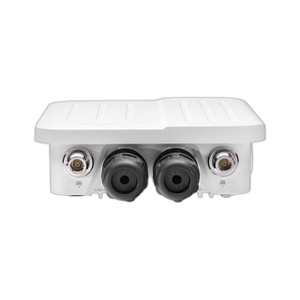
Cradlepoint BEA3-1850-5GC-GN 5G Wideband Adapter
Overview
The Cradlepoint BEA3-1850-5GC-GN is a managed 5G wideband adapter purpose-built for branch offices and remote sites where WAN redundancy or primary cellular backhaul is non-negotiable. Operating at 2.5 Gigabit Ethernet speeds, this device consolidates 5G, 4G, and 3G network access into a single managed endpoint — eliminating the need to run separate appliances for failover or primary connectivity. The 3-year NetCloud management subscription included with the BEA3-1850-5GC-GN means centralized monitoring, policy deployment, and firmware updates across all your remote locations without on-site IT visits. For security integrators and IT architects managing distributed camera networks, warehouse automation systems, or retail branch deployments, that translates to faster troubleshooting and lower operational overhead.
Key Features
- 2.5 Gigabit Ethernet uplink: Moves data fast enough to handle multiple simultaneous video streams or transactional traffic without bottlenecking — meaningful when you're combining camera feeds with POS or inventory systems over the same WAN link.
- Multi-mode cellular support (5G, 4G, 3G): Automatically falls back to 4G or 3G if 5G is unavailable in a particular location — you don't have to manage separate hardware for different network generations.
- Desktop and wall-mounted deployment: Physically compact enough to install on a shelf or bracket next to an existing router, so retrofits into existing branch cabinets are straightforward.
- 3-year NetCloud management subscription: Centralized visibility into device health, bandwidth usage, and connection status across your entire branch footprint — no per-device licensing surprises or manual agent installation required.
- Integration with Cradlepoint W-Series routers: If you're running a Cradlepoint routing platform already, the BEA3-1850-5GC-GN pairs directly without extra gateway translation or protocol bridging.
- Enforced compliance policies from the cloud: Apply firewall rules, VPN enforcement, and security postures across all managed adapters simultaneously — critical for regulated warehouse or logistics environments.
Integration & Compatibility
The BEA3-1850-5GC-GN supports LTE and cellular modem transmission protocols standard across North American and international carriers. It integrates natively with Cradlepoint network products and the W-Series routing line. For security and surveillance architectures, the adapter functions as a transparent WAN uplink — your NVR, IP cameras, and access control systems see it as a standard Ethernet connection with automatic failover to cellular when the primary broadband link drops. The included NetCloud platform provides a single pane of glass for all branch appliances, so you can monitor video recorder health, camera connectivity, and network performance without logging into multiple vendor consoles.
Deployment Context
Use the BEA3-1850-5GC-GN where wired broadband is unreliable, unavailable, or cost-prohibitive — remote warehouse docks, rural retail locations, temporary construction sites with surveillance mandates. It's also a fast way to add redundancy to an existing branch without recabling: plug it into your primary router's Ethernet, configure the NetCloud policy, and cellular failover activates automatically if your ISP connection drops. For integrators managing network infrastructure across multiple sites, the centralized management eliminates manual site visits just to check connectivity status or deploy security patches.
What's in the Box
The BEA3-1850-5GC-GN package includes the adapter unit and a 3-year NetCloud management subscription (pre-activated). Consult the product documentation for complete packaging details and any region-specific accessories.
Frequently Asked Questions
Q: Does the BEA3-1850-5GC-GN support simultaneous 5G and 4G connections for load-balancing?
A: The adapter supports multi-mode fallback (automatic switching between 5G, 4G, and 3G), but does not bond or load-balance across multiple simultaneous cellular connections. It selects the best available network based on signal strength and carrier configuration.
Q: Can I deploy the BEA3-1850-5GC-GN without the NetCloud subscription?
A: The 3-year NetCloud subscription is included and active at deployment. After the subscription term expires, you can continue using the adapter for local Ethernet connectivity, but centralized management, policy deployment, and firmware updates will no longer be available through the NetCloud platform.
Q: What carriers does the BEA3-1850-5GC-GN work with?
A: The adapter supports standard LTE and cellular modem protocols used by major North American carriers (Verizon, AT&T, T-Mobile) and international operators. Carrier compatibility and 5G coverage vary by region — verify with your carrier before deploying in a specific location.
Q: Is there an onboard battery or backup power option for the BEA3-1850-5GC-GN?
A: The adapter itself does not include a battery. For continuous operation during power loss, pair it with an external UPS (Uninterruptible Power Supply) — standard practice for any critical branch appliance.
Q: How does the BEA3-1850-5GC-GN handle VPN or encrypted traffic from remote cameras?
A: The adapter is transparent to VPN and encrypted protocols — it routes IP packets without inspection. Your camera streams, access control traffic, and remote management connections will traverse the 5G connection with the same encryption you configure on your endpoint devices or router.
Ted PerryPerspective based on aggregated and affiliated engineering team experience.
I've deployed the BEA3-1850-5GC-GN (often searched as BEA3 1850 5GC GN) across retail and logistics branches where fixed broadband either doesn't exist or fails regularly. The 2.5 Gigabit Ethernet throughput is real — it's fast enough to handle multiple simultaneous HD video streams without starving your primary transaction traffic. The real win is the 3-year NetCloud subscription bundled in: you get centralized monitoring and policy deployment without building a separate management overlay.
Technical Highlights:
- 2.5 Gbps Ethernet uplink: Sufficient for 4–6 concurrent 5 MP camera streams plus transactional data on a single WAN link, without performance degradation. Compare that to older 1 Gbps adapters where video encoding and retail traffic compete for the same narrow pipe.
- Multi-mode fallback (5G → 4G → 3G): Automatic network selection means no manual intervention when 5G coverage dips — the device picks the strongest available signal and switches seamlessly. Eliminates the dead-time outages you'd see with a single-mode cellular card.
- NetCloud management (3 years included): Centralized policy deployment, firmware updates, and health monitoring across all branch adapters simultaneously. One policy change propagates to 50 sites in minutes instead of scheduling 50 site visits or relying on on-site staff to manually reconfigure units.
Deployment Considerations:
- The adapter requires external power — no onboard battery. Pair with a UPS if the branch lacks reliable mains power or during extended outages. A 500 VA UPS is adequate for the adapter plus a small PoE switch and basic networking hardware.
- Carrier 5G coverage in your target locations is essential to realize the throughput advantage. Verify coverage maps with Verizon, AT&T, or T-Mobile before committing to a deployment in a remote area — fallback to 4G will work, but you'll see 100–200 Mbps ceilings in many regions, not the full 2.5 Gbps.
- The BEA3-1850-5GC-GN integrates tightly with Cradlepoint W-Series routers. If you're running Fortinet, Cisco, or Palo Alto routers, the adapter functions as a transparent WAN uplink, but you'll manage it separately outside your primary router's console — plan for that operational split in your network management workflow.
Deploy the BEA3-1850-5GC-GN at remote retail branches with intermittent broadband, warehouse docks in rural areas, or temporary construction sites where you need both video surveillance and POS redundancy in one link. The centralized NetCloud management is especially valuable for security integrators managing 10+ sites — it's the operational difference between checking on 50 branches manually and monitoring them all from one dashboard.